Customized Electric Vehicle Charger Enterprise
Home

Blog

Blog

  • Reflections on EV Charging and What Lies Ahead
    Reflections on EV Charging and What Lies Ahead
    Dec 31, 2025
    As the year comes to a close, we would like to take this moment to extend our sincere New Year wishes to all our partners, clients, and industry peers. Thank you for the trust, conversations, and collaborations that have shaped the past year 🙏. Your engagement continues to motivate progress across the EV charging ecosystem 🚗⚡. The transition toward electrified transportation is no longer a future concept—it is a reality unfolding at different speeds across regions 🌍. Over the past year, the EV charging industry has seen both rapid deployment and growing complexity 📈. From grid constraints ⚡🔌 and site limitations 🏢 to rising expectations around reliability and scalability, charging infrastructure is being asked to do more than ever before. Looking ahead to the new year, several industry directions are becoming increasingly clear: 💫Charging infrastructure must be designed with long-term flexibility in mind 🔧. As vehicle power requirements increase and fleet electrification accelerates 🚛⚡, solutions that allow modular expansion and staged investment will be better positioned to support sustainable growth. 💫Operational reliability is becoming just as important as charging power 🛠️. Downtime, maintenance challenges, and inconsistent user experience are no longer acceptable for commercial operators and public charging networks. 💫Local adaptation will matter more than standardized deployment 🌐. Grid conditions, regulatory frameworks, and user behavior vary significantly by market, and charging solutions must respond accordingly. At FES Power, we believe the coming year will be defined not by how fast charging infrastructure is deployed, but by how intelligently it is planned 🧠💡. Our focus remains on developing practical, scalable EV charging solutions that support real-world operating conditions—whether for residential use 🏡, commercial sites 🏢, or high-power DC charging applications ⚡. By prioritizing system stability, modular design, and future readiness, we aim to support our partners as they navigate an increasingly complex charging landscape. As we step into the new year, we look forward to continued dialogue, shared learning, and new opportunities to contribute to the global transition toward cleaner mobility 🌱🚗⚡. We wish you a successful, innovative, and rewarding year ahead. Happy New Year from all of us at FES Power! 🎉⚡
    Read More
  • Is Ultra-Fast Charging the Turning Point for EV Adoption in 2026?
    Is Ultra-Fast Charging the Turning Point for EV Adoption in 2026?
    Jan 05, 2026
    The electric vehicle (EV) industry is reaching a decisive moment in 2026. Global EV sales surpassed 20 million units in 2025, accounting for more than 25% of global new car sales 📈. Yet one question continues to dominate industry discussions: 👉 Is charging infrastructure finally ready to support mass EV adoption? With the rapid rise of ultra-fast charging (UFC) technology, the answer may now be yes. By significantly reducing charging time and improving user convenience, ultra-fast charging is reshaping how consumers, fleets, and operators perceive EVs. 🌍 Global EV Charging Infrastructure: Growth With Gaps The global charging network continues to expand rapidly: 🌐 1.3 million+ public charging points were added globally in 2024 📊 This represents a 30% year-on-year increase ⚡ Ultra-fast chargers (≥150 kW) grew by 50%+, but still account for only ~10% of public fast chargers This imbalance highlights a critical reality: quantity alone is not enough. The future of EV adoption depends on power level, efficiency, and scalability. Meanwhile, the global EV fast-charging market is projected to reach USD 33 billion by 2033, driven primarily by demand for high-power DC charging solutions 💼📈. ⚡ Why Ultra-Fast Charging Changes Everything Charging speed is no longer a “nice-to-have”—it is a deciding factor for EV buyers.   📌 Key data insights show: Ultra-fast charging usage grew nearly 40%  YoY Lower-power DC chargers are seeing declining utilization Advanced ultra-fast stations can add 300 km of range in ~5 minutes ⏱️ This brings EV charging closer than ever to the ICE refueling experience ⛽➡️🔌. From a consumer psychology standpoint 🧠, ultra-fast charging significantly reduces: ⚠️ Range anxiety ⏳ Charging time frustration 🛣️ Long-distance travel hesitation Result: higher confidence, faster adoption, and better user satisfaction ✅. 🚧 Challenges Ahead — and Why Power Matters Despite progress, challenges remain: Some regions saw charger deployment slowdowns (e.g., UK public installations dropped in 2025)              📉 The EV-to-charger ratio is expected to worsen, rising from 7.5 EVs per charger (2025) to 14+ by 2040 🔌 Grid capacity constraints demand smarter, more efficient charging solutions This underscores a clear conclusion: The next phase of infrastructure growth must be faster, smarter, and more powerful. 🔋 Introducing FES Power Ultra-Fast Charging Solutions (480–920 kW) At FES Power, we believe ultra-fast charging is not just innovation—it is infrastructure readiness for the next decade ⚙️. Our 480–920 kW ultra-fast DC charging systems are designed to meet both today’s high-power needs and tomorrow’s EV architectures. ⭐ Key Advantages ⚡ 480–920 kW High-Power Output Supports 800 V+ EV platforms and future high-voltage vehicles ❄️ Advanced Liquid-Cooling Technology Enables sustained high-power delivery with thermal stability 🧩 Modular & Scalable Architecture Ideal for highway hubs, fleet depots, and large-scale charging parks 🔌 Multi-Vehicle & Multi-Protocol Support Designed for flexible, future-ready deployments 🌱 Smart Energy & Grid Integration Optional energy storage and intelligent power management reduce grid stress 💼 Value for Operators and Drivers Ultra-fast charging delivers tangible benefits across the ecosystem: 1️⃣ Shorter Dwell Time 80% SOC achieved in minutes, not hours ⏱️ 2️⃣ Higher Station Throughput More vehicles served per day = higher ROI 📊 3️⃣ Future-Proof Investment Ready for next-generation EV platforms 🚀 4️⃣ Sustainable Infrastructure Optimized energy use and renewable integration 🌍♻️ 🔮 Conclusion: Ultra-Fast Charging Is the Inflection Point Ultra-fast charging is no longer experimental—it is becoming the new standard. 📈 The data is clear ⚡ The technology is ready 🚗 The market is demanding it As EV adoption accelerates in 2026 and beyond, high-power charging infrastructure will define success. At FES Power, our 480–920 kW ultra-fast charging solutions are built to power this transition—supporting operators, cities, and businesses in delivering a faster, smarter, and more reliable EV charging future.
    Read More
  • Celebrating 3 Years of Growth and Innovation at FES Power
    Celebrating 3 Years of Growth and Innovation at FES Power
    Jan 06, 2026
    This year marks the 3rd anniversary of FES Power 🎂—a meaningful milestone in our journey within the EV charging industry 🚗⚡. Over the past three years, we have remained focused on one clear mission: delivering reliable, scalable, and high-quality EV charging solutions 🌍 to meet the evolving needs of the global market. 🚀 From a Single Product Line to a Complete Charging Ecosystem 🔬Since our establishment, FES Power has continuously invested in research, development, and manufacturing of EV charging equipment. 🏠What began with home charging solutions has steadily grown into a comprehensive product portfolio, supporting a wide range of real-world charging scenarios. Today, our charging ecosystem includes: 🏠 Home EV chargers for daily residential use 🏢 Commercial EV chargers for public and fleet applications 🔋 Mobile charging power solutions for flexible and emergency needs 🔌 AC chargers for cost-effective and scalable deployment ⚡ DC fast chargers to support high-power, high-efficiency charging This continuous expansion reflects our long-term commitment to building a complete, flexible, and future-ready EV charging system—not just individual products. 🛠️ Continuous Improvement in Quality and Performance Product diversity alone is not enough. Over the past three years, we have placed equal emphasis on product quality, system stability, and safety performance. Each new generation of FES Power chargers benefits from ongoing optimization in: ⚙️ Hardware design 🧠 System architecture 🔒 Operational reliability Our philosophy is simple and consistent: Technology should support long-term operation, not short-term performance claims. 🌍 Growing Together with Global Partners In just three years, FES Power has built strong partnerships across Southeast Asia, Europe, and the Middle East. Through close collaboration with regional partners, we gain deep insight into: 🌐 Local grid conditions 📏 Regional standards and regulations 🚏 Diverse charging application scenarios This allows us to deliver EV charging solutions that are not only technically compliant, but also commercially practical and scalable. 🔮 Looking Ahead: The Next Chapter Three years is both a milestone and a new beginning ✨. As the global transition toward electric mobility accelerates 📈, FES Power will continue to: 🔬 Strengthen R&D and innovation capabilities ⚡ Improve charging efficiency and system reliability 🌏 Expand our global footprint 🚀 Deliver higher-power and more flexible charging solutions 🙏We sincerely thank our partners, customers, and team members who have supported us throughout this journey. The future of EV charging is just beginning—and we are ready to move forward together. ⚡ FES Power — Powering the Future of EV Charging ⚡
    Read More
  • EV Charging Hub Signals the Rise of Ultra-Fast Charging
    EV Charging Hub Signals the Rise of Ultra-Fast Charging
    Jan 07, 2026
    New York City has recently announced plans to develop its largest public electric vehicle (EV) charging hub to date, marking another significant milestone in the global transition toward electric mobility. The project, located near JFK Airport, is expected to feature dozens of charging points in its initial phase, with future expansion planned for high-power charging and commercial vehicle applications. This development is more than a local infrastructure upgrade—it reflects broader global trends reshaping the EV charging industry. 🔷What This Project Tells Us About the EV Charging Market Large metropolitan areas like New York are facing a common challenge: rapid EV adoption combined with limited urban space and grid constraints. As a result, cities are increasingly prioritizing: ✨Centralized, high-capacity charging hubs instead of scattered low-power chargers ✨Scalable infrastructure that can support future growth in both passenger and commercial EVs ✨High-power DC fast charging to reduce dwell time and improve asset utilization The New York project clearly demonstrates that ultra-fast charging is becoming a core requirement, not a premium option—especially in high-traffic locations such as airports, logistics corridors, and urban transit nodes. 🔷FES Power’s Perspective: Power Density and Scalability Matter At FES Power, we view this announcement as further confirmation of a direction we have long believed in: the future of EV charging lies in high-power, flexible, and scalable DC charging systems. As cities and operators invest in large public charging hubs, the technical focus is shifting toward: 💫Higher total site power capacity 💫Intelligent power distribution 💫The ability to serve multiple vehicles simultaneously without overloading the grid These requirements align closely with the design philosophy behind FES Power’s ultra-fast charging solutions. Supporting High-Power Charging with FES Power Ultra-Fast Solutions FES Power provides high-performance DC charging systems designed for large-scale public and commercial charging scenarios: 🔸Ultra-fast DC charging power up to 480–960 kW, suitable for charging hubs and fleet applications 🔸Wide DC output voltage range (150–1000 V) to support different EV platforms 🔸Flexible power allocation, enabling multiple charging points to dynamically share power based on real-time demand 🔸Liquid-cooled charging technology, delivering high current safely and efficiently Such solutions are particularly well-suited for environments like the New York charging hub, where throughput, reliability, and future expandability are critical success factors. 🔷Looking Ahead As global cities accelerate investment in public EV charging infrastructure, projects like New York City’s largest charging hub set a clear benchmark for what comes next: fewer but more powerful stations, designed to scale with demand and serve diverse vehicle types. FES Power remains committed to supporting charging operators, infrastructure developers, and energy partners worldwide with reliable, high-power charging solutions that are ready for the next phase of electrification.
    Read More
  • How Much Will It Cost to Install an EV Charger?
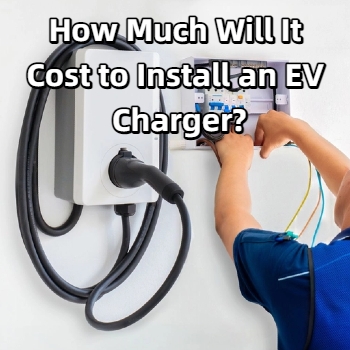
    How Much Will It Cost to Install an EV Charger?
    Jan 09, 2026
    Installing an EV charger is no longer just a technical decision—it is a strategic investment. But how much does it really cost? The answer depends heavily on the type of charger, where it is installed, and how it will be used. Let’s break it down by application scenario 👇 🔌How much does it cost to install a home EV charger? 🏠 For residential use, AC chargers (Level 2) are the most common choice. Typical cost range: Charger unit: USD 500 – 2,000 Installation & wiring: USD 300 – 1,500 Total installed cost: USD 800 – 3,500 Key cost factors include: Electrical panel capacity Cable length and routing Indoor vs outdoor installation ✅ Best for: private homes, villas, apartments with fixed parking ⚡ Charging power: 7kW / 11kW / 22kW 💡 Cost-effective, stable, and easy to maintain 🛍️How much does it cost to install a commercial AC charging station? 🅿️ For offices, hotels, and retail locations, AC chargers focus more on destination charging rather than speed. Typical cost range: Charger unit: USD 1,000 – 3,000 Installation & networking: USD 1,000 – 3,000 Total installed cost: USD 2,000 – 6,000 Why businesses choose AC chargers: Longer parking duration ⏱️ Lower upfront investment Brand image & customer attraction 🌱 ✅ Best for: hotels, offices, shopping malls ⚡ Charging during work or overnight stays 🚀How much does it cost to install a DC fast charger? ⚡ DC fast chargers deliver high power and fast turnaround, but with higher investment. Typical cost range: DC charger unit: USD 20,000 – 80,000 Installation & grid upgrade: USD 10,000 – 50,000 Total installed cost: USD 30,000 – 130,000+ Major cost drivers: Power level (60kW / 120kW / 240kW+) Transformer & grid connection 🏗️ Cooling system (air or liquid) ❄️ ✅ Best for: highways, fleet depots, urban fast-charging hubs ⚡ Charging time: 15–40 minutes ⚡How much does it cost to build an ultra-fast charging hub? ⚡ Ultra-fast charging hubs use distributed DC systems or charging power cabinets. Typical cost range (per site): Charging power cabinet: USD 100,000 – 300,000 Dispensers & cables: USD 30,000 – 80,000 Infrastructure & civil work: USD 50,000 – 150,000 Total project cost: USD 180,000 – 500,000+ Why investors choose ultra-fast charging: High vehicle throughput 🚗 Future-proof for 800–1000V platforms Flexible power allocation across multiple vehicles ✅ Best for: public charging operators, logistics hubs, EV fleets ⚡ Power range: 480kW – 960kW+ 💡What other hidden costs should you consider? ⚠️ Beyond the charger itself, many projects underestimate these costs: Grid connection & utility approval 📄 Software platforms & OCPP integration 🖥️ Operation & maintenance (O&M) 🔧 Land use or parking modification 🚧 A proper feasibility study can significantly reduce long-term risk. 🌍Can you purchase all these EV chargers from one supplier? ✅ Yes. At FES Power, we provide a full range of EV charging solutions: 🔹 Home & residential AC chargers 🔹 Commercial AC charging stations 🔹 DC fast chargers (60kW–240kW) 🔹 Ultra-fast charging power cabinets (480kW–960kW) 🔹 Smart charging software & energy management From single chargers to complete charging hubs, we support projects across residential, commercial, fleet, and public infrastructure scenarios. So, how much will your EV charger installation really cost? 🤔 The real answer is: 👉 It depends on your application, power demand, and long-term goals. Choosing the right charger type from the start can save significant CAPEX and OPEX over time. If you are planning an EV charging project and want a clear cost estimate and solution design, our team at FES Power is ready to support you.
    Read More
  • How Fast Is “Fast Charging”, Really?
    How Fast Is “Fast Charging”, Really?
    Jan 12, 2026
    Fast charging has become one of the most frequently used — and most misunderstood — terms in the EV industry. But how fast is “fast,” really? Is 50 kW still considered fast charging today? And does higher power always mean better performance? Let’s break it down with real data, real-world use cases, and practical insights. 🔍What Does “Fast Charging” Actually Mean?  In technical terms, fast charging usually refers to DC (direct current) charging, where power is delivered directly to the vehicle’s battery, bypassing the onboard charger. ✨AC charging: typically 7–22 kW ✨DC fast charging: starts around 50 kW ✨Ultra-fast charging: commonly 150 kW and above However, calling something “fast” without context can be misleading. A charger’s speed must always be evaluated against battery size, vehicle acceptance rate, and charging curve behavior, not just the kW number. ⏱️How Long Does Fast Charging Take in Real Numbers?  Let’s look at a typical example using a 70 kWh EV battery, charging from 20% to 80% (the most common fast-charging window): ✨50 kW DC charger: ~45–60 minutes ✨150 kW DC charger: ~20–30 minutes ✨250 kW DC charger: ~15–20 minutes On paper, higher power dramatically reduces charging time. In reality, the actual speed depends on whether the vehicle can sustain high power throughout the session — something many EVs cannot.  🔋Why Don’t EVs Charge at Maximum Power All the Time? EV batteries follow a charging curve, not a straight line. ✨Peak power is usually reached between 20%–40% SOC ✨Power gradually tapers down after 60% SOC ✨Above 80%, charging slows significantly to protect battery health This means a 250 kW charger does not deliver 250 kW for the entire session. The benefit of high-power charging lies in shortening the high-demand window, especially during peak operating hours. 🚀When Does Ultra-Fast Charging Truly Make Sense?  Ultra-fast charging (300 kW–960 kW systems) is not designed for every scenario. It delivers the most value in environments where time equals revenue: 💫Highway service areas 💫Public fast-charging hubs 💫Logistics and fleet depots 💫Bus and heavy-duty vehicle operations In these scenarios, throughput matters more than individual session efficiency. Reducing charging time by even 10 minutes can significantly increase daily station utilization. ⚙️Is More Power Always Better for Charging Stations?  Not necessarily. Installing higher power without a flexible architecture often leads to: Underutilized capacity Higher grid connection costs Inefficient energy allocation during off-peak hours This is why modern charging infrastructure is shifting toward centralized, modular power systems with dynamic power distribution, rather than fixed-power standalone chargers. 🔌📊How Can Charging Power Be Used More Efficiently?  Advanced DC charging systems now rely on: Wide voltage output ranges (e.g. 150–1000V) Dynamic power allocation across multiple connectors Scalable power modules For example, FES Power’s high-power DC charging solutions are designed to adapt power output in real time, allowing: Multiple vehicles to charge simultaneously Power to be distributed based on actual demand Future expansion without replacing the entire system This approach ensures that “fast charging” remains fast — even during peak usage. 🌍What Does “Fast Charging” Mean for the Future?  As EV adoption accelerates, the industry is moving beyond single-vehicle speed toward system-level efficiency: Faster turnover, not just faster sessions Smarter power management, not just higher kW Infrastructure designed for scalability, not short-term demand In this context, fast charging is no longer defined by a single number, but by how intelligently power is delivered. ✅So, How Fast Is “Fast Charging”, Really?  Fast charging is not just about reaching the highest kW rating. It is about: Delivering the right power at the right time Matching charger capability with vehicle behavior Designing systems that maximize uptime and utilization When these elements come together, fast charging becomes not just fast — but truly effective.
    Read More
  • What Types of Ultra-Fast EV Chargers Are Available on the Market?
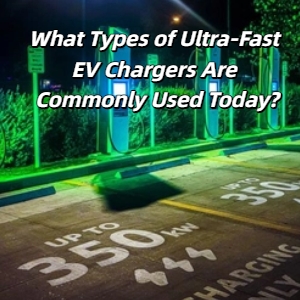
    What Types of Ultra-Fast EV Chargers Are Available on the Market?
    Jan 14, 2026
    As electric vehicles continue to gain momentum worldwide, ultra-fast charging has become a critical part of modern EV infrastructure. But the term “ultra-fast charger” can refer to very different technologies and system designs. So, what types of ultra-fast EV chargers are actually available on the market today? This article provides a clear, practical overview from a technical and application-focused perspective. 🔋What Is Considered an Ultra-Fast EV Charger?  In general, the industry defines ultra-fast charging as DC charging systems with power levels of 150 kW and above. In high-demand scenarios such as highways, charging hubs, and fleet depots, total system power can reach 300 kW, 480 kW, or even 960 kW and beyond. The goal of ultra-fast charging is not only shorter charging time, but also: ✨Higher station throughput ✨Better power utilization ✨Scalability for future EV models ⚙️What Is an Integrated DC Fast Charger?  Integrated DC fast chargers combine the power modules, control system, and charging connectors into a single cabinet. Key characteristics: 💫Typical power range: 60–240 kW 💫Compact, all-in-one design 💫Easier and faster to deploy Common applications: 🟠Commercial parking lots 🟠Small public charging sites 🟠Early-stage EV infrastructure projects While integrated chargers are convenient, their fixed power configuration limits flexibility when multiple vehicles need to charge simultaneously. 🔌What Is a Split-Type DC Charging System?  A split-type (or separated) DC charging system divides the charging infrastructure into: 🔸A central power cabinet 🔸Multiple charging dispensers Advantages include: 🔸Total system power up to 360–960 kW 🔸Power shared among multiple charging points 🔸Easier expansion without replacing the entire system This architecture has become the mainstream solution for ultra-fast charging stations, especially where high utilization is required. 🔄What Is a Flexible or Dynamic Charging System?  Flexible charging is not a standalone hardware category, but a system-level capability. It allows power to be: 🔅Dynamically allocated based on vehicle demand 🔅Adjusted in real time during charging 🔅Shared efficiently across multiple vehicles For example, instead of assigning fixed power per connector, a flexible system can distribute power such as 200 kW + 120 kW + 80 kW simultaneously—maximizing the use of available capacity. This approach is essential for busy charging hubs and fleet operations. 🏗️What Is a Centralized Ultra-Fast Charging System?  A centralized ultra-fast charging system focuses on delivering very high total power from a shared power source. Typical features include: 🔅Centralized power cabinets (e.g. 480–960 kW) 🔅Modular power units 🔅Support for 2–16 simultaneous charging points Ideal use cases: 🔻Highway service areas 🔻Urban fast-charging hubs 🔻Logistics fleets and bus depots Centralized systems reduce infrastructure redundancy and improve long-term operational efficiency. ❄️Why Are Liquid-Cooled Chargers Important for Ultra-Fast Charging?  As single-connector power levels exceed 250 kW, traditional air-cooled charging cables become heavy and difficult to handle. Liquid-cooled charging technology enables: 🟡Higher current output (500A–600A) 🟡Thinner, lighter cables 🟡More stable high-power performance This makes liquid-cooled dispensers a key component of modern ultra-fast charging solutions.  🧠How Should Operators Choose the Right Ultra-Fast Charging Solution? When selecting an ultra-fast charging system, operators should consider: 🔴Number of vehicles charging simultaneously 🔴Required charging time per vehicle 🔴Grid connection capacity 🔴Future expansion plans For long-term operation, split-type, flexible, and centralized architectures offer the best balance between performance and scalability. 🌍How Do Modern Solutions Address These Needs?  Advanced solutions, such as FES Power’s high-power DC charging systems, combine: 🟣480–960 kW centralized power cabinets 🟣Wide voltage range (150–1000 V) 🟣Dynamic power distribution 🟣Support for liquid-cooled dispensers These systems are designed to meet the real-world demands of ultra-fast charging today while remaining ready for tomorrow’s EV technologies. ✅Conclusion: What Do Ultra-Fast Chargers Really Have in Common?  Although ultra-fast chargers come in different forms, the most effective solutions share the same core principles: 🔵High total power Intelligent power management Flexible system design 🔋Understanding these differences helps operators, investors, and planners build charging infrastructure that is not only fast—but also efficient and future-proof. 
    Read More
  • Thinking About Installing Commercial EV Chargers? Are You Truly Prepared?
    Thinking About Installing Commercial EV Chargers? Are You Truly Prepared?
    Jan 16, 2026
    As electric vehicle adoption continues to accelerate worldwide, commercial EV charging has evolved from a “nice-to-have” amenity into a strategic infrastructure investment. Parking operators, shopping malls, office buildings, hotels, and industrial parks are increasingly exploring charging deployment. However, installing commercial EV chargers is far more complex than simply purchasing equipment and connecting power. Proper upfront preparation is critical to ensure long-term reliability, compliance, and profitability. 📍Is Your Site Actually Suitable for Commercial EV Charging?  The first step in any commercial charging project is a realistic site assessment. Key considerations include the number of parking spaces, traffic flow, average parking duration, and future expansion potential. For example, retail locations and office buildings typically benefit from AC chargers or medium-power DC chargers, while fleet depots, logistics hubs, and highway service areas require high-power DC fast or ultra-fast charging solutions. Clear vehicle access, safe cable routing, and adequate spacing for electrical equipment are also essential to meet operational and safety standards. 🔌Can Your Electrical Infrastructure Support Charging Demand?  Power availability is one of the most decisive factors in commercial EV charging. Before installation, operators must evaluate transformer capacity, existing load levels, and grid stability. In many cases, grid upgrades or transformer expansion may be required—especially for DC fast charging applications. Modular solutions, such as FES Power’s DC charging systems, allow power capacity to be scaled gradually. This approach helps reduce initial investment pressure while preserving flexibility for future growth, making it particularly suitable for commercial and semi-public charging projects. 📄Are You Familiar With Local Regulations and Approval Processes?  Commercial EV charger installation often involves multiple regulatory steps, including utility coordination, grid connection approval, construction permits, and fire safety inspections. These requirements vary significantly by country and region, and insufficient preparation can lead to costly delays. Engaging experienced charging solution providers early in the planning phase can help align technical designs with regulatory expectations, ensuring smoother approvals and faster project execution. 💰Have You Defined a Clear Business and Revenue Model?  Commercial EV charging revenue extends beyond electricity sales. Common models include charging service fees, membership programs, fleet contracts, and even value-added services such as advertising or data integration. The optimal business model depends heavily on charger power level, user behavior, and site type. With a comprehensive portfolio ranging from AC chargers to high-power DC charging cabinets and charging hubs, FES Power enables operators to tailor infrastructure deployment to specific commercial scenarios, balancing capital expenditure and return on investment. 🛠️Are You Selecting Equipment Designed for Long-Term Operation?  Commercial EV chargers are high-utilization assets that must operate reliably in diverse environmental conditions. Equipment quality, protocol compatibility, intelligent load management, and remote monitoring capabilities are essential for minimizing downtime and maintenance costs. Choosing chargers that support multiple standards, offer real-time diagnostics, and enable centralized management can significantly improve operational efficiency. Reliable manufacturers with proven field experience and professional after-sales support are crucial for long-term success. 🔄Have You Considered Scalability and Future-Proofing?  EV technology and charging demand continue to evolve rapidly. A well-designed charging site should allow for future power upgrades, additional charging points, and software enhancements without requiring complete system replacement. Flexible architectures—such as distributed power cabinets and dynamic power allocation—help operators adapt to increasing EV adoption while protecting their initial investment. ✅Conclusion: Preparation Determines the Success of Commercial EV Charging  Installing commercial EV chargers is a strategic infrastructure decision, not a short-term installation task. Thorough preparation—covering site assessment, power capacity, regulatory compliance, business modeling, and equipment selection—lays the foundation for stable operation and sustainable returns. By partnering with experienced solution providers like FES Power, commercial operators can deploy reliable, scalable, and future-ready charging infrastructure that supports both today’s needs and tomorrow’s growth in electric mobility.
    Read More
  • What Is an EV Charger? A Clear Guide to One of Today’s Hottest Topics in E-Mobility
    What Is an EV Charger? A Clear Guide to One of Today’s Hottest Topics in E-Mobility
    Jan 19, 2026
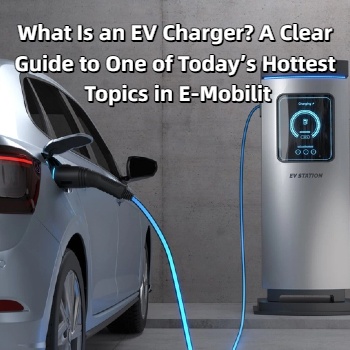
    🚗As electric vehicles (EVs) continue to gain global momentum, EV chargers have quickly become one of the most talked-about topics in the energy and transportation sectors. Governments are accelerating electrification policies, automakers are expanding EV lineups, and businesses are investing in charging infrastructure. Yet despite the growing attention, many people still ask a very basic question: what exactly is an EV charger? This article aims to provide a clear, practical, and easy-to-understand explanation of EV chargers—what they are, how they work, what key components they include, and why choosing the right charger matters. ❔What Does “EV Charger” Actually Mean? An EV charger (Electric Vehicle Charger) is a device that supplies electrical energy to recharge the battery of an electric vehicle. In simple terms, it acts as the bridge between the power grid and the EV battery, converting and controlling electricity so it can be safely and efficiently stored in the vehicle. Unlike conventional fuel pumps, EV chargers are not just “power outlets.” They are intelligent power systems that communicate with vehicles, monitor safety conditions, and manage charging performance in real time. 🔥Why Are EV Chargers Such a Hot Topic Right Now? The rapid rise of EV chargers is driven by several global trends: 🌍 Carbon neutrality and emission reduction policies 🚘 Fast growth in EV sales worldwide 🏙️ Expansion of public and commercial charging networks 🏢 New business models for parking operators, fleets, and energy companies As EV adoption accelerates, charging infrastructure has become a critical foundation of the entire EV ecosystem—making EV chargers a key area of investment and innovation. What Are the Main Components of an EV Charger? A modern EV charger is made up of several core components, each with a specific function: 🔌 Power Input & Distribution System This section connects the charger to the electrical grid and distributes power internally. It ensures stable voltage and current delivery while protecting against overloads and faults. ⚙️ Power Conversion Module One of the most critical components. AC chargers primarily manage and control power delivery DC fast chargers convert AC grid power into DC power suitable for direct battery charging High-quality power modules directly impact charging speed, efficiency, and reliability. 🧠 Control & Communication Unit This is the “brain” of the EV charger. It: Communicates with the vehicle (via protocols like OCPP or CAN) Adjusts charging power based on battery status Enables smart features such as load balancing, authentication, and remote monitoring 🛡️ Safety & Protection System Safety is non-negotiable. EV chargers include: Over-current and over-voltage protection Temperature monitoring Insulation and grounding protection These systems ensure safe operation for both users and vehicles. 📺 User Interface & Connectivity Displays, indicators, RFID readers, or app connectivity allow users to: Start and stop charging Check charging status Manage payments or access control Are All EV Chargers the Same? Not at all. EV chargers vary by: Charging speed (AC vs. DC fast charging) Power level (from a few kW to hundreds of kW) Application scenario (home, commercial parking, highways, fleets) Choosing the right charger depends on usage frequency, vehicle types, grid capacity, and business goals. ⚡How Does FES Power Support EV Charging Solutions?  At FES Power, we focus on delivering reliable, scalable, and high-performance EV charging solutions for commercial and public applications. Our product portfolio includes: 🚀 DC fast chargers and ultra-fast charging systems 🔋 Flexible power cabinet solutions with dynamic power distribution 🧩 Modular designs that support future expansion 🌐 Smart control systems compatible with modern charging platforms Whether for public charging stations, fleet depots, or commercial parking facilities, FES Power chargers are designed to maximize efficiency, safety, and long-term value. Final Thoughts: EV Chargers Are More Than Just Hardware An EV charger is not simply a device—it is a core infrastructure element of the electric mobility era. Understanding what an EV charger is, how it works, and what components it includes helps businesses, investors, and users make better decisions as the industry continues to evolve. 🌱As EV adoption grows, knowledge will be just as important as technology. And EV chargers will remain at the center of this transformation. ⚡
    Read More
  • Which Certifications Do EV Chargers Need to Be Sold Globally?
    Which Certifications Do EV Chargers Need to Be Sold Globally?
    Jan 21, 2026
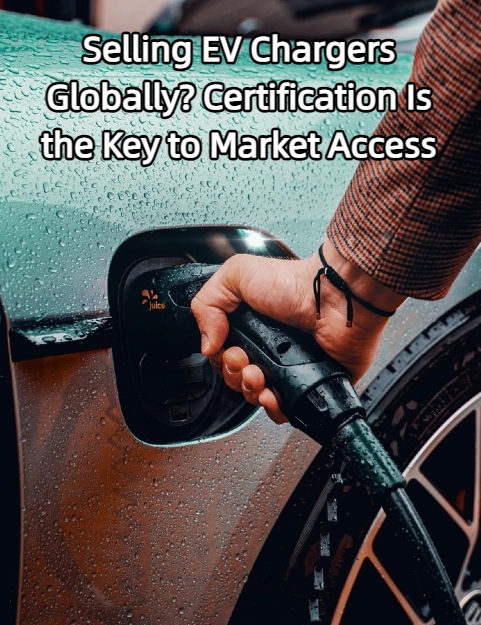
    As electric vehicles continue to grow worldwide, EV chargers are no longer just a product — they are regulated electrical infrastructure. Before selling or exporting EV chargers, understanding certification requirements is essential. Different countries require different approvals, and each certification focuses on safety, grid compatibility, EMC performance, and user protection. This article provides a clear, practical overview of the main EV charger certifications, which countries they apply to, what they actually verify, and how manufacturers can prepare for compliant global sales. 🔍Why Are Certifications Mandatory for EV Chargers?  EV chargers handle high voltage, high current, and direct interaction with vehicles and power grids. Certifications are required to ensure that chargers: 🔒 Protect users from electric shock and fire risks ⚙️ Operate safely with local power grids 📡 Do not interfere with other electronic equipment (EMC) 🚗 Communicate correctly with electric vehicles 📜 Comply with national laws and market access rules Without proper certification, EV chargers cannot be legally sold, installed, or insured in most markets. What Is CE Certification and Where Is It Required? CE marking is mandatory for EV chargers sold in the European Union and EEA countries. CE certification mainly ensures compliance with: LVD (Low Voltage Directive) – electrical safety EMC Directive – electromagnetic compatibility RED (if wireless communication is used) RoHS – restriction of hazardous substances 📌 Applicable Markets: EU countries, Norway, Switzerland, and many countries that recognize EU standards. 🛡️ What CE Really Ensures: That the EV charger is electrically safe, environmentally compliant, and suitable for connection to European power systems. What Certifications Are Required in the UK After Brexit? The UK now requires UKCA certification instead of CE (with limited transition periods). UKCA covers requirements similar to CE: Electrical safety EMC performance Environmental compliance 📌 Applicable Market: United Kingdom only. ⚠️ Important Note: Products certified only with CE may not be accepted in the UK without UKCA marking. Which Certifications Are Needed for North America?  North America has some of the strictest safety standards globally. UL / ETL (USA) UL 2594 (AC chargers) UL 2202 (DC fast chargers) CSA (Canada) 🛡️ These certifications focus heavily on: Fire prevention Insulation and enclosure protection Abnormal operation testing Long-term durability 📌 Applicable Markets: United States and Canada. ⚠️ Key Difference: North American standards are often more conservative than IEC standards used elsewhere. What About Australia and New Zealand Certifications?  Australia and New Zealand require RCM (Regulatory Compliance Mark). RCM ensures: Electrical safety compliance (AS/NZS standards) EMC compliance Grid compatibility 📌 Applicable Markets: Australia and New Zealand. 🔌 Chargers must be tested against AS/NZS 3000 and related standards, which differ from EU norms. 🌏Which Certifications Apply to Asia, the Middle East, and Other Regions?  Different regions adopt different frameworks: IEC / CB Scheme – International basis accepted by many countries G-Mark / SASO (Saudi Arabia) BIS (India) KC (South Korea) PSE (Japan) 🧩 Common Practice: Many countries accept CB test reports as a foundation, then require local deviations or national registration. 🧪What Do EV Charger Certifications Actually Test?  Across regions, certifications usually evaluate: ⚡ Electrical safety (overcurrent, grounding, insulation) 🔥 Fire resistance and thermal performance 📡 EMC/EMI (emissions and immunity) 🌧️ Environmental protection (IP ratings) 🔄 Communication protocols (IEC 61851, ISO 15118) 🔧 Mechanical strength and enclosure durability In short: certifications confirm the charger is safe, reliable, and grid-compatible. 📦How Can Manufacturers Prepare EV Chargers for Global Sales?  For exporters and distributors, smart preparation includes: Designing products based on IEC standards first Supporting multi-certification architecture Using modular power systems adaptable to regional needs Preparing documentation, labeling, and firmware localization This approach significantly reduces certification time and cost when entering new markets. 🚀How Does FES Power Support Certified Global EV Charger Sales?  At FES Power, we design EV charging solutions with global compliance in mind. 🔋 Our product portfolio includes: AC chargers with CE / UKCA-ready designs DC fast chargers aligned with IEC & UL structures High-power modular systems supporting multi-market certification 🌍 We support: Certification-ready hardware architecture Flexible customization for regional standards Export-focused documentation and compliance support Whether for Europe, the UK, Australia, the Middle East, or emerging markets, our chargers are built to help partners enter markets faster and more confidently. ✅What Should You Remember Before Exporting EV Chargers?  Selling EV chargers internationally is not just about price or power — certification is the real market entry key. ✔️ Always confirm target-country certification requirements ✔️ Understand what each certification actually ensures ✔️ Work with manufacturers who design for compliance from day one 🌍With the right preparation and the right partners, global EV charger sales become clear, compliant, and scalable.
    Read More
  • Is EV Charging Still Profitable in 2026?
    Is EV Charging Still Profitable in 2026?
    Jan 23, 2026
    As electric vehicle (EV) adoption accelerates worldwide, the EV charging industry is entering a critical profitability phase. After a strong expansion in 2025, investors and operators are asking a key question: Is EV charging still a profitable business in 2026? The short answer is yes—but profitability now depends on smart infrastructure planning, fast-charging deployment, and scalable technology. 📈2025 in Review: EV Adoption Continued to Surge  Global EV sales reached approximately 20.7–22 million units in 2025, representing ~20–25% year-on-year growth, according to Benchmark Mineral Intelligence and BloombergNEF . Key regional highlights (2025): ✨China: 12.9 million EVs sold (+17%) ✨Europe: 4.3 million EVs (+33%) ✨North America: 1.8 million EVs (slight slowdown due to policy changes) ✨Global EV fleet: ~85 million vehicles on the road This expanding fleet directly drives charging demand growth, particularly in urban, fleet, highway, and commercial environments. 🚀2026 Outlook: EV Sales and Charging Demand Will Accelerate  Industry forecasts expect global EV sales to exceed 26–28 million units in 2026, pushing the total global EV fleet beyond 100–116 million vehicles . At the same time: Public charging points are expected to grow from ~6 million (2025) to 7–8 million+ in 2026 Global networks are projected to add over 1 million new public chargers in 2026 alone The EV charging infrastructure market is forecast to grow from $19.47B (2025) to $25.76B (2026), a 32% annual growth rate This confirms that charging infrastructure remains one of the fastest-expanding segments of the EV ecosystem. ⚡Why Fast Charging Is Driving Profitability in 2026  Revenue is increasingly shifting toward DC fast and ultra-fast charging. ABI Research reports that: DC chargers accounted for ~78% of public charging revenue in 2025 DC charging revenue will grow from ~$17.2B in 2026 to over $111B by 2035 Fast-charging demand is growing at ~36% annually Profit drivers in 2026 include: Higher session revenue per vehicle Shorter dwell time = higher charger turnover Fleet electrification (logistics, ride-hailing, buses) Premium pricing for ultra-fast charging 💰Is EV Charging Still Profitable? Key Business Metrics  A well-planned fast-charging site in 2026 can achieve: Metric Typical Range Payback period 2.5–4 years Gross margin 25–45% Utilization rate 18–35%+ Revenue growth YoY 20–40% Best ROI segment DC fast / fleet / highway hubs Most profitable site types: Highway fast-charging hubs Fleet & logistics depots Taxi & ride-hailing charging yards Commercial malls & high-traffic parking Public transit depots Key Risks in 2026—and How to Mitigate Them ⚠️➡️✅ 💫Challenges 💫Grid capacity limitations 💫High installation CAPEX 💫Uneven charger utilization 💫Competitive pricing pressure 💫Solutions Modular & scalable charger deployment Smart load management Battery-buffered charging systems Ultra-fast hubs to maximize turnover Strategic site selection based on traffic analytics ⚡How FES Power Enables Profitable EV Charging in 2026 🔋 To capture growing demand and maximize ROI, FES Power provides high-performance DC fast-charging and ultra-fast charging solutions tailored for commercial and fleet operations. Key Advantages of FES Power Chargers High-power DC fast charging (up to ultra-fast class) Scalable modular architecture for future expansion Smart energy management & load balancing OCPP-ready & backend platform compatible Designed for high-utilization commercial environments Optimized for fleet, highway, and high-traffic deployments Business Benefits for Operators Faster charging = higher station throughput Reduced downtime with robust thermal & power management Lower operational costs through intelligent power allocation Future-proof design aligned with 2026–2030 growth trends 📊2026 Profitability Outlook: The Bottom Line  EV charging remains a profitable and expanding business in 2026, but success depends on: ✅ Prioritizing DC fast & ultra-fast charging ✅ Targeting high-traffic and fleet-focused locations ✅ Deploying scalable, smart, and energy-efficient infrastructure ✅ Partnering with reliable, future-ready charging technology providers like FES Power As EV adoption surpasses 100 million vehicles globally, charging infrastructure is no longer optional—it is a core pillar of the clean-mobility economy.
    Read More
  • What’s Driving the Next Wave of Growth?
    What’s Driving the Next Wave of Growth?
    Jan 26, 2026
    📈As electric vehicle adoption accelerates worldwide, 2026 is shaping up to be a pivotal year for EV charging infrastructure. Global charger deployment, ultra-fast charging expansion, smart energy integration, and cost optimization are reshaping the industry. Backed by the latest data from the IEA, GlobalData, and market intelligence reports, here are the most impactful EV charging trends to watch in 2026. ⚡️Is Ultra-Fast Charging Becoming the New Standard? 🅿️Ultra-fast charging is no longer a premium niche—it is becoming a mainstream requirement. In 2024, global ultra-fast chargers (≥150 kW) grew by over 50% year-over-year, now representing nearly 10% of all fast chargers . The cost of ultra-fast chargers has also fallen by approximately 20% between 2022 and 2024, making high-power deployment more commercially viable . ☕️By 2026, the market is expected to accelerate the rollout of 350 kW–1000 kW ultra-rapid chargers, enabling charge times comparable to conventional refueling. 🦚How FES Power aligns: FES Power’s high-power DC charging platforms (including 240 kW–960 kW scalable charging systems) are designed to support ultra-fast, modular expansion—future-proofing operators for the next generation of EV demand. ❔Will Global Charger Installations Continue to Scale Rapidly The global EV charging infrastructure market is projected to grow from 5.8 million units in 2025 to 11 million units by 2030, representing a 13.6% CAGR . In 2024 alone, more than 1.3 million new public chargers were installed worldwide, marking a 30% annual growth rate . ✨China remains the dominant deployment leader, accounting for nearly 80% of global fast-charging growth, while Europe and Southeast Asia are rapidly scaling their public networks. This indicates that 2026 will remain a high-growth infrastructure year, driven by urban expansion, fleet electrification, and policy incentives. ⁉️Is Smart Charging Becoming Essential for Grid Stability? As charger density increases, grid-aware and smart charging systems are becoming a necessity rather than an upgrade. Approximately 31% of new charging installations now include smart energy management, while 42% of new stations are cloud-connected for monitoring, pricing, and load optimization . Additionally, vehicle-to-grid (V2G) and bidirectional charging adoption is rising, with 16% of new installations already supporting V2G-ready hardware . 🎊FES Power advantage: FES Power integrates intelligent load balancing, remote OCPP management, cloud analytics, and energy-storage-ready architecture to help operators reduce peak load costs and maximize ROI. 🤔Will Battery-Integrated Charging Become More Common? Energy-storage-integrated charging systems are gaining traction to address grid limitations and demand spikes. Many regions now report that over 29% of charging areas face grid capacity constraints, pushing adoption of battery-buffered charging hubs . ✨Battery-assisted charging enables: 🔸Faster peak-hour charging 🔸Reduced grid upgrade costs 🔸Improved power stability 🔸Better integration with renewable energy This trend is expected to expand significantly in 2026, especially for fleet depots, logistics hubs, and highway charging corridors. ⁉️Are Charging Networks Shifting Toward Profitability and Efficiency? Charging network operators are increasingly focused on utilization rates, uptime, and operational efficiency. Tesla’s Supercharging network processed approximately 54 million charging sessions per quarter in 2025, delivering 1.8 TWh of energy, with average stall throughput exceeding 268 kWh per day . This demonstrates that high-power, high-utilization charging models are becoming economically sustainable—especially when paired with: 🔷Dynamic pricing 🔷Fleet contracts 🔷Subscription charging programs FES Power’s modular charging architecture allows scalable investment models—supporting operators from pilot deployment to large-scale commercialization. 💥Will EV Charging Markets Continue Expanding in 2026? The global EV charging stations market is projected to grow from USD 44.5 billion in 2025 to over USD 219 billion by 2033, representing a 22% CAGR . 💫Key growth drivers include: Rising EV ownership (27% annual growth) Fleet electrification expansion (43% increase) Fast-charging installations (38% growth) Smart charging adoption (31% growth) This confirms that 2026 will remain a strong expansion year for infrastructure investors, utilities, and charging operators. 📓What Should Businesses Prepare for in 2026? To stay competitive, charging stakeholders should focus on: 🔷Deploying ultra-fast and modular DC chargers 🔷Integrating smart energy management and cloud platforms 🔷Preparing for battery-assisted and V2G-ready infrastructure 🔷Improving charger uptime, maintenance efficiency, and customer experience FES Power delivers end-to-end EV charging solutions, covering AC chargers, high-power DC fast chargers, ultra-fast chargerCompanies that invest early in high-power, intelligent, and scalable chagering hubs, and mobile energy-storage charging systems—helping partners stay ahead of the 2026 technology curve. 💫Conclusion: Is 2026 a Turning Point for EV Charging? Yes. With charger installations accelerating, ultra-fast technology becoming mainstream, energy storage integration rising, and smart charging systems expanding, 2026 is set to become a defining year for EV charging infrastructure worldwide.
    Read More
1 2 3 4 5 6 7 8

leave a message

leave a message
If you are interested in our products and want to know more details,please leave a message here,we will reply you as soon as we can.
submit
Contact Us: bella@fespower.cn

home

products

WhatsApp

Contact Us