Jan 05, 2026
The electric vehicle (EV) industry is reaching a decisive moment in 2026. Global EV sales surpassed 20 million units in 2025, accounting for more than 25% of global new car sales 📈. Yet one question continues to dominate industry discussions:
👉 Is charging infrastructure finally ready to support mass EV adoption?
With the rapid rise of ultra-fast charging (UFC) technology, the answer may now be yes. By significantly reducing charging time and improving user convenience, ultra-fast charging is reshaping how consumers, fleets, and operators perceive EVs.
🌍 Global EV Charging Infrastructure: Growth With Gaps
The global charging network continues to expand rapidly:
🌐 1.3 million+ public charging points were added globally in 2024
📊 This represents a 30% year-on-year increase
⚡ Ultra-fast chargers (≥150 kW) grew by 50%+, but still account for only ~10% of public fast chargers
This imbalance highlights a critical reality: quantity alone is not enough. The future of EV adoption depends on power level, efficiency, and scalability.
Meanwhile, the global EV fast-charging market is projected to reach USD 33 billion by 2033, driven primarily by demand for high-power DC charging solutions 💼📈.
⚡ Why Ultra-Fast Charging Changes Everything
Charging speed is no longer a “nice-to-have”—it is a deciding factor for EV buyers.
📌 Key data insights show:
Ultra-fast charging usage grew nearly 40% YoY
Lower-power DC chargers are seeing declining utilization
Advanced ultra-fast stations can add 300 km of range in ~5 minutes ⏱️
This brings EV charging closer than ever to the ICE refueling experience ⛽➡️🔌.
From a consumer psychology standpoint 🧠, ultra-fast charging significantly reduces:
⚠️ Range anxiety
⏳ Charging time frustration
🛣️ Long-distance travel hesitation
Result: higher confidence, faster adoption, and better user satisfaction ✅.
🚧 Challenges Ahead — and Why Power Matters
Despite progress, challenges remain:
Some regions saw charger deployment slowdowns (e.g., UK public installations dropped in 2025)
📉 The EV-to-charger ratio is expected to worsen, rising from 7.5 EVs per charger (2025) to 14+ by 2040
🔌 Grid capacity constraints demand smarter, more efficient charging solutions
This underscores a clear conclusion:
The next phase of infrastructure growth must be faster, smarter, and more powerful.
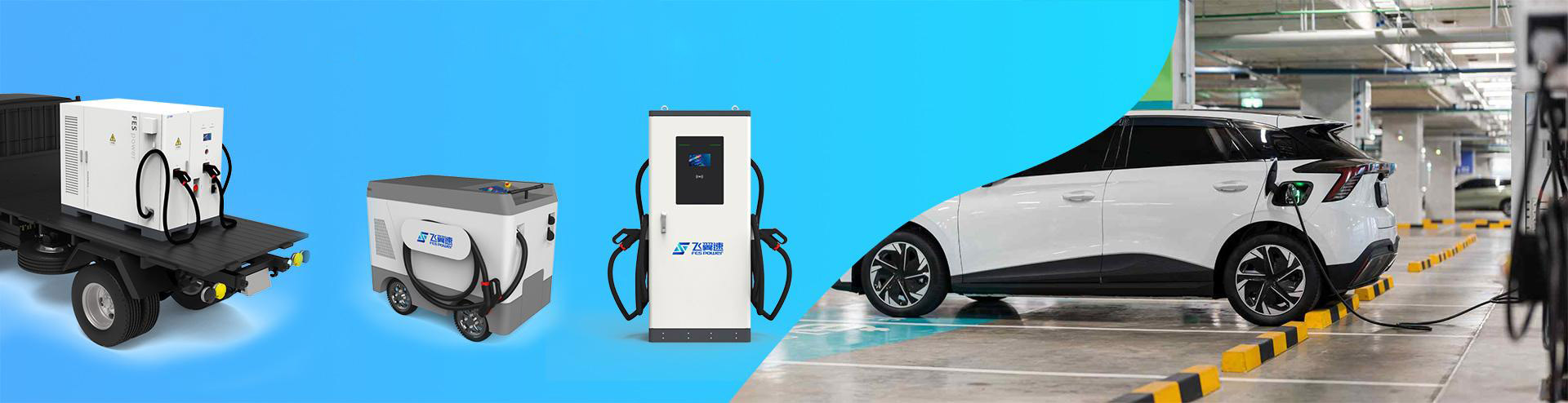
🔋 Introducing FES Power Ultra-Fast Charging Solutions (480–920 kW)
At FES Power, we believe ultra-fast charging is not just innovation—it is infrastructure readiness for the next decade ⚙️.
Our 480–920 kW ultra-fast DC charging systems are designed to meet both today’s high-power needs and tomorrow’s EV architectures.
⭐ Key Advantages
⚡ 480–920 kW High-Power Output
Supports 800 V+ EV platforms and future high-voltage vehicles
❄️ Advanced Liquid-Cooling Technology
Enables sustained high-power delivery with thermal stability
🧩 Modular & Scalable Architecture
Ideal for highway hubs, fleet depots, and large-scale charging parks
🔌 Multi-Vehicle & Multi-Protocol Support
Designed for flexible, future-ready deployments
🌱 Smart Energy & Grid Integration
Optional energy storage and intelligent power management reduce grid stress
💼 Value for Operators and Drivers
Ultra-fast charging delivers tangible benefits across the ecosystem:
1️⃣ Shorter Dwell Time
80% SOC achieved in minutes, not hours ⏱️
2️⃣ Higher Station Throughput
More vehicles served per day = higher ROI 📊
3️⃣ Future-Proof Investment
Ready for next-generation EV platforms 🚀
4️⃣ Sustainable Infrastructure
Optimized energy use and renewable integration 🌍♻️
🔮 Conclusion: Ultra-Fast Charging Is the Inflection Point
Ultra-fast charging is no longer experimental—it is becoming the new standard.
📈 The data is clear
⚡ The technology is ready
🚗 The market is demanding it
As EV adoption accelerates in 2026 and beyond, high-power charging infrastructure will define success.
At FES Power, our 480–920 kW ultra-fast charging solutions are built to power this transition—supporting operators, cities, and businesses in delivering a faster, smarter, and more reliable EV charging future.
Read More






 IPv6 network supported