Apr 20, 2026
🔌 Can Single-Function EV Charging Stations Meet Global Energy Demand Growth?
The global EV charging infrastructure market hit $64.48 billion in 2026, and will surge to $790.15 billion by 2035 with a stunning 32.11% annual growth rate. Meanwhile, global EV ownership keeps breaking records, and traditional one-way charging stations only finish power supply tasks. Over 60% of global power grids face insufficient capacity for large-scale fast-charging expansion. Simple charging piles can no longer balance peak power pressure, renewable energy consumption and fleet charging needs. It clearly proves standalone charging stations are outdated, and multi-functional energy hubs become inevitable industry upgrades. Core SEO keywords: EV Charging Infrastructure, Energy Hub EV Station, Smart EV Charging.
⚡ How Does V2G Technology Redefine EV Station Energy Value?
Vehicle-to-Grid bidirectional technology is the core foundation of energy hub transformation. Global V2G market reaches $2.3 billion in 2026, and will rise to $11.25 billion by 2033, keeping 18.5% high CAGR. V2G lets EVs work as mobile energy storage: charge at low off-peak prices, discharge back to grid during peak demand. Every 100,000 V2G EVs can provide 200MW grid regulation capacity, equal to a medium thermal power plant and cut over 100,000 tons carbon emissions yearly. Ordinary charging stations have no bidirectional dispatch ability, while energy hubs integrate V2G, peak shaving, frequency regulation and green power consumption. This fully answers why energy hubs dominate future EV power network.
🏭 What Operational Advantages Make Energy Hubs More Profitable Than Normal Chargers?
Traditional charging piles only earn charging service fees, with low single-station profit and unstable income. Energy hubs combine EV charging, battery energy storage, photovoltaic power generation and grid auxiliary services, lifting station overall revenue by over 40%. Global public charging utilization grows 20% faster than new port construction. Multi-scenario energy scheduling avoids grid overload, reduces expensive substation reconstruction costs (over $3 million per project), shortens deployment cycle from 3–5 years to months. Long-term operation data shows integrated energy hubs have far lower maintenance rate and higher return on investment, perfectly matching commercial park, highway and urban public station demands.
🚗 How Does FES Power Cannon300 Perfectly Support Charging Station To Energy Hub Upgrade?
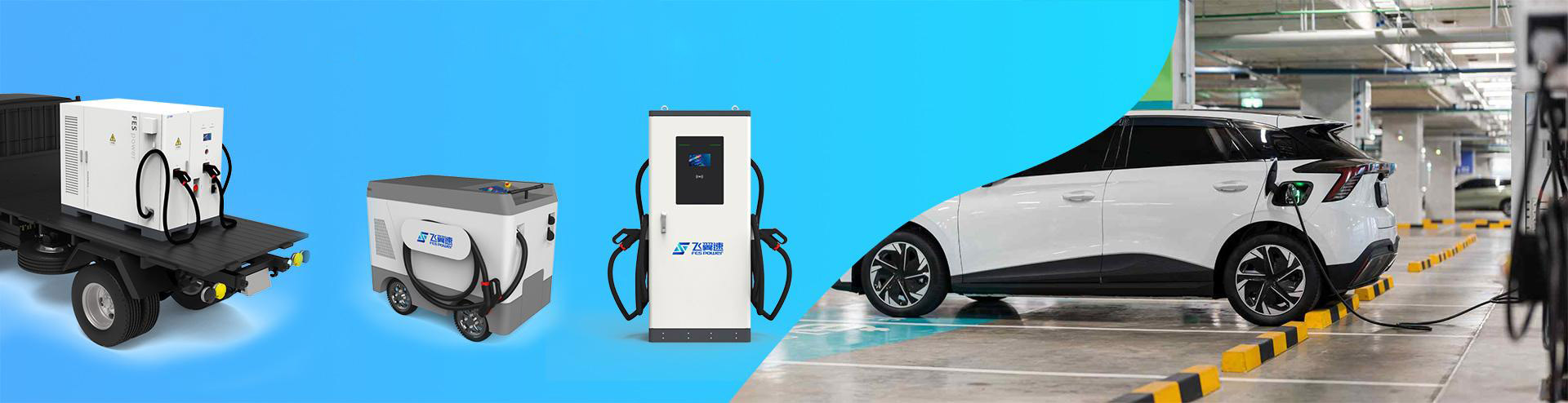
Our flagship Cannon300 battery-buffered ultra-fast DC charger is tailor-made for next-gen EV energy hub construction. It supports max 150kW high-power fast charging, wide voltage range 200–1000V DC, dual CCS2 ports simultaneous charging. Built-in integrated BESS energy storage system solves grid capacity shortage fundamentally, realizing off-grid stable fast charging. Cannon300 fully adapts V2G bidirectional interaction, smart grid scheduling, solar photovoltaic complementary operation. It supports OCPP cloud management, automatic peak-valley power adjustment and remote operation monitoring. One Cannon300 unit easily upgrades a basic charging station into a distributed smart energy hub, matching global low-carbon energy development trends and meeting international grid interconnection standards.
🌍 Will Energy Hubs Become The Standard Layout Of Global EV Infrastructure?
By 2030, over 70% new public EV charging stations worldwide will be built as comprehensive energy hubs. Policies in Europe, Asia-Pacific and North America all encourage charging station-energy storage-grid integrated construction. Distributed energy hubs optimize renewable energy allocation, ease urban power pressure and build sustainable EV ecological closed loop. From market scale, technical iteration and policy guidance, energy hubs are irreplaceable mainstream of EV charging infrastructure. Choosing Cannon300 means seizing the future dividend of global EV energy hub industry.
Read More







 IPv6 network supported