Customized Electric Vehicle Charger Enterprise
Home

DC fast charging solutions

DC fast charging solutions

  • Why Are More B2B Customers Choosing Customizable-Power DC EV Chargers?
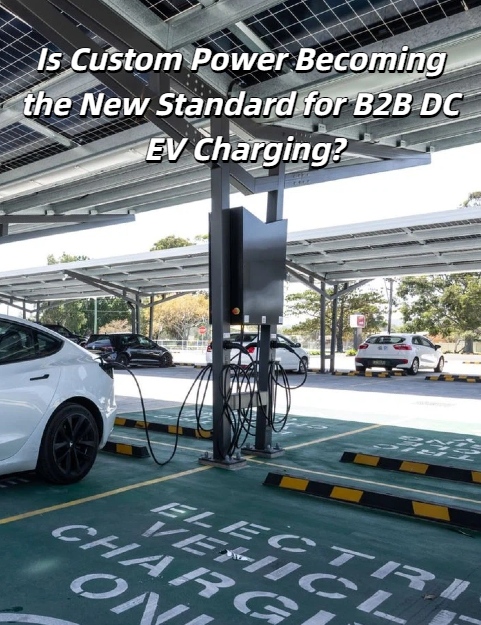
    Why Are More B2B Customers Choosing Customizable-Power DC EV Chargers?
    Dec 17, 2025
    For B2B customers, EV chargers are not showcase products—they are long-term infrastructure investments that must operate reliably and deliver a measurable return. Fixed-power DC chargers often create challenges in real deployments: ⚠️ Grid capacity constraints Many commercial sites—parking facilities, hotels, industrial parks, or logistics hubs—cannot support high-power chargers without costly grid upgrades. 💰 Unnecessary upfront investment (CAPEX) Over-specifying power often increases costs without improving utilization. 🔒 Limited flexibility for future expansion Fixed configurations can make scaling or adjusting power difficult later on. The result? Impressive specifications on paper, but suboptimal ROI in practice. ❓ What Do B2B Charging Scenarios Actually Need? Different B2B applications place very different demands on charging infrastructure: 🏨 Hotels & commercial parking Focus on balanced power distribution, simultaneous charging, and energy efficiency. 🚗 Dealers & showroom facilities Need compatibility with multiple vehicle models rather than maximum charging speed. 🚚 Fleet & logistics operations Prioritize stability, uptime, and predictable performance. 🏭 Industrial parks & business campuses Require phased deployment aligned with existing grid capacity. As a result, B2B buyers are increasingly asking: 🔸Can the charging power be customized to match current grid conditions? 🔸Can we start with lower power and scale up later? 🔸Is small-batch deployment supported for pilot projects? These questions explain why customizable-power DC chargers are gaining traction. ❓ What Are the Key Advantages of Customizable-Power DC Chargers? 🔹 1. How Can Custom Power Reduce Initial Investment? By aligning charger power with actual demand, businesses can: Avoid unnecessary grid expansion Reduce upfront equipment costs Improve overall project economics 🔹 2. How Does Custom Power Improve Flexibility and Scalability? Customizable configurations allow: Power levels that are not locked into a single fixed model Phased deployment strategies Easier future upgrades as demand grows 🔹 3. Why Does Power Matching Support Long-Term Operations? For B2B projects, reliability matters more than peak performance. Optimized power configurations help: Reduce long-term equipment stress Improve system stability Lower maintenance and operational costs 🛠️ ❓ How Does FES Power Support Customizable DC Charging for B2B Projects? At FES Power, our DC charging solutions are designed from the ground up with flexibility and real-world deployment in mind. 🚀 What We Offer B2B Customers: ⚡ Customizable DC charging power Configured based on site conditions and application requirements 📦 Small-batch customization support Ideal for pilot projects, regional rollouts, and specialized use cases 🧩 Modular system design Enables easier expansion and long-term maintenance 🏢 B2B-focused application support, including: Commercial real estate Fleet & logistics charging Dealer and distributor facilities Industrial parks and campuses Rather than simply delivering the highest power rating, we focus on one essential question: Does this configuration truly fit your project, grid capacity, and operating model? ❓ Is Power Customization the Future of B2B EV Charging? As the EV charging market becomes more mature, B2B customers are making more data-driven and practical decisions. Customizable-power DC chargers represent a shift from selling equipment to enabling successful projects. If you are planning a DC charging deployment—or looking for a flexible solution that can adapt to uncertain grid conditions and evolving demand—FES Power is ready to support your project with reliable, scalable DC charging solutions. 🔋 👉 Contact us to discuss your application scenario and customized power requirements.
    Read More
  • Thinking About Installing Commercial EV Chargers? Are You Truly Prepared?
    Thinking About Installing Commercial EV Chargers? Are You Truly Prepared?
    Jan 16, 2026
    As electric vehicle adoption continues to accelerate worldwide, commercial EV charging has evolved from a “nice-to-have” amenity into a strategic infrastructure investment. Parking operators, shopping malls, office buildings, hotels, and industrial parks are increasingly exploring charging deployment. However, installing commercial EV chargers is far more complex than simply purchasing equipment and connecting power. Proper upfront preparation is critical to ensure long-term reliability, compliance, and profitability. 📍Is Your Site Actually Suitable for Commercial EV Charging?  The first step in any commercial charging project is a realistic site assessment. Key considerations include the number of parking spaces, traffic flow, average parking duration, and future expansion potential. For example, retail locations and office buildings typically benefit from AC chargers or medium-power DC chargers, while fleet depots, logistics hubs, and highway service areas require high-power DC fast or ultra-fast charging solutions. Clear vehicle access, safe cable routing, and adequate spacing for electrical equipment are also essential to meet operational and safety standards. 🔌Can Your Electrical Infrastructure Support Charging Demand?  Power availability is one of the most decisive factors in commercial EV charging. Before installation, operators must evaluate transformer capacity, existing load levels, and grid stability. In many cases, grid upgrades or transformer expansion may be required—especially for DC fast charging applications. Modular solutions, such as FES Power’s DC charging systems, allow power capacity to be scaled gradually. This approach helps reduce initial investment pressure while preserving flexibility for future growth, making it particularly suitable for commercial and semi-public charging projects. 📄Are You Familiar With Local Regulations and Approval Processes?  Commercial EV charger installation often involves multiple regulatory steps, including utility coordination, grid connection approval, construction permits, and fire safety inspections. These requirements vary significantly by country and region, and insufficient preparation can lead to costly delays. Engaging experienced charging solution providers early in the planning phase can help align technical designs with regulatory expectations, ensuring smoother approvals and faster project execution. 💰Have You Defined a Clear Business and Revenue Model?  Commercial EV charging revenue extends beyond electricity sales. Common models include charging service fees, membership programs, fleet contracts, and even value-added services such as advertising or data integration. The optimal business model depends heavily on charger power level, user behavior, and site type. With a comprehensive portfolio ranging from AC chargers to high-power DC charging cabinets and charging hubs, FES Power enables operators to tailor infrastructure deployment to specific commercial scenarios, balancing capital expenditure and return on investment. 🛠️Are You Selecting Equipment Designed for Long-Term Operation?  Commercial EV chargers are high-utilization assets that must operate reliably in diverse environmental conditions. Equipment quality, protocol compatibility, intelligent load management, and remote monitoring capabilities are essential for minimizing downtime and maintenance costs. Choosing chargers that support multiple standards, offer real-time diagnostics, and enable centralized management can significantly improve operational efficiency. Reliable manufacturers with proven field experience and professional after-sales support are crucial for long-term success. 🔄Have You Considered Scalability and Future-Proofing?  EV technology and charging demand continue to evolve rapidly. A well-designed charging site should allow for future power upgrades, additional charging points, and software enhancements without requiring complete system replacement. Flexible architectures—such as distributed power cabinets and dynamic power allocation—help operators adapt to increasing EV adoption while protecting their initial investment. ✅Conclusion: Preparation Determines the Success of Commercial EV Charging  Installing commercial EV chargers is a strategic infrastructure decision, not a short-term installation task. Thorough preparation—covering site assessment, power capacity, regulatory compliance, business modeling, and equipment selection—lays the foundation for stable operation and sustainable returns. By partnering with experienced solution providers like FES Power, commercial operators can deploy reliable, scalable, and future-ready charging infrastructure that supports both today’s needs and tomorrow’s growth in electric mobility.
    Read More
  • What’s Driving the Next Wave of Growth?
    What’s Driving the Next Wave of Growth?
    Jan 26, 2026
    📈As electric vehicle adoption accelerates worldwide, 2026 is shaping up to be a pivotal year for EV charging infrastructure. Global charger deployment, ultra-fast charging expansion, smart energy integration, and cost optimization are reshaping the industry. Backed by the latest data from the IEA, GlobalData, and market intelligence reports, here are the most impactful EV charging trends to watch in 2026. ⚡️Is Ultra-Fast Charging Becoming the New Standard? 🅿️Ultra-fast charging is no longer a premium niche—it is becoming a mainstream requirement. In 2024, global ultra-fast chargers (≥150 kW) grew by over 50% year-over-year, now representing nearly 10% of all fast chargers . The cost of ultra-fast chargers has also fallen by approximately 20% between 2022 and 2024, making high-power deployment more commercially viable . ☕️By 2026, the market is expected to accelerate the rollout of 350 kW–1000 kW ultra-rapid chargers, enabling charge times comparable to conventional refueling. 🦚How FES Power aligns: FES Power’s high-power DC charging platforms (including 240 kW–960 kW scalable charging systems) are designed to support ultra-fast, modular expansion—future-proofing operators for the next generation of EV demand. ❔Will Global Charger Installations Continue to Scale Rapidly The global EV charging infrastructure market is projected to grow from 5.8 million units in 2025 to 11 million units by 2030, representing a 13.6% CAGR . In 2024 alone, more than 1.3 million new public chargers were installed worldwide, marking a 30% annual growth rate . ✨China remains the dominant deployment leader, accounting for nearly 80% of global fast-charging growth, while Europe and Southeast Asia are rapidly scaling their public networks. This indicates that 2026 will remain a high-growth infrastructure year, driven by urban expansion, fleet electrification, and policy incentives. ⁉️Is Smart Charging Becoming Essential for Grid Stability? As charger density increases, grid-aware and smart charging systems are becoming a necessity rather than an upgrade. Approximately 31% of new charging installations now include smart energy management, while 42% of new stations are cloud-connected for monitoring, pricing, and load optimization . Additionally, vehicle-to-grid (V2G) and bidirectional charging adoption is rising, with 16% of new installations already supporting V2G-ready hardware . 🎊FES Power advantage: FES Power integrates intelligent load balancing, remote OCPP management, cloud analytics, and energy-storage-ready architecture to help operators reduce peak load costs and maximize ROI. 🤔Will Battery-Integrated Charging Become More Common? Energy-storage-integrated charging systems are gaining traction to address grid limitations and demand spikes. Many regions now report that over 29% of charging areas face grid capacity constraints, pushing adoption of battery-buffered charging hubs . ✨Battery-assisted charging enables: 🔸Faster peak-hour charging 🔸Reduced grid upgrade costs 🔸Improved power stability 🔸Better integration with renewable energy This trend is expected to expand significantly in 2026, especially for fleet depots, logistics hubs, and highway charging corridors. ⁉️Are Charging Networks Shifting Toward Profitability and Efficiency? Charging network operators are increasingly focused on utilization rates, uptime, and operational efficiency. Tesla’s Supercharging network processed approximately 54 million charging sessions per quarter in 2025, delivering 1.8 TWh of energy, with average stall throughput exceeding 268 kWh per day . This demonstrates that high-power, high-utilization charging models are becoming economically sustainable—especially when paired with: 🔷Dynamic pricing 🔷Fleet contracts 🔷Subscription charging programs FES Power’s modular charging architecture allows scalable investment models—supporting operators from pilot deployment to large-scale commercialization. 💥Will EV Charging Markets Continue Expanding in 2026? The global EV charging stations market is projected to grow from USD 44.5 billion in 2025 to over USD 219 billion by 2033, representing a 22% CAGR . 💫Key growth drivers include: Rising EV ownership (27% annual growth) Fleet electrification expansion (43% increase) Fast-charging installations (38% growth) Smart charging adoption (31% growth) This confirms that 2026 will remain a strong expansion year for infrastructure investors, utilities, and charging operators. 📓What Should Businesses Prepare for in 2026? To stay competitive, charging stakeholders should focus on: 🔷Deploying ultra-fast and modular DC chargers 🔷Integrating smart energy management and cloud platforms 🔷Preparing for battery-assisted and V2G-ready infrastructure 🔷Improving charger uptime, maintenance efficiency, and customer experience FES Power delivers end-to-end EV charging solutions, covering AC chargers, high-power DC fast chargers, ultra-fast chargerCompanies that invest early in high-power, intelligent, and scalable chagering hubs, and mobile energy-storage charging systems—helping partners stay ahead of the 2026 technology curve. 💫Conclusion: Is 2026 a Turning Point for EV Charging? Yes. With charger installations accelerating, ultra-fast technology becoming mainstream, energy storage integration rising, and smart charging systems expanding, 2026 is set to become a defining year for EV charging infrastructure worldwide.
    Read More
  • Why Are Traditional EV Charging Stations Struggling to Stay Profitable?
    Why Are Traditional EV Charging Stations Struggling to Stay Profitable?
    Feb 05, 2026
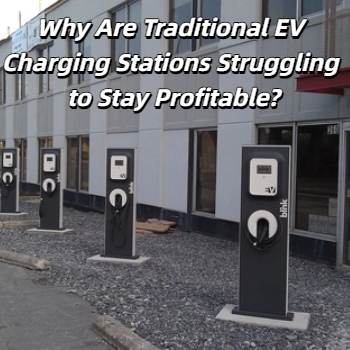
    As EV adoption accelerates worldwide 🚗⚡, charging stations are being deployed faster than ever. However, many operators are discovering a hard truth: traditional EV charging stations are struggling to remain profitable.Behind the growing demand lies a combination of high costs, low utilization, and inflexible infrastructure. So what’s really holding profitability back—and how can operators fix it? Are High Upfront Costs Draining Profit Before Operations Even Begin? 💰⚠️Traditional EV charging stations typically require a heavy upfront investment. Fixed-power DC chargers demand dedicated power modules, complex civil works, and expensive grid upgrades 🔌🏗️.By the time a station goes live, operators are already facing long payback periods and tight margins. In many cases, profitability feels out of reach before the first vehicle even plugs in.Is Low Utilization the Silent Revenue Killer? 📉🚘While EV numbers are increasing, charger usage is often uneven throughout the day. Peak hours bring congestion ⏱️, while off-peak hours leave chargers idle 😴.A fixed 120 kW or 180 kW charger often runs far below its full capacity, meaning expensive assets are underutilized most of the time. Low utilization directly translates into weak revenue performance and poor ROI.Are Fixed-Power Chargers Too Rigid for a Changing EV Market? 🔒⚡Traditional chargers allocate a fixed amount of power to a single vehicle, regardless of real-time demand. This rigidity causes power waste when vehicles don’t need full output and limits the ability to serve multiple vehicles efficiently 🔄.As EV battery sizes grow and fast-charging expectations rise 🚀, fixed-power systems quickly become outdated, forcing operators to reinvest sooner than planned.Do High Maintenance and Downtime Reduce Profitability Further? 🛠️❌All-in-one chargers concentrate power modules, control systems, and interfaces into a single unit. When something fails, the entire charger may go offline 🚫⚡.This increases maintenance costs, prolongs downtime, and directly impacts revenue—especially at high-traffic locations where availability is critical.Is Limited Grid Capacity Blocking Expansion? 🌍🔋Many charging sites face strict grid limitations. Expanding a traditional charging station often requires transformer upgrades, lengthy utility approvals, and high connection fees ⏳💵.As a result, scaling becomes slow, expensive, or simply impossible—especially in urban areas and emerging markets. Is There a Smarter, More Profitable Charging Model? 🤔⚡To overcome these challenges, forward-thinking operators are shifting toward split-type flexible EV charging systems—a fundamentally different architecture designed for efficiency and scalability.How FES Power’s Split-Type Flexible Charging System Changes the Game 🚀FES Power’s solution separates the power supply from the charging terminals, creating a centralized and intelligent charging architecture ⚙️⚡. A high-capacity power cabinet—up to 720 kW—dynamically distributes power to multiple front-end terminals in real time.Instead of wasting capacity, power is allocated exactly where it’s needed, when it’s needed 🔄📊. This dramatically improves utilization rates and allows operators to serve more vehicles with the same grid connection.Why Does This Mean Faster ROI and Lower Risk? 📈💡With flexible power sharing, operators no longer need to oversize infrastructure for peak demand alone. The system adapts automatically to real charging behavior, improving revenue per site and shortening payback periods 💰⚡.The modular design also makes future expansion simple—new terminals can be added without installing entirely new power units.How Does This Reduce Operating and Maintenance Costs? 🛠️✅Centralized power cabinets simplify maintenance by reducing scattered failure points. Modular power units allow fast replacement and minimize downtime ⏱️.More uptime means happier drivers 😊 and more consistent charging revenue. Is This the Future of Profitable EV Charging? 🔮⚡For public fast-charging operators, fleet depots, highway service areas, and commercial charging sites, flexibility is no longer optional. Profitability depends on smarter power management, scalable design, and grid-friendly deployment 🌱⚡.Final Thought: Profitability Comes from Flexibility 💡Traditional EV charging stations are struggling not because demand is weak—but because their infrastructure is inefficient and inflexible.To succeed in 2026 and beyond, charging operators must rethink how power is delivered, shared, and scaled. Split-type flexible charging systems represent the next generation of profitable EV infrastructure.At FES Power, we help operators transform charging stations from cost centers into scalable, revenue-generating assets .
    Read More
  • What No One Tells You Before You Invest in EV Charging Stations
    What No One Tells You Before You Invest in EV Charging Stations
    Feb 09, 2026
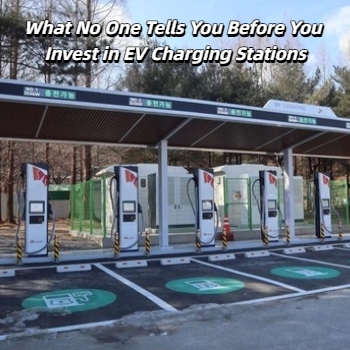
    The EV charging industry looks like a golden opportunity. Governments promote electrification, EV sales keep rising, and charging demand seems guaranteed.But behind the optimistic headlines, many first-time investors discover a very different reality. Here’s what most people don’t tell you before you invest in EV charging stations — explained clearly, without hype.🚧 1. High Power Doesn’t Automatically Mean High ProfitMany new investors assume:“If I install a 120 kW or 240 kW fast charger, I’ll earn more.”In reality, power utilization matters more than peak power.Fast chargers often run at low utilization ratesVehicles rarely charge at full power for longIdle power capacity still costs money (grid fees, demand charges)📌 Result: High-capex chargers with long ROI periods.👉 What works better? Smart power distribution — allocating available power dynamically based on real demand, not theoretical maximums.💰 2. Grid Connection Is Often the Real Cost DriverFew investors realize that grid upgrades can cost as much as the charger itself.Hidden costs includeTransformer upgradesUtility approval delaysDemand charges during peak hoursLimited grid capacity at commercial sites⚠️ In many regions, grid constraints, not hardware, limit expansion.👉 This is why modular and centralized power architectures matter. With a shared power cabinet, operators can scale charging points without repeating grid investments.🧩 3. Traditional “All-in-One” Chargers Are InflexibleAll-in-one DC chargers look simple — until your business grows.Problems appear when:Demand varies across time and locationsOne charger fails and capacity is lostPower cannot be redistributed efficientlyEach charger acts as a standalone island, leading to:Low overall utilizationDifficult maintenancePoor scalability🔄 4. Scalability Is More Important Than SpeedThe most profitable charging operators think long-term:How easily can I add more charging points?Can I upgrade power without replacing hardware?Can one system serve cars, fleets, buses, or trucks?This is where split-type and flexible charging systems outperform traditional designs. 🔌 How FES Power Approaches EV Charging DifferentlyAt FES Power, we design EV charging systems around real-world operation, not just headline power numbers.⚙️ Our Key Solution: Split-Type Flexible Charging SystemInstead of installing multiple independent fast chargers, our system uses:🧠 Centralized Power Cabinets (up to 720 kW)🔗 Multiple Front-End Charging Terminals⚡ Dynamic Power Allocation based on vehicle demand✅ What This Means for InvestorsLower initial grid capacity requirementHigher overall power utilizationEasier site expansionReduced downtime riskBetter long-term ROI📊 One power cabinet can serve multiple charging points — power goes where it’s needed, when it’s needed.📈 5. EV Charging Is an Infrastructure Business, Not a Gadget BusinessThis is perhaps the biggest misconception.Successful EV charging projects focus on:System architectureEnergy managementLifecycle costOperational flexibilityNot just charger appearance or peak kW numbers.🚀 Final Thought: Smart Design Beats Blind ExpansionEV charging is still a strong long-term opportunity — but only for those who design intelligently from day one.Before investing, ask:Can my system adapt as demand changes?Am I paying for unused power?Will this design still make sense in 5 years? At FES Power, we help operators and investors build charging infrastructure that grows sustainably — not expensively.If you’re evaluating your first (or next) EV charging project, system design matters more than you think.
    Read More

leave a message

leave a message
If you are interested in our products and want to know more details,please leave a message here,we will reply you as soon as we can.
submit
Contact Us: bella@fespower.cn

home

products

WhatsApp

Contact Us