Customized Electric Vehicle Charger Enterprise
Home

EV charger

EV charger

  • What Is V2G and How Will It Transform the Future of EV Charging?
    What Is V2G and How Will It Transform the Future of EV Charging?
    Sep 10, 2025
    The transition to electric vehicles (EVs) is not only reshaping transportation but also redefining how we interact with energy. One of the most exciting innovations at this intersection is V2G – Vehicle-to-Grid technology. 🔄 What Exactly Is V2G? Traditionally, EV charging has been one-way: power flows from the grid into the vehicle’s battery. V2G, or Vehicle-to-Grid, changes this dynamic by allowing energy to flow both ways. This means that EVs can act as mobile energy storage units. They not only charge from the grid but also discharge electricity back into the grid when needed—supporting energy stability, lowering costs, and unlocking new revenue streams for EV owners. ⚡ How Does V2G Work? Off-Peak Charging: EVs charge when electricity demand is low and prices are cheaper. Peak Discharge: When the grid is under pressure, EVs release stored power back to the grid. Compensation: EV owners or fleet operators receive credits or payments for supporting the grid. In short, EVs become part of a virtual power plant, helping balance energy supply and demand.🌍 Why Is V2G Important? For Consumers: Lower charging costs and backup power during outages. For Fleets: Optimized energy use and new revenue streams by participating in demand response programs. For Utilities: Improved grid stability and better integration of renewable energy like wind and solar. For Society: Higher energy efficiency and accelerated transition toward clean energy. 🔧 What Do We Need for V2G to Work? V2G-Enabled EVs – Vehicles capable of bi-directional charging. V2G-Compatible Chargers – Equipped with inverters to allow two-way energy flow. Supportive Policies – Energy markets must allow EVs to feed power back into the grid and compensate users. 🚀 How FES Power Charging Solutions Fit into the Future of V2G At FES Charging, we are actively preparing for this next step in EV infrastructure with a portfolio of solutions designed to support smarter, more flexible energy systems: 150–480kW Solar + Storage Ultra-Fast Chargers: Combining renewable energy and storage, these chargers can seamlessly integrate with V2G technology, enabling large fleets to become energy contributors as well as consumers. 7–22kW Wall-Mounted AC Chargers: Ideal for homes, offices, and kerbside charging, providing the foundation for smart scheduling and future V2G adoption. 120–160kW DC Fast Chargers: Perfect for logistics hubs and fleet depots where quick charging is critical, with potential upgrades to support bi-directional energy flow. By linking EV charging with renewable generation and smart grid systems, we aim to turn every charging point into part of a connected energy ecosystem. 🔮 Looking Ahead The future of charging is not just about powering vehicles—it’s about redefining the role of mobility in the energy grid. V2G will empower drivers, fleets, and communities to actively participate in energy markets, reduce costs, and accelerate the global shift toward sustainability. As governments and industries push forward with pilot projects, the question is not if V2G will arrive, but how fast. 👉 Learn more about how FES Charging is shaping the future of energy and mobility at www.fescharging.com.
    Read More
  • Smart Charging Meets Solar and Storage: A New Era of EV Infrastructure
    Smart Charging Meets Solar and Storage: A New Era of EV Infrastructure
    Oct 22, 2025
    As electric mobility surges worldwide, the EV charging landscape is evolving fast — shifting from traditional power solutions to intelligent, sustainable, and energy-flexible systems. 🚗⚡ The latest trend combines smart charging with solar energy ☀️ and battery storage 🔋, creating cleaner, more resilient power networks that shape the future of green transportation.  🌱 Accelerating the Energy Transition Traditional EV chargers often rely on complex grid connections and long installation timelines.  🌞⚡In contrast, smart charging systems with solar + storage integration can operate semi-independently from the grid — reducing peak loads, speeding up installation, and maximizing renewable power use.  These hybrid systems store solar energy during the day ☀️ and release it during high-demand hours 🌙, balancing the grid and cutting operational costs. 💰 🔋 Battery-Buffered Charging: A Smarter Path Forward A new generation of battery-buffered ultra-rapid chargers is reshaping the market. Instead of waiting 3–6 years for utility upgrades, these systems can be deployed in as little as 1–2 years. ⏱️ By integrating on-site energy storage, they deliver high-power, stable charging even in locations with limited grid capacity. ⚡ Cannon 300 — FES Power’s Answer to the Future FES Power’s Cannon 300 redefines what “smart charging” means. It combines ultra-rapid performance, renewable readiness, and modular scalability, making it ideal for modern EV hubs, fleets, and highway stations. 🏙️🚚 ✨ Key Highlights: 🔌 Up to 600 kW ultra-fast output, supporting 600 A liquid-cooled and 250 A air-cooled dispensers. 🔋 Built-in LiFePO₄ battery (150–260 kWh) for flexible and stable energy use. ☀️ PV integration with MPPT function — directly utilizes solar power. 🌐 Smart communication: Ethernet, 4G/LTE, Wi-Fi, and OCPP 1.6J/2.0. ❄️ Operates from -25 °C to 55 °C, low noise (<45 dB Eco mode). 🧠 Works in grid-tied or off-grid mode for full deployment flexibility. 🌍 Building a Cleaner, Smarter Future By integrating solar energy, storage systems, and smart control, Cannon 300 enables faster, cheaper, and greener charging infrastructure. 💡 It’s not just a charging station — it’s a complete energy ecosystem built for the new era of e-mobility. 🚘🌱 FES Power — Empowering the Future of Energy Transition 🔗 www.fespower.com
    Read More
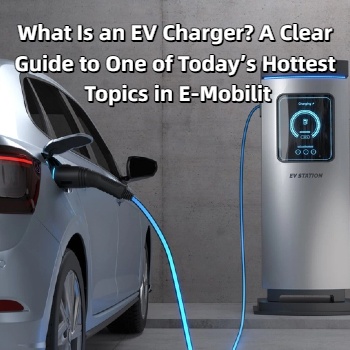
  • What Is an EV Charger? A Clear Guide to One of Today’s Hottest Topics in E-Mobility
    What Is an EV Charger? A Clear Guide to One of Today’s Hottest Topics in E-Mobility
    Jan 19, 2026
    🚗As electric vehicles (EVs) continue to gain global momentum, EV chargers have quickly become one of the most talked-about topics in the energy and transportation sectors. Governments are accelerating electrification policies, automakers are expanding EV lineups, and businesses are investing in charging infrastructure. Yet despite the growing attention, many people still ask a very basic question: what exactly is an EV charger? This article aims to provide a clear, practical, and easy-to-understand explanation of EV chargers—what they are, how they work, what key components they include, and why choosing the right charger matters. ❔What Does “EV Charger” Actually Mean? An EV charger (Electric Vehicle Charger) is a device that supplies electrical energy to recharge the battery of an electric vehicle. In simple terms, it acts as the bridge between the power grid and the EV battery, converting and controlling electricity so it can be safely and efficiently stored in the vehicle. Unlike conventional fuel pumps, EV chargers are not just “power outlets.” They are intelligent power systems that communicate with vehicles, monitor safety conditions, and manage charging performance in real time. 🔥Why Are EV Chargers Such a Hot Topic Right Now? The rapid rise of EV chargers is driven by several global trends: 🌍 Carbon neutrality and emission reduction policies 🚘 Fast growth in EV sales worldwide 🏙️ Expansion of public and commercial charging networks 🏢 New business models for parking operators, fleets, and energy companies As EV adoption accelerates, charging infrastructure has become a critical foundation of the entire EV ecosystem—making EV chargers a key area of investment and innovation. What Are the Main Components of an EV Charger? A modern EV charger is made up of several core components, each with a specific function: 🔌 Power Input & Distribution System This section connects the charger to the electrical grid and distributes power internally. It ensures stable voltage and current delivery while protecting against overloads and faults. ⚙️ Power Conversion Module One of the most critical components. AC chargers primarily manage and control power delivery DC fast chargers convert AC grid power into DC power suitable for direct battery charging High-quality power modules directly impact charging speed, efficiency, and reliability. 🧠 Control & Communication Unit This is the “brain” of the EV charger. It: Communicates with the vehicle (via protocols like OCPP or CAN) Adjusts charging power based on battery status Enables smart features such as load balancing, authentication, and remote monitoring 🛡️ Safety & Protection System Safety is non-negotiable. EV chargers include: Over-current and over-voltage protection Temperature monitoring Insulation and grounding protection These systems ensure safe operation for both users and vehicles. 📺 User Interface & Connectivity Displays, indicators, RFID readers, or app connectivity allow users to: Start and stop charging Check charging status Manage payments or access control Are All EV Chargers the Same? Not at all. EV chargers vary by: Charging speed (AC vs. DC fast charging) Power level (from a few kW to hundreds of kW) Application scenario (home, commercial parking, highways, fleets) Choosing the right charger depends on usage frequency, vehicle types, grid capacity, and business goals. ⚡How Does FES Power Support EV Charging Solutions?  At FES Power, we focus on delivering reliable, scalable, and high-performance EV charging solutions for commercial and public applications. Our product portfolio includes: 🚀 DC fast chargers and ultra-fast charging systems 🔋 Flexible power cabinet solutions with dynamic power distribution 🧩 Modular designs that support future expansion 🌐 Smart control systems compatible with modern charging platforms Whether for public charging stations, fleet depots, or commercial parking facilities, FES Power chargers are designed to maximize efficiency, safety, and long-term value. Final Thoughts: EV Chargers Are More Than Just Hardware An EV charger is not simply a device—it is a core infrastructure element of the electric mobility era. Understanding what an EV charger is, how it works, and what components it includes helps businesses, investors, and users make better decisions as the industry continues to evolve. 🌱As EV adoption grows, knowledge will be just as important as technology. And EV chargers will remain at the center of this transformation. ⚡
    Read More

leave a message

leave a message
If you are interested in our products and want to know more details,please leave a message here,we will reply you as soon as we can.
submit
Contact Us: bella@fespower.cn

home

products

WhatsApp

Contact Us