
- Call Us : +86-15060765919
- Mail Us : bella@fespower.cn
🚗As electric vehicles (EVs) continue to gain global momentum, EV chargers have quickly become one of the most talked-about topics in the energy and transportation sectors. Governments are accelerating electrification policies, automakers are expanding EV lineups, and businesses are investing in charging infrastructure.
Yet despite the growing attention, many people still ask a very basic question: what exactly is an EV charger?
This article aims to provide a clear, practical, and easy-to-understand explanation of EV chargers—what they are, how they work, what key components they include, and why choosing the right charger matters.
❔What Does “EV Charger” Actually Mean?
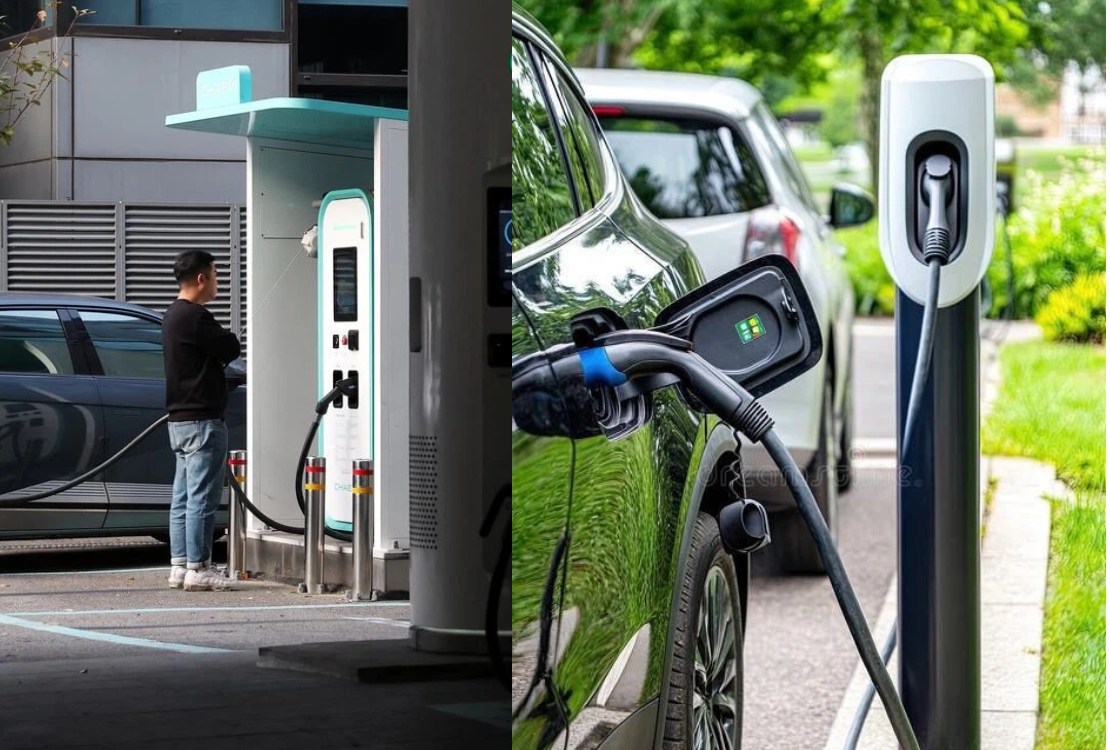
An EV charger (Electric Vehicle Charger) is a device that supplies electrical energy to recharge the battery of an electric vehicle. In simple terms, it acts as the bridge between the power grid and the EV battery, converting and controlling electricity so it can be safely and efficiently stored in the vehicle.
Unlike conventional fuel pumps, EV chargers are not just “power outlets.” They are intelligent power systems that communicate with vehicles, monitor safety conditions, and manage charging performance in real time.
🔥Why Are EV Chargers Such a Hot Topic Right Now?
The rapid rise of EV chargers is driven by several global trends:
🌍 Carbon neutrality and emission reduction policies
🚘 Fast growth in EV sales worldwide
🏙️ Expansion of public and commercial charging networks
🏢 New business models for parking operators, fleets, and energy companies
As EV adoption accelerates, charging infrastructure has become a critical foundation of the entire EV ecosystem—making EV chargers a key area of investment and innovation.
What Are the Main Components of an EV Charger?
A modern EV charger is made up of several core components, each with a specific function:
🔌 Power Input & Distribution System
This section connects the charger to the electrical grid and distributes power internally. It ensures stable voltage and current delivery while protecting against overloads and faults.
⚙️ Power Conversion Module
One of the most critical components.
AC chargers primarily manage and control power delivery
DC fast chargers convert AC grid power into DC power suitable for direct battery charging
High-quality power modules directly impact charging speed, efficiency, and reliability.
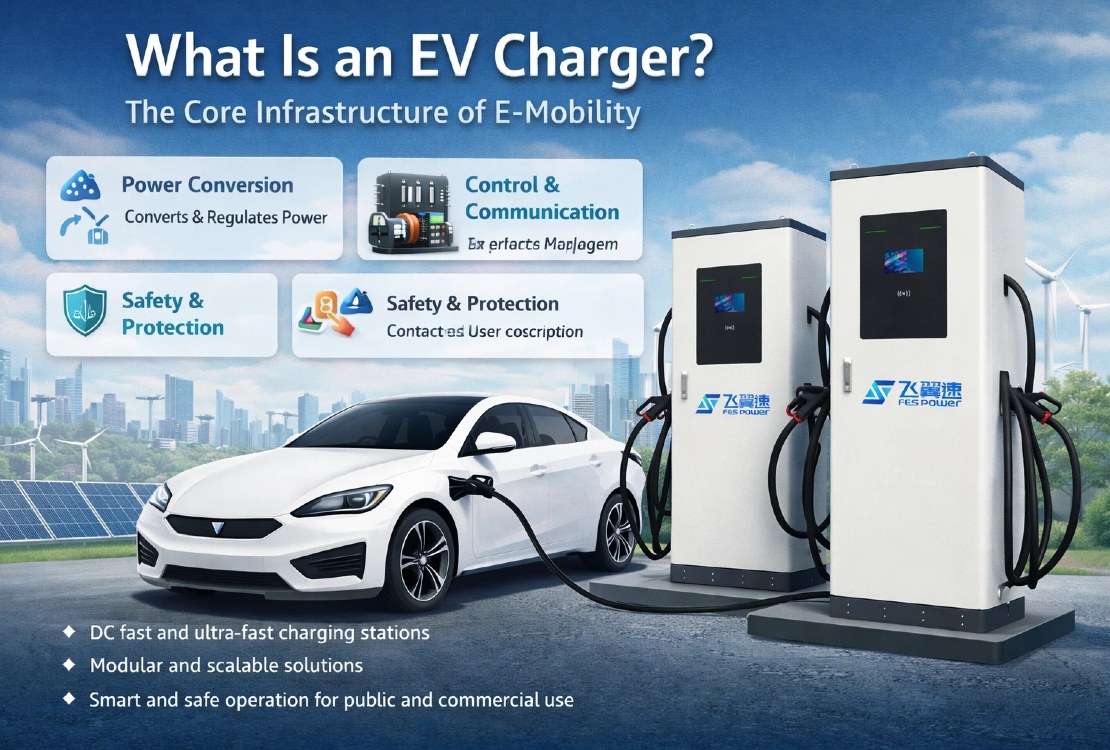
🧠 Control & Communication Unit
This is the “brain” of the EV charger. It:
Communicates with the vehicle (via protocols like OCPP or CAN)
Adjusts charging power based on battery status
Enables smart features such as load balancing, authentication, and remote monitoring
🛡️ Safety & Protection System
Safety is non-negotiable. EV chargers include:
Over-current and over-voltage protection
Temperature monitoring
Insulation and grounding protection
These systems ensure safe operation for both users and vehicles.
📺 User Interface & Connectivity
Displays, indicators, RFID readers, or app connectivity allow users to:
Start and stop charging
Check charging status
Manage payments or access control
Are All EV Chargers the Same?
Not at all. EV chargers vary by:
Charging speed (AC vs. DC fast charging)
Power level (from a few kW to hundreds of kW)
Application scenario (home, commercial parking, highways, fleets)
Choosing the right charger depends on usage frequency, vehicle types, grid capacity, and business goals.
⚡How Does FES Power Support EV Charging Solutions?
At FES Power, we focus on delivering reliable, scalable, and high-performance EV charging solutions for commercial and public applications. Our product portfolio includes:
🚀 DC fast chargers and ultra-fast charging systems
🔋 Flexible power cabinet solutions with dynamic power distribution
🧩 Modular designs that support future expansion
🌐 Smart control systems compatible with modern charging platforms
Whether for public charging stations, fleet depots, or commercial parking facilities, FES Power chargers are designed to maximize efficiency, safety, and long-term value.
Final Thoughts: EV Chargers Are More Than Just Hardware
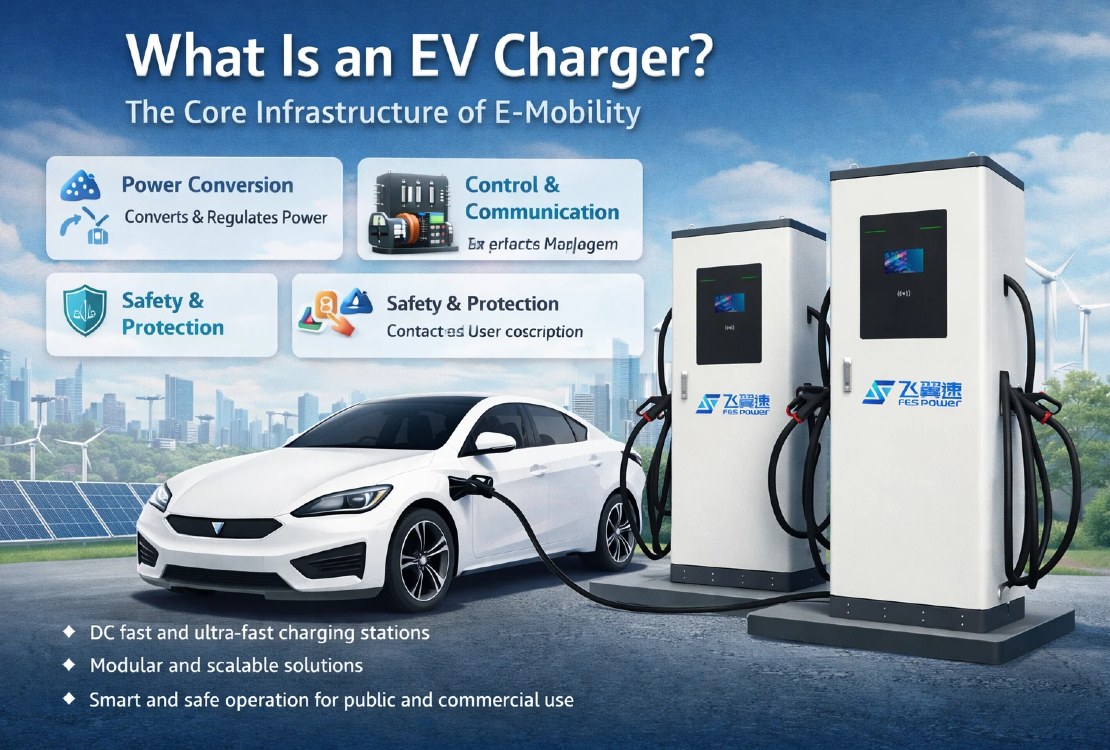
An EV charger is not simply a device—it is a core infrastructure element of the electric mobility era. Understanding what an EV charger is, how it works, and what components it includes helps businesses, investors, and users make better decisions as the industry continues to evolve.
🌱As EV adoption grows, knowledge will be just as important as technology. And EV chargers will remain at the center of this transformation. ⚡



 IPv6 network supported