Apr 15, 2026
As electric vehicles continue to scale globally, commercial charging stations are rapidly becoming a critical infrastructure investment. For businesses such as shopping malls, highways, office parks, and fleet depots, choosing the right EV charger solution is not just about hardware—it’s about efficiency, scalability, and long-term ROI.
⚡ What Makes A Good Commercial EV Charger Solution?A successful commercial EV charging station requires more than just installing chargers. It involves a complete ecosystem thatcombines hardware, software, and energy management.First, high reliability and uptime are essential. Commercial chargers must operate continuously under high utilization, minimizing downtime and maintenance costs. Robust and weatherproof designs (e.g., IP-rated systems) ensure long-term performance in demanding environments.
Second, scalability is critical. Businesses often start with a few chargers but need to expand as EV adoption grows. Scalable systems allow operators to increase capacity without redesigning infrastructure.
Third, smart management systems play a key role. Cloud-based platforms enable remote monitoring, payment integration, load balancing, and diagnostics—helping operators maximize efficiency and revenue.
Finally, power flexibility is essential. Commercial scenarios require a mix of AC and DC chargers, typically ranging from 22kW AC to 480kW+ DC fast charging to meet different user needs.
🚗 Key Types Of Commercial EV Charger SolutionsDifferent commercial scenarios require different charger configurations:1️⃣ Destination Charging (AC Chargers)Ideal for offices, hotels, and malls where vehicles stay longer. Lower power (7kW–22kW) but cost-effective.2️⃣ Fast Charging (DC Chargers)Suitable for highways and urban hubs, offering 60kW–480kW for quick turnaround and high traffic flow.3️⃣ Ultra-Fast & Split-Type SystemsDesigned for large-scale stations and fleets, enabling flexible power distribution across multiple charging guns.4️⃣ Solar + Storage + Charging IntegrationCombining EV chargers with energy storage reduces grid dependency and optimizes energy costs, especially in high-demand scenarios.💼 How EV Charging Stations Generate Business Value
Installing EV chargers is no longer just a sustainability move—it’s a revenue strategy.Commercial charging stations can:1️⃣ Increase customer dwell time and spending2️⃣ Attract high-value EV drivers3️⃣ Generate direct charging revenue4️⃣ Enhance brand image and visibility on charging mapsIn fact, many businesses are now treating EV charging as a new profit center, similar to traditional fuel stations.
🔋 FES Power Commercial EV Charger Solutions
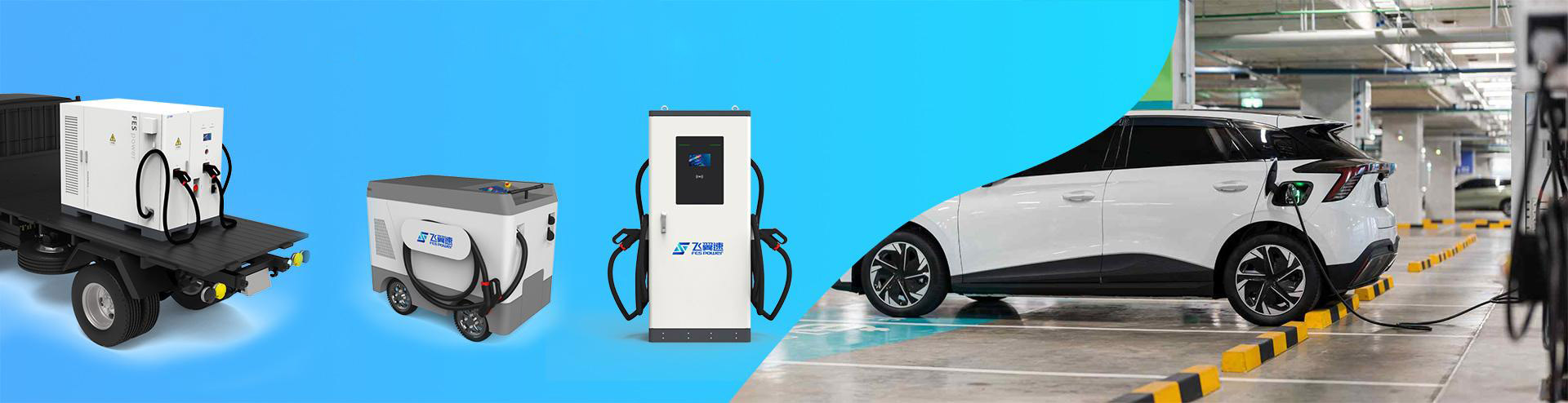
As a professional EV charging solution provider, FES Power delivers a full portfolio tailored for commercial applications:
1️⃣ ⚡ High-Power DC Fast Chargers (60kW–240kW) Ideal for urban charging stations and commercial parking Dual-gun design for higher utilization Supports global standards (CCS, CHAdeMO, GB/T)2️⃣ 🚀 Split-Type Ultra-Fast Charging Systems (Up To 960kW+)Centralized power cabinet + distributed charging terminalsDynamic power allocation improves efficiencyPerfect for highways, fleets, and high-traffic hubs3️⃣ 🌞 Solar + Storage Integrated Charging SolutionsCombine EV charging with battery storage systemsReduce peak demand costsEnable off-grid or weak-grid deployment4️⃣ 📊 Smart Charging Management PlatformRemote monitoring and diagnosticsFlexible pricing and payment integrationOCPP-compatible for network expansion
These solutions are designed to help operators maximize ROI, improve station utilization, and future-proof their infrastructure.
🔧 Conclusion: Choosing The Right SolutionSelecting the best EV charger solution for commercial charging stations depends on your business model, location, and expected traffic. A successful deployment should balance:1️⃣ Power capacity vs. demand2️⃣ Initial investment vs. long-term ROI3️⃣ Scalability and future expansion4️⃣ Smart energy and operational management
With the right strategy and technology partner like FES Power, commercial EV charging stations can evolve from a cost center into a high-growth, revenue-generating asset in the new energy ecosystem.
Read More






 IPv6 network supported