Customized Electric Vehicle Charger Enterprise
Home

Blog

Blog

  • Why Is Energy Hub The Future Of EV Charging Infrastructure?
    Why Is Energy Hub The Future Of EV Charging Infrastructure?
    Apr 20, 2026
    🔌 Can Single-Function EV Charging Stations Meet Global Energy Demand Growth? The global EV charging infrastructure market hit $64.48 billion in 2026, and will surge to $790.15 billion by 2035 with a stunning 32.11% annual growth rate. Meanwhile, global EV ownership keeps breaking records, and traditional one-way charging stations only finish power supply tasks. Over 60% of global power grids face insufficient capacity for large-scale fast-charging expansion. Simple charging piles can no longer balance peak power pressure, renewable energy consumption and fleet charging needs. It clearly proves standalone charging stations are outdated, and multi-functional energy hubs become inevitable industry upgrades. Core SEO keywords: EV Charging Infrastructure, Energy Hub EV Station, Smart EV Charging. ⚡ How Does V2G Technology Redefine EV Station Energy Value? Vehicle-to-Grid bidirectional technology is the core foundation of energy hub transformation. Global V2G market reaches $2.3 billion in 2026, and will rise to $11.25 billion by 2033, keeping 18.5% high CAGR. V2G lets EVs work as mobile energy storage: charge at low off-peak prices, discharge back to grid during peak demand. Every 100,000 V2G EVs can provide 200MW grid regulation capacity, equal to a medium thermal power plant and cut over 100,000 tons carbon emissions yearly. Ordinary charging stations have no bidirectional dispatch ability, while energy hubs integrate V2G, peak shaving, frequency regulation and green power consumption. This fully answers why energy hubs dominate future EV power network. 🏭 What Operational Advantages Make Energy Hubs More Profitable Than Normal Chargers? Traditional charging piles only earn charging service fees, with low single-station profit and unstable income. Energy hubs combine EV charging, battery energy storage, photovoltaic power generation and grid auxiliary services, lifting station overall revenue by over 40%. Global public charging utilization grows 20% faster than new port construction. Multi-scenario energy scheduling avoids grid overload, reduces expensive substation reconstruction costs (over $3 million per project), shortens deployment cycle from 3–5 years to months. Long-term operation data shows integrated energy hubs have far lower maintenance rate and higher return on investment, perfectly matching commercial park, highway and urban public station demands. 🚗 How Does FES Power Cannon300 Perfectly Support Charging Station To Energy Hub Upgrade? Our flagship Cannon300 battery-buffered ultra-fast DC charger is tailor-made for next-gen EV energy hub construction. It supports max 150kW high-power fast charging, wide voltage range 200–1000V DC, dual CCS2 ports simultaneous charging. Built-in integrated BESS energy storage system solves grid capacity shortage fundamentally, realizing off-grid stable fast charging. Cannon300 fully adapts V2G bidirectional interaction, smart grid scheduling, solar photovoltaic complementary operation. It supports OCPP cloud management, automatic peak-valley power adjustment and remote operation monitoring. One Cannon300 unit easily upgrades a basic charging station into a distributed smart energy hub, matching global low-carbon energy development trends and meeting international grid interconnection standards. 🌍 Will Energy Hubs Become The Standard Layout Of Global EV Infrastructure? By 2030, over 70% new public EV charging stations worldwide will be built as comprehensive energy hubs. Policies in Europe, Asia-Pacific and North America all encourage charging station-energy storage-grid integrated construction. Distributed energy hubs optimize renewable energy allocation, ease urban power pressure and build sustainable EV ecological closed loop. From market scale, technical iteration and policy guidance, energy hubs are irreplaceable mainstream of EV charging infrastructure. Choosing Cannon300 means seizing the future dividend of global EV energy hub industry.
    Read More
  • From 350kW to 1500kW: The Evolution of EV Fast Charging Technology
    From 350kW to 1500kW: The Evolution of EV Fast Charging Technology
    Apr 13, 2026
    How Fast Is EV Charging Evolving Today? ⚡The electric vehicle (EV) industry is undergoing a rapid transformation, and EV fast charging technology is at the center of this evolution. What was once considered “fast charging” at 50kW or 150kW has quickly scaled to 350kW ultra-fast charging, and now the industry is moving toward 500kW, 960kW, and even 1500kW megawatt charging systems. As EV adoption accelerates globally, driven by government policies and consumer demand, the need for high-power EV charging infrastructure has become critical. Today’s focus is no longer just about charging—it’s about charging speed, grid efficiency, and scalable energy systems. What Defines 350kW Fast Charging Today? 🔌The 350kW EV charger has become the current benchmark for ultra-fast DC charging.Key characteristics:⚡ Adds up to 300 km of range in 15–20 minutes 🚗 Widely deployed across highways and public charging networks 🔌 Compatible with CCS fast charging standards 🚙 Suitable for most passenger EVs However, as battery capacities increase and EV fleets expand, 350kW charging is starting to show limitations in: ⚠️ Charging time efficiency ⚠️ Station throughput ⚠️ Grid load management Why Is the Industry Moving Beyond 350kW? 🚀The transition from 350kW to 1500kW EV charging is driven by three major factors:1. Rising Demand for Ultra-Fast Charging⚡ Consumers expect charging to be as fast as refueling ⚡ Emergence of 500kW+ high power chargers ⚡ Growth of Megawatt Charging Systems (MCS) for electric trucks 2. Commercial Fleet Electrification🚚 Electric buses and logistics trucks require: ⚡ Short turnaround charging ⚡ High utilization charging stations 3. Charging Station Profitability💰 More vehicles charged per day 📈 Higher ROI for operators 📍 Better land use efficiency What Is 1500kW Megawatt Charging? ⚡1500kW EV chargers represent the next frontier in ultra-fast charging infrastructure.Benefits:⚡ Charging time reduced to 5–10 minutes 🔋 Designed for 800V–1000V+ platforms 🚛 Supports heavy-duty EVs and long-range vehicles   Challenges:⚠️ Grid capacity limitations ⚠️ High installation costs ⚠️ Complex power distribution The Key Technology Behind High-Power EV Charging 🔧The evolution of EV charging technology relies on several innovations:⚙️ Power Electronics⚡ Adoption of SiC (Silicon Carbide) semiconductors ⚡ Higher efficiency and reduced heat loss 🔋 Battery Advancements⚡ High C-rate batteries enabling ultra-fast charging ⚡ Advanced thermal management systems 🧠 Smart Energy Management⚡ AI-based load balancing ⚡ Dynamic power allocation 🧩 Modular Charging Architecture⚡ Flexible power scaling ⚡ Easier maintenance and expansion Why Split-Type EV Chargers Are the Future? 🧩 As charging power increases, traditional all-in-one chargers face limitations in scalability and heat dissipation.This is where split-type DC fast chargers become the preferred solution. Advantages of Split Chargers:⚡ Centralized power cabinet + distributed terminals 🔄 Dynamic power allocation across multiple vehicles 📐 Reduced footprint at charging points 🛠️ Easier maintenance and upgrades 📈 Scalable for future expansion A Practical Solution: 960kW Split-Type DC Fast Charging System ⚡Between current 350kW systems and future 1500kW megawatt charging, 960kW split-type EVchargers offer the ideal balance of performance, scalability, and cost efficiency. Why 960kW is a strategic choice:⚡ Supports multi-vehicle simultaneous charging 🔄 Enables flexible power distribution (e.g., 240kW × 4) 📉 Reduces grid pressure with smart load management 🚀 Future-ready for megawatt charging upgrades Typical application scenarios:🛣️ Highway charging hubs 🚚 Commercial fleet depots 🏙️ Urban fast charging stations ☀️ Integrated solar + storage + charging systemsValue for operators:📈 Higher station throughput ⚡ Improved energy efficiency 💰 Better ROI and faster payback How Energy Storage Is Changing EV Charging ⚡🔋The integration of energy storage systems (ESS) with EV chargers is becoming a major trend.Key benefits:⚡ Reduces peak grid demand 📉 Enables peak shaving and load balancing 🔋 Improves station stability 🌞 Supports renewable energy integrationThis is especially critical for high-power chargers above 500kW, where grid constraints are a major bottleneck. What’s Next for EV Charging Technology? 🌍Looking ahead, the EV charging industry will continue evolving toward:⚡ Megawatt Charging Systems (MCS) 🔄 Vehicle-to-Grid (V2G) integration 🧠 AI-powered smart charging networks 🌐 PV + ESS + Charging ecosystems The transition from 350kW to 1500kW is not just about speed—it represents a shift toward intelligent and energy-integrated infrastructure. Conclusion: Bridging Today and the Future ⚡While 1500kW charging represents the future, the industry today needs practical and scalable solutions.The 960kW split-type DC fast charging system stands out as a key bridge:⚡ Powerful for current high-demand scenarios 🔄 Flexible for future expansion 💰 Optimized for profitability For operators and energy providers, choosing the right architecture today is essential to staying competitive in the rapidly evolving EV ecosystem.
    Read More
  • How Do EVs and Chargers Match Globally?
    How Do EVs and Chargers Match Globally?
    Jul 25, 2025
    In an era where sustainable transportation is globally advocated, new energy electric vehicles, with their environmental and efficient features, are gradually becoming an important part of road traffic. However, the popularity of new energy electric vehicles is closely related to the construction of charging piles, and different countries show different situations in the matching of these two.🧾Current Situation of EV and Charging Pile Matching in Various Countries📍China: EV ownership is rising, with a significant share in new car sales. It has an extensive public and private charging network covering cities, highways, and residential areas. Strong policy support drives coordinated growth of EVs and chargers.📍United States: The market is growing, with notable adoption in California but uneven nationwide. Charging piles are increasing but unevenly distributed—dense in cities/developed areas, scarce in remote regions. Regional disparities stem from geography, economy, and policies.📍European Countries: Norway has high EV adoption; Germany, France grow steadily. Norway leads in public charger density; others lag EV growth, with limited coverage in old/remote areas. Matching varies by country, influenced by carbon targets and infrastructure planning.📍Japan: The market is small but growing, with consumer concerns over range and charging ease. Chargers are concentrated in major cities, limited by space, failing to meet potential demand. Constrained by spatial planning and consumer perceptions. The adaptation of EVs and charging piles is influenced by policies, economy, geography, and population. Our Cannon 300 Product: An Excellent Solution for Global Charging Needs Facing global EV and charger matching complexities, our Cannon 300 offers efficient solutions with these advantages: 🧑‍🔧Rapid Deployment, Reducing Grid Upgrade CostsSuitable for regions with weak grids, it operates stably on existing grids via advanced power management, enabling quick deployment and avoiding costly, time-consuming grid upgrades. 🎊Future-Oriented Technology, Flexible Expansion of Power OutputUses cutting-edge tech to expand power output without grid upgrades, adapting to rising EV power demands. Solves insufficient power issues via software/hardware upgrades. 📤Photovoltaic Support, Realizing Energy Optimization and Cost ReductionOptimizes energy distribution between grid (off-peak) and battery (peak). Uses photovoltaic power during the day, switches to grid at peak times. Cuts energy costs by 30-50%, saves up to $3 million on substation upgrades, and works in areas with limited grid capacity without long upgrade waits. 🚘Flexible Expansion, Adapting to Growing DemandFits diverse scenarios like busy highways and commercial parks. Expands via adding power modules (to boost power) or energy storage modules (to enhance scheduling), avoiding full equipment replacement, lowering costs, and meeting growing demand. Interested in Cannon 300's role in future EV charging? Click https://www.fescharging.com/ for specs, case studies, and updates.
    Read More
  • How Does EC01 Charging Pile Work?
    How Does EC01 Charging Pile Work?
    Aug 05, 2025
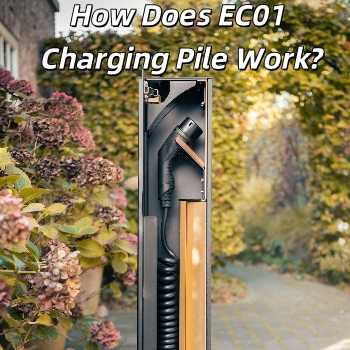
    With the popularization of new energy vehicles, charging piles have become indispensable equipment in both household and public scenarios. For home vehicle owners, a safe, intelligent, and efficient charging pile can greatly enhance the driving experience. Today, we'll explore the working principle of new energy vehicle charging piles and recommend a cost-effective home wall-mounted charging pile - the EC01. 📒The Core Working Principle of New Energy Vehicle Charging Piles📍A charging pile is essentially an electrical energy conversion and control terminal, with the core logic of safely converting alternating current from the power grid into electrical energy suitable for automobile batteries and intelligently managing the charging process.🚎In terms of power flow, the charging pile connects to the power grid to obtain alternating current, which undergoes rectification and filtering processes to output stable electricity. Home slow-charging piles output alternating current, which needs to be converted into direct current by the on-board charger (OBC) for storage in the battery.🔋During charging, the charging pile interacts in real-time with the Battery Management System (BMS): the BMS feeds back parameters such as power and temperature, and the charging pile adjusts its output accordingly to prevent issues like overcharging. At the same time, the metering module of the charging pile records the electricity consumption for billing purposes, and the safety system monitors in real-time, immediately cutting off power in case of abnormalities such as leakage or short circuits. 🎊Highlights of the Home Slow-Charging Essential - EC01 Wall-Mounted Charging PileFor household users, slow-charging piles are the go-to choice. Despite their lower charging speed, they're easy to install, budget-friendly, and gentle on battery life—perfect for overnight charging. Our EC01 home wall-mounted charging pile, designed specifically for home use, offers these key benefits: 🕸Multiple Connections for More Convenient Intelligent ControlThe EC01 offers versatile connectivity via 4G, Ethernet, and Bluetooth, enabling remote monitoring of charging status. With the mobile APP, users can start/stop charging remotely and view real-time data like progress, voltage, and current. This eliminates the need for on-site operation, providing convenient, hands-free charging management from anywhere. ⚡️Peak-Valley Charging for Cost-Effective SavingsMany families are concerned about the difference between peak and valley electricity prices, and the EC01's scheduled charging feature is the ideal solution. Simply set the charging time in the APP, and the charger will start automatically during off-peak hours when electricity rates are lower. For example, in some regions, valley electricity prices are nearly 50% of peak rates, resulting in substantial long-term savings on charging costs. 📝Complete Records for Full Control of Charging DataThe EC01 auto-logs key charging data—time, capacity, cost, and duration—then generates intuitive reports in its APP. View past records anytime to manage vehicle energy use and optimize travel plans. 🏭Flexible Installation to Adapt to Various ScenariosThe EC01 offers flexible installation options with wall-mounted and standing modes. Wall-mounted setup maximizes space efficiency, ideal for garages, while standing placement enables easy relocation to fit various home layouts. Its installation is straightforward, and professional technicians can complete wiring and debugging during a single home visit. 🔌Multiple Power Options to Adapt to Different Vehicle ModelsThe EC01 comes with 7kW, 11kW, and 22kW power options, adaptable to vehicle charging needs and home grid capacity. The 7kW setting suits most family cars, enabling overnight full charges, while 11kW and 22kW are ideal for vehicles supporting higher power, significantly cutting charging times. When selecting a home charging pile, prioritize safety, stability, intelligent features, and cost-effectiveness. The EC01 wall-mounted charger stands out with multi-device connectivity, peak-valley charging, detailed usage logs, flexible installation, and various power options, making it a top pick for home charging needs. If you're looking for a reliable home charging pile for your new energy vehicle, give the EC01 a try. To learn more, please click https://www.fescharging.com/.
    Read More
  • Fast Charging Needed? Meet D30 DC Charger
    Fast Charging Needed? Meet D30 DC Charger
    Aug 04, 2025
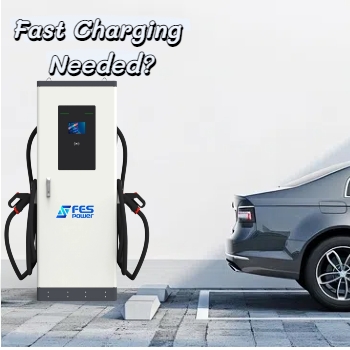
    📢The development of the new energy vehicle industry has been nothing short of remarkable. In Europe, the market share of Chinese electric vehicles has been steadily rising, with sales in June increasing by 47.5% year - on - year, accounting for 5.5% of the market. In the United States, despite challenges, efforts to build a more comprehensive charging infrastructure have been ongoing. In Asia, countries such as China and South Korea are leading the way in both automobile production and the expansion of charging networks. 🎊However, this growth has also brought about an urgent need for efficient charging solutions. Long charging times have always been one of the major obstacles to the large - scale popularization of new energy vehicles. To address this issue, we are proud to introduce the most advanced DC charger, D30, which is specifically designed to meet the high - speed charging needs of the modern new energy vehicle era. 🔋DC Charger D30: Powerful PerformanceThe D30 DC charger offers two powerful power options: 120kW and 160kW. These high - power outputs can significantly reduce the charging time of electric vehicles. Whether it is a small electric car or a large electric SUV, the D30 can quickly replenish the vehicle's battery. For example, compared with some low - power chargers, the 120kW D30 can charge a vehicle with a certain battery capacity in a shorter time, allowing you to get back on the road in an instant.The maximum voltage of the D30 is 250V, ensuring stable and efficient power transmission to the vehicle's battery. The combination of this high - voltage output and high - power performance is the key to achieving fast charging. 🤝Customizable and User - FriendlyThe D30 is equipped with a CCS2 connector, which is compatible with a variety of electric vehicles in the international market and can seamlessly connect with most modern new energy vehicles. It comes with a standard 4 - meter - long cable, supporting easy connection to the vehicle's charging port. At the same time, the connector and cable length can be customized to meet the needs of different scenarios such as large charging stations and compact installations.To enhance the user experience, the D30 is equipped with a 7 - inch touch - screen display. This intuitive interface allows users to easily operate the charger. You can check the charging status, monitor the charging progress, and even make payments directly through the touch - screen. The display is designed to be user - friendly, enabling both tech - savvy users and those new to electric vehicle charging to operate the D30 with ease.❄️Advanced Cooling Technology and Safety Features ⭐️Liquid - Cooling Heat Dissipation System: Adopts efficient liquid - cooling circulation technology to precisely control the temperature of the charging module, reduce equipment failure rates, and extend service life.⭐️Intelligent Air - Cooling Optimization: Equipped with an AI temperature control chip to dynamically adjust fan speed, achieving a balance between heat dissipation efficiency and noise control.⭐️Multiple Over - Temperature Protections: Built - in temperature sensor matrix, supporting automatic power off when overheating, buzzer alarm, and remote fault reporting.⭐️Insulation Monitoring Mechanism: Real - time detection of the equipment's insulation status. When the insulation resistance is lower than the threshold, it immediately cuts off the power supply and locks the charging connector.⭐️Lightning and Surge Protection: Equipped with professional - grade lightning protection modules and surge protectors, effectively resisting power grid fluctuations and lightning risks.🚘Wide Adaptability to Working EnvironmentsThe D30 is designed to adapt to a variety of environmental conditions and can operate stably within a temperature range of - 20℃ to 50℃. This makes it suitable for various regions around the world, from the cold winters in Northern Europe and Canada to the hot summers in the Middle East and Africa. Whether installed in an outdoor open - air charging station, an indoor garage, or a shopping mall, the D30 can efficiently complete the charging work.In conclusion, as the new energy vehicle industry continues to develop rapidly, the demand for high - quality and efficient fast - charging solutions such as the D30 DC charger is becoming increasingly critical. With its powerful performance, customizable design, advanced cooling and safety features, and wide adaptability to working environments, the D30 is an ideal choice for charging stations, electric vehicle fleets, and even individual users who require fast and reliable charging for their electric vehicles. To learn more, please click https://www.fescharging.com/  
    Read More
  • Is E - Station 120 pioneering?
    Is E - Station 120 pioneering?
    Jul 31, 2025
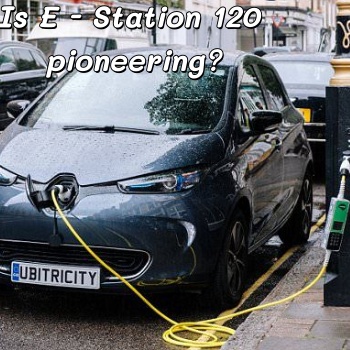
    🎉Nowadays, the new energy vehicle industry is booming, and the supporting mobile charging equipment market has also ushered in a golden period of development. From the initial simple small - capacity emergency power sources to today's professional equipment with increasingly improved functions and constantly enhanced power, mobile power sources have undergone earth - shaking changes. 🪨Mobile power sources in the market are evolving along several key trends. As the battery capacity of new energy vehicles grows, users demand higher-capacity mobile charging equipment. Fast charging has also become essential, necessitating greater output power. Additionally, users expect enhanced safety, durability, and adaptability for stable operation in diverse environments. However, many current products fall short in capacity, power, and protection, failing to meet user expectations. 💡Against such an industry background, our E - Station 120 mobile charging equipment has emerged as the times require. It perfectly conforms to the market development trend and brings a new solution to solve the current mobile charging problems. 🔋Ultra - large Battery Capacity: The E - Station 120 is equipped with a 209kWh ultra - large battery, which can supply power to multiple new energy vehicles. In scenarios such as large parking lots, exhibition sites and highway service areas, it can easily meet the charging needs of multiple vehicles and solve the problem of insufficient capacity of charging equipment.⚡️Excellent Output Capacity: It supports simultaneous output of AC power and DC power, and the maximum output power of each of the two gun heads reaches 120kW, which greatly shortens the charging time, improves charging efficiency and saves users' time costs.🧷Safe and Durable:⭐️It is equipped with a variety of protection functions, which can effectively deal with sudden situations such as overcurrent, overvoltage and short circuit, ensuring the safety of the charging process.⭐️It has excellent impact resistance. During transportation, installation and daily use, even if it encounters slight collisions, it can operate stably, extending the service life of the equipment.🚗Multiple Models to Meet Different Needs: There are two models: forklift basement type and driving chassis type.⭐️The forklift basement type is suitable for moving and deployment by means of forklifts and other equipment.⭐️The driving chassis type has autonomous movement capability, making it more flexible and convenient to use.📦Reasonable Specification Design: The product specifications are 1900×1000×1700mm and the weight is 3200kg. Such size and weight not only ensure that there is enough space inside to accommodate the large - capacity battery and advanced charging modules, but also facilitate transportation and installation, and can adapt to various site conditions. To sum up, the E - Station 120 stands out in the current mobile charging equipment market with its ultra - large capacity, high - power output, excellent protection and impact resistance, as well as flexible model options. It not only meets users' demand for efficient and safe charging, but also leads the new development trend of mobile charging equipment. It is believed that in the future, it will play an important role in the field of new energy vehicle charging. For more information, please click https://www.fescharging.com/  
    Read More
  • Future Charging: PV-Storage & Cannon 300
    Future Charging: PV-Storage & Cannon 300
    Jul 30, 2025
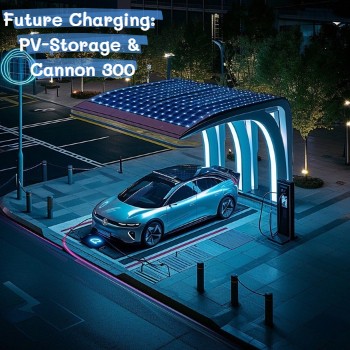
    With the surge in new energy vehicles, building supporting charging piles is crucial for urban infrastructure. Let's analyze a photovoltaic + energy storage integrated charging station and explore its green electricity conversion and intelligent supply.​ ☀️Working Principle of Photovoltaic-Storage Charging Station: The Intelligent Code of Energy Cycle​A photovoltaic-storage charging station is a green energy hub integrating photovoltaic power generation, energy storage system and intelligent charging. Its core logic can be broken down into three major links:​ ⚡️Light Energy Capture and Conversion​High-conversion-efficiency photovoltaic panels (such as monocrystalline silicon or cadmium telluride materials) convert solar energy into direct current, which is then converted into alternating current through a photovoltaic inverter to directly power the charging pile or be connected to the power grid.​ 🔋Energy Buffering of Energy Storage System​A lithium battery energy storage system (such as a 215kWh lithium iron phosphate battery pack) acts as a "power bank", storing electricity when there is excess photovoltaic power and releasing it during peak electricity consumption or at night. Through the intelligent management system (EMS), it monitors electricity prices and loads in real time, dynamically adjusts charging and discharging strategies, and realizes peak-valley arbitrage and grid peak regulation.​ 💵Precise Release of Ultra-Fast Charging Technology​Liquid-cooled ultra-fast charging terminals (such as the 300kW-600kW power segment) adopt flexible power distribution technology, dynamically adjusting current and voltage according to the state of the vehicle battery, achieving the ultimate experience of "5 minutes of charging, 200 kilometers of range".​ ☀️ Cannon 300: Redefining the Industry Benchmark of Photovoltaic-Storage Ultra-Fast Charging​As an independently developed photovoltaic-storage ultra-fast charging system by our company, Cannon 300 integrates four disruptive innovations with "efficiency, intelligence and safety" as its core:​ 🦋Integrated Photovoltaic-Storage-Charging Architecture​|⭐️25% Improvement in Photovoltaic Direct Supply Efficiency: Adopts a dual MPPT photovoltaic controller, compatible with 180-1500V wide input, and can adapt to photovoltaic arrays under different lighting conditions.​⭐️Bidirectional Empowerment of Energy Storage System: Integrates a liquid-cooled ultra-fast charging module and a 215kWh energy storage container, supporting grid-connected/off-grid dual-mode switching. In case of grid failure, it can independently provide emergency charging for 10 electric vehicles for 3 hours.​ 🦖 Technological Breakthroughs in Liquid-Cooled Ultra-Fast Charging​⭐️300kW Liquid-Cooled Ultra-Fast Charging Terminal: Uses silicon carbide (SiC) power devices, with a charging efficiency of over 96%. The cable weight is only 1/3 of that of traditional copper cables, greatly reducing the user's operational burden.​⭐️Intelligent Thermal Management System: Predicts battery temperature rise through AI algorithms, dynamically adjusts liquid cooling flow, ensures that the temperature difference of battery cells during charging is ≤2℃, and extends battery life by 30%.​ 👩‍🔧Full-Scenario Intelligent Management​⭐️Energy Dispatching Brain: Features an in-house developed EMS system. It analyzes real-time meteorological data, electricity price curves, and charging demand, optimizing photovoltaic-storage-charging collaboration. For instance, it stores energy during off-peak hours (23:00–7:00) and discharges during peak hours (18:00–22:00), slashing operating costs by 40%.​⭐️Enhanced User Experience: Offers reserved charging, plug-and-charge, and seamless fee settlement via a mobile APP. While charging, users can monitor real-time photovoltaic contribution and carbon savings (e.g., 1.2kg CO₂ reduction per charge).​ 👷‍♀️ Safety Protection​⭐️Five-Level Protection System: Includes overvoltage protection, leakage monitoring, fire sprinkler, smoke alarm and remote shutdown, ensuring reliable operation in extreme environments.​ ☀️ Core Application Scenarios of Cannon 300​ 🏙️Urban Commercial Complexes​Deploying Cannon 300 in shopping mall and office building parking lots, using rooftop photovoltaics to achieve "self-generation and self-use", and suppressing the impact of charging peaks on the power grid through energy storage.​ 🚘Highway Service Areas​Meeting long-distance travel needs, the liquid-cooled ultra-fast charging module of Cannon 300 can replenish 300 kilometers of range for electric trucks in 10 minutes. Cooperating with photovoltaic canopies and energy storage systems, it reduces the dependence on grid expansion.​ 🏭Industrial Parks and Logistics Hubs​Provides customized charging solutions for electric forklifts and logistics vehicles, and combines peak-valley electricity price strategies to achieve low-cost operation of "photovoltaic power supply during the day and off-peak electricity storage at night".​ Conclusion: Energy Revolution from Technology to Scenarios​ Photovoltaic-storage charging stations create a "power generation - energy storage - electricity consumption" closed-loop ecosystem, with Cannon 300 as the prime carrier. Ideal for urban microgrids, highway nodes, and industrial parks, it drives new energy infrastructure towards decarbonization, intelligence, and high efficiency through superior technical and economic value.​ Click https://www.fescharging.com/ now to obtain a customized solution for Cannon 300 and jointly embark on the golden age of green energy!​
    Read More
  • Did Our Batteries Shine in Stuttgart?
    Did Our Batteries Shine in Stuttgart?
    Jul 29, 2025
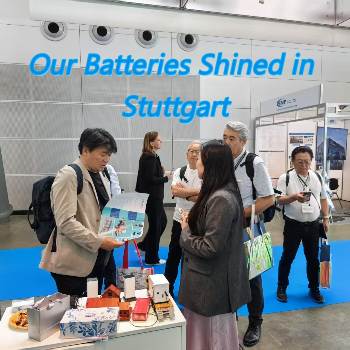
    From June 3rd to 5th, the Germany Stuttgart Battery Show (The Battery Show Europe) was held. This industry event attracted over 1,100 top enterprises and more than 21,000 professional visitors from around the world. Our company participated with core technologies and innovative products, gained recognition from international customers with our strength, and after the exhibition, we ushered in a wave of cooperation contracts, adding a new chapter to our global layout. ​ Booth Highlights: Winning Over Global Customers with Technical Strength​During the three-day exhibition, our booth was a major draw. Representatives from European automotive firms, energy storage integrators, and new energy investors from Germany, France, Italy, and beyond visited in droves. Many customers were eager to collaborate after learning about our products, with some even requesting immediate factory tours. This global interest underscores the viability and market acceptance of our company's technology. ​Customer Concerns: We Answered These Questions Professionally​The exhibition serves as both a display stage and a market feedback channel. Over three days, customers mainly inquired about product performance, application scenarios, and cooperation models, reflecting their technological implementation expectations. Our tech and business teams worked seamlessly, leveraging their expertise to provide clear responses:​🪨Regarding Product Performance: Safety and Endurance are Core Concerns​❓"How many cycles can your solid-state battery last? What is the performance attenuation rate in a -20℃ low-temperature environment?" This was a question from a German automobile company engineer, and it was also one of the most frequently asked questions on site.​💡Our technical director showed the third-party test report on the spot: "This solid-state battery for electric vehicles has a laboratory cycle life of over 3,000 times with an attenuation rate of less than 20%; in a -20℃ environment, the capacity retention rate can still reach 85%, fully meeting the vehicle needs in cold regions of Europe." ​ 🪨Regarding Application Scenarios: Energy Storage and Vehicle Regulations Have Different Requirements​❓An Italian customer focusing on photovoltaic energy storage projects asked: "For large-scale energy storage power stations, how does your battery system balance cost and safety?"​💡The business director replied with a smile: "We have customized a 'echelon utilization + intelligent BMS' solution for energy storage scenarios - after screening and reorganization, retired vehicle-regulated batteries can be reused in the energy storage field for 5-8 years, directly reducing the initial investment by 30%."​ 🪨Regarding Cooperation Models: Flexibly Adapting to the Global Supply Chain​ ❓"If we reach a cooperation, can you guarantee the production capacity delivery cycle?" In response to the concerns of a French distributor, 💡we gave a clear answer: "We have an intelligent production line with an annual output of 5GWh in China, and the delivery cycle for regular orders is 45 days."​ Aftermath of the Exhibition: From Intentions to Contracts, Cooperation Achievements Continue to Ferment​ The end of the exhibition is not the end but a new starting point for cooperation. In the month after returning to China, the business cards left and needs noted at the booth were gradually converted into tangible orders.​ What's more encouraging is that 5 more companies made special trips to China to visit us after the exhibition, and 2 of them have entered the sample testing stage. These achievements confirm that our concept of "technology first, customer foremost" is taking root in the global market.​ The Stuttgart event was more than an exhibition—it was a valuable exchange with global partners. Customer feedback guided our efforts, and positive responses motivated us. Going forward, we'll focus on tech innovation, expand in the global battery market, and seek more partnerships to drive the new energy industry forward. please click https://www.fescharging.com/ to learn more.​  
    Read More
  • What Basic Functions Do EV Chargers Need?
    What Basic Functions Do EV Chargers Need?
    Jul 24, 2025
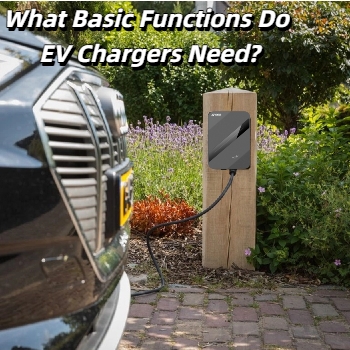
    With the global surge in new energy vehicle adoption, charging piles, as key infrastructure, are pivotal for user satisfaction and industry growth. Globally, high-performing EV chargers must fulfill several fundamental criteria, and our wall-mounted charger excels in these areas.​ First and foremost, safe and reliable charging is essential. Charging piles globally must feature key safety functions to safeguard vehicles and users:​ 🚗Overload protection: Monitors charging power in real-time and auto-shuts off when exceeding the rated load, preventing overheating hazards.🔥Short-circuit protection: Fast-response circuits instantly cut power upon detecting abnormal short circuits for safety.​⚡️Leakage protection: High-precision detectors trigger an immediate power-off when leakage current surpasses the safety limit.​ Our wall-mounted chargers are internationally certified for safety, offering end-to-end protection. They comply with global charging standards for most electric vehicles. ​ Secondly, convenient connection and interaction are essential. With diverse user habits worldwide, charging piles must support multiple flexible connection methods.​ 🕸 Versatile Connectivity: The wall-mounted charger integrates a 4G module and Wi-Fi, enabling remote control via mobile networks or Wi-Fi in areas with reliable coverage. Users can monitor charging status and manage sessions from anywhere.​🎧 Bluetooth Backup: In low-signal environments like underground parking or rural areas, Bluetooth connectivity ensures local operation, eliminating network dependency.​💻Flexible Operation Modes: Supporting QR code scanning, app control, and card swiping, the charger accommodates diverse user preferences across global markets. ​ Moreover, accurate power metering and billing are key to user trust. Given diverse global electricity pricing, EV chargers must support:​ 📒Accurate electricity recording: Charging piles must precisely track charging capacity. Our wall-mounted models use high-precision metering chips, with an error rate well below international standards.​💵Intelligent electricity price switching: Automatically adapts to peak and off-peak pricing, detecting time periods and adjusting billing according to regional policies.​🔢Transparent bill management: Real-time access via our smart App allows users to view charging volume and cost breakdowns, ensuring full transparency and traceabil In addition, intelligent management and data query functions improve usage efficiency:​ ⛰️ User-friendly operation: The wall-mounted charger's built-in networking allows real-time charging data synchronization to the cloud. Users can monitor progress, view history, and schedule charging via mobile devices.❕ Efficient operator management: Operators can remotely monitor device status, quickly identify and resolve issues, reducing maintenance costs. ​ Finally, wall-mounted chargers are space-efficient, making them ideal for home garages and commercial lots. With features like multi-connection, precise metering, and intelligent management, they offer a globally scalable charging solution, accelerating the adoption of EVs. https://www.fescharging.com/
    Read More
  • Why Fire Safety Matters for Portable Chargers?
    Why Fire Safety Matters for Portable Chargers?
    Jul 22, 2025
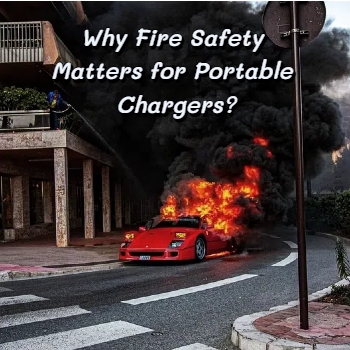
    In recent years, there have been occasional cases of electric vehicle charging equipment catching fire worldwide: from spontaneous combustion of charging piles in home garages to small fires caused by equipment short circuits during charging in public places. These incidents not only cause property damage but also pose safety risks. Charging safety has become one of the top concerns for electric vehicle users and operators globally. 🔋Why Do Charging Devices Catch Fire? Most charging device fires stem from insufficient flame retardancy of materials and lack of safety protection: 🔥Some low-cost products use ordinary plastic casings or internal components. Such materials are prone to melting and igniting when exposed to high temperatures (e.g., heat generated by circuit short circuits or component aging), and the flame spreads quickly. 🔥Without overload or short-circuit protection, the circuit cannot be cut off in time when abnormal, and the continuous high temperature will make combustibles reach the ignition point, eventually causing a fire. 🔋Our Portable Charger: Blocking Fire Risks at the Source Targeting flame retardant safety, our portable charger addresses safety pain points from the design source with core advantages: 🔥1. UL94 V-0 Flame Retardancy, Passing Global Rigorous Certification The casing and key components are made of high-quality flame-retardant plastic and have passed the internationally authoritative UL94 V-0 flame retardant test. This means that even if exposed to an open flame, the flame will self-extinguish within 10 seconds after the fire source is removed, with no burning drips (which will not ignite items below), blocking flame spread at the material level. 🔥2. Comprehensive Safety Protection, Beyond Flame Retardancy ⭐️IP65 Dust and Water Resistance: Completely isolates dust intrusion and can resist low-pressure water jets (e.g., rainy days, car washing scenarios), avoiding short circuits caused by moisture. ⭐️IK08 Impact Resistance: Can withstand a 1.5kg weight impacting from a height of 50cm, with the casing not easily damaged, preventing internal circuits from being exposed and causing danger. ⭐️Triple Circuit Protection: Built-in overload protection (automatically cuts off power when current is too high), leakage protection (instantly cuts off power when the human body touches leakage), and short-circuit protection (responds quickly when the line is short-circuited), preventing fire triggers at the circuit level. 🔥3. Flexible Use, Safety on the Go As a portable charger, it breaks through scene limitations: when there is a power supply, it can directly connect alternating current to the car for charging, easily adapting to wall-mounted installation needs in fixed places such as garages and offices; it is also lightweight and portable, meeting emergency charging scenarios when there is an external power supply outdoors. Whether at home or on the go, safety protection is always on.   🚩Charging safety is no small matter, especially for portable devices, which need to balance "portability" and "safety". Choosing products with UL94 V-0 certification and multiple protections can ensure worry-free charging every time.   Interested in learning more about our products? Visit our official website https://www.fescharging.com/ for comprehensive details.
    Read More
  • Why Wall-Mounted EV Chargers for Business?
    Why Wall-Mounted EV Chargers for Business?
    Jul 21, 2025
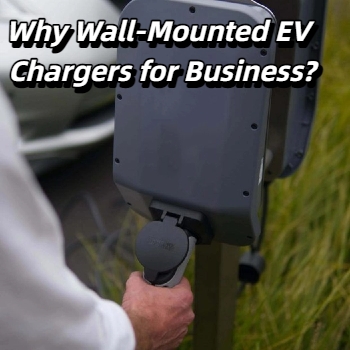
    As EVs boom, EV chargers are vital for commercial spaces. Let’s see why wall-mounted ones excel.Basics of EV ChargingEV chargers link grids and electric vehicles, with two types: floor-mounted (high-power, for fast hubs) and wall-mounted EV chargers (space-saving, ideal for offices, malls, communities). A top charger needs speed, stability, smart controls—our wall-mounted model delivers. Why Our Wall-Mounted Charger Shines1. Flexible & Space-SavingWall or floor-mount (with brackets) fits mall parking, offices, communities. Cuts install costs by 30% vs. traditional.   2. Brand-Matched Customization⭐️Custom shell colors to blend with venues.⭐️Custom indicator lights (breathing/color-changing) show status (standby/charging/error).3. Smart Power ControlIntelligent modules adjust power (6A-32A) in real time—prevents tripping in peaks, speeds up in off-peaks, critical for busy commercial zones. 4. Global Compatibility⭐️Dual plugs: GB/T (China), Type 2 (EU) for all EV models.⭐️Charging options: card, QR code, or enterprise systems (employee/member charging).5. Business-Ready Management⭐️Smart software tracks EV charging records (time, kWh, cost) for billing.⭐️Remote monitoring: Check status, adjust prices via app/PC—lowers operational effort.⭐️Fault alerts reduce downtime. 6. Globally CertifiedCE-certified (EN 61851-1) for worldwide use. IP65 waterproof, IK08 impact-resistant. Built-in protections (overheat, leakage) ensure safety.A Must for Commercial SpacesOur wall-mounted EV charger saves space, cuts costs, and fits hotels, retail, more. It’s not just a charger—it’s a smart business tool.🚗Need a customized EV charging solution? Say less! This is your ultimate go-to!⭐️Please click https://www.fescharging.com/ to view details
    Read More
  • How to Choose Home Charger for Your Electric Vehicle
    How to Choose Home Charger for Your Electric Vehicle
    Jun 18, 2025
    As electric vehicles (EVs) become more popular, having a reliable home electric car charger is essential for convenience and efficiency. With different options available, selecting the right one can seem overwhelming. Whether you need a basic home electric car charger or a more advanced Smart AC EV Charger, understanding your needs is key.     When choosing a home charger, consider factors like charging speed, compatibility with your EV model, and smart features. A Smart AC EV Charger, like those offered by FES Power, provides added benefits such as remote monitoring, scheduling, and energy optimization. These features help you charge efficiently while reducing electricity costs.   Installation is another important factor. Some home electric car chargers require professional setup, while others can be easily plugged into a standard outlet. FES Power offers user-friendly solutions designed for seamless integration into your home. Additionally, look for safety certifications and weatherproof designs if you plan to install the charger outdoors.   Choosing the right home electric car charger doesn’t have to be complicated. With the right knowledge and a reliable provider like FES Power, you can enhance your EV ownership experience with fast, smart, and efficient charging at home.   If you're interested in our products, you can get more information at www.fescharging.com.
    Read More
1 2 3 4 5 6 7 8 9 10

leave a message

leave a message
If you are interested in our products and want to know more details,please leave a message here,we will reply you as soon as we can.
submit
Contact Us: bella@fespower.cn

home

products

WhatsApp

Contact Us