Customized Electric Vehicle Charger Enterprise
Home

Electric Vehicle Charging Solutions

Electric Vehicle Charging Solutions

  • How Many Types of EV Chargers Are There?
    How Many Types of EV Chargers Are There?
    Dec 24, 2025
    A Simple Guide to EV Charger Types — and How to Choose the Right One As electric vehicles (EVs) become more popular worldwide 🌍, many customers ask the same question: 👉 How many types of EV chargers are there, and which one should I choose? This article explains EV charger types in a simple, visual, and easy-to-understand way, helping you quickly identify the right charging solution — and showing how FES Power supports different charging scenarios 🔋. 🔌 1. EV Chargers by Charging Method (The Most Important Difference) ⚙️ AC EV Chargers — The Everyday Charging Solution AC EV chargers supply alternating current to the vehicle, where the onboard charger converts it into DC power. Key features ✅ Stable and safe for daily use 💰 Lower cost and simpler installation 🏠 Ideal for long parking durations Common power options:7kW/11kW/22kW Typical use cases 🏡 Home garages 🏢 Office parking 🏨 Hotels & shopping centers 🔷 FES Power solution FES Power offers smart AC EV chargers for residential and commercial use, supporting Type 2 connectors, RFID, mobile app control, and OCPP compatibility 📱. These chargers are ideal for customers seeking reliable, cost-effective, and future-ready charging solutions. ⚡ DC EV Chargers — Fast Charging When Time Matters DC EV chargers convert AC to DC inside the charger and deliver power directly to the vehicle battery. Key features 🚀 Much faster charging 🔋 High power output 🏗️ Designed for heavy-duty use Common power options:60kW/120kW/160kW/240kW+ Typical use cases 🛣️ Highway service areas 🏙️ Urban fast-charging stations 🚚 Logistics fleets 🚌 Electric buses & trucks 🔷 FES Power solution FES Power provides customizable DC fast chargers supporting CCS2 connectors, single or dual guns, and flexible power configurations 🔧. Our DC chargers are designed for continuous operation, modular expansion, and long-term reliability. 🧱 2. EV Chargers by Installation Type 🧩 Wall-Mounted Chargers Compact and space-saving Mostly AC chargers Ideal for homes and small parking areas FES Power Wall-mounted AC chargers designed for residential garages and apartment buildings 🏠. 🏗️ Floor-Standing Chargers Strong and professional appearance Suitable for public and commercial locations Available for AC and DC FES Power Floor-standing chargers for shopping malls, workplaces, and public charging stations 🅿️. 🔄 Portable / Mobile Chargers Plug-and-play design Temporary or emergency charging Lower power output FES Power Mobile charging solutions for flexible and on-demand charging needs 🚙. ⏱️ 3. EV Chargers by Charging Speed 🐢 Level 1 Charging Standard household outlet Very slow charging Emergency or backup use 🚶 Level 2 Charging Dedicated AC power supply Balanced speed and cost Most common choice worldwide 🔷 FES Power focus FES Power AC chargers are optimized for Level 2 charging, covering the majority of daily charging scenarios ⚖️. 🏎️ Level 3 Charging (DC Fast Charging) High-power DC output Short charging time Ideal for public and fleet use 🔷 FES Power focus FES Power DC chargers support scalable power expansion, helping customers grow from basic fast charging to high-power hubs 📈. 🔗 4. EV Chargers by Connector Type Different regions use different standards 🌐. Connector Region Type Type 1 North America, Japan AC Type 2 Europe, Global AC CCS1 / CCS2 North America / Europe DC CHAdeMO Japan DC GB/T China AC & DC 🔷 FES Power FES Power chargers support Type 2 and CCS2 standards, fully compliant with European and global market requirements ✅. 🏘️ 5. EV Chargers by Application Scenario 🏡 Home Charging AC chargers Focus on safety and ease of use FES Power Smart home chargers built for daily convenience and long-term safety 🔐. 🏢 Commercial Charging AC + DC combinations Billing and backend management FES Power Commercial chargers supporting OCPP platforms, ideal for operators and property owners 💼. 🚛 Fleet, Bus & Truck Charging High-power DC chargers Designed for intensive use FES Power Heavy-duty DC charging solutions for logistics fleets, bus depots, and industrial applications 🏭. ✅ 6. One Simple Takeaway If you are new to EV charging, remember this: ⚡ AC chargers are best for daily and overnight charging, while DC chargers are essential for fast charging and fleet operations. Understanding these categories makes EV charger selection simple and stress-free. 🌱 Conclusion: Choose the Right EV Charger with Confidence There is no one-size-fits-all EV charger. The right choice depends on: ⚡ Charging speed requirements 🧱 Installation environment 🚗 Vehicle type 📊 Usage frequency FES Power delivers a complete range of AC and DC EV charging solutions, helping customers build reliable, scalable, and future-proof charging infrastructure. With the right knowledge — and the right partner — EV charging becomes easy 🔋✨.
    Read More
  • How EV Charging Infrastructure Supports a Sustainable Future
    How EV Charging Infrastructure Supports a Sustainable Future
    Dec 25, 2025
    As the holiday season arrives 🎅, Christmas is not only a time for celebration 🎁 and reflection 🌟, but also a meaningful moment to think about the future we are building together. At FES Power, we believe that sustainability 🌍 and innovation 🚀 should move forward hand in hand. While families gather 👨‍👩‍👧‍👦, cities light up ✨, and travel demand increases 🚗, reliable and efficient energy infrastructure becomes more important than ever—especially in the rapidly evolving electric vehicle (EV) ecosystem 🔋. 🎅 A Season of Connection—and Energy Demand ⚡ Christmas traditionally marks one of the busiest travel periods of the year 🛣️❄️. With more electric vehicles on the road 🚙, the demand for stable, high-performance EV charging solutions continues to grow 📈. From urban charging hubs 🏙️ to highway fast-charging stations, the role of charging infrastructure is no longer optional—it is essential ✅. This seasonal surge reminds us that EV charging must be scalable 📐, reliable 🛡️, and future-ready 🔮 to support both peak demand and long-term growth. 🎄 Engineering for Reliability and Flexibility 🧩 At FES Power, we focus on delivering EV charging solutions that are engineered for real-world conditions 🌦️. Our AC and DC chargers are designed to support: ⚡ Flexible power configurations 🧩 Modular system architecture 🔋 High efficiency and long-term operational stability 🛠️ Customization for different markets and applications These capabilities ensure that charging infrastructure can adapt smoothly 🎯—whether during holiday peaks 🎄 or daily operations 📅. 🌟 Sustainability Beyond the Season 🌍 Christmas reminds us of responsibility, generosity ❤️, and long-term thinking 🕊️. In the energy sector ⚡, this means investing in solutions that reduce emissions 🌱, improve efficiency 📊, and support global electrification goals 🚗🔌. By enabling smarter EV charging systems, we are not only supporting today’s drivers—we are contributing to cleaner cities 🏙️🌿 and a more sustainable transportation ecosystem for the years ahead ⏳. 🎁 Looking Forward to the New Year 🎆 As we approach the new year, FES Power remains committed to innovation 🚀, quality, and partnership. We will continue working closely with operators, distributors, and project developers worldwide to deliver charging solutions that are reliable, scalable, and aligned with future energy needs. 🎄 This Christmas, we sincerely thank our partners and clients for their trust and collaboration. ✨ May the holiday season bring warmth, inspiration, and new opportunities for growth. 🎅🎄 Merry Christmas and a sustainable New Year from all of us at FES Power! ⚡🌍✨
    Read More
  • How Much Will It Cost to Install an EV Charger?
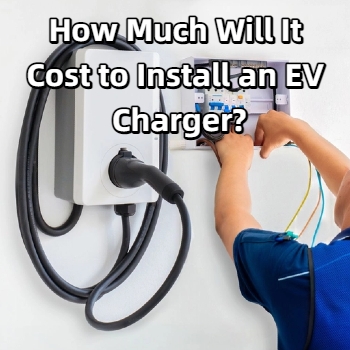
    How Much Will It Cost to Install an EV Charger?
    Jan 09, 2026
    Installing an EV charger is no longer just a technical decision—it is a strategic investment. But how much does it really cost? The answer depends heavily on the type of charger, where it is installed, and how it will be used. Let’s break it down by application scenario 👇 🔌How much does it cost to install a home EV charger? 🏠 For residential use, AC chargers (Level 2) are the most common choice. Typical cost range: Charger unit: USD 500 – 2,000 Installation & wiring: USD 300 – 1,500 Total installed cost: USD 800 – 3,500 Key cost factors include: Electrical panel capacity Cable length and routing Indoor vs outdoor installation ✅ Best for: private homes, villas, apartments with fixed parking ⚡ Charging power: 7kW / 11kW / 22kW 💡 Cost-effective, stable, and easy to maintain 🛍️How much does it cost to install a commercial AC charging station? 🅿️ For offices, hotels, and retail locations, AC chargers focus more on destination charging rather than speed. Typical cost range: Charger unit: USD 1,000 – 3,000 Installation & networking: USD 1,000 – 3,000 Total installed cost: USD 2,000 – 6,000 Why businesses choose AC chargers: Longer parking duration ⏱️ Lower upfront investment Brand image & customer attraction 🌱 ✅ Best for: hotels, offices, shopping malls ⚡ Charging during work or overnight stays 🚀How much does it cost to install a DC fast charger? ⚡ DC fast chargers deliver high power and fast turnaround, but with higher investment. Typical cost range: DC charger unit: USD 20,000 – 80,000 Installation & grid upgrade: USD 10,000 – 50,000 Total installed cost: USD 30,000 – 130,000+ Major cost drivers: Power level (60kW / 120kW / 240kW+) Transformer & grid connection 🏗️ Cooling system (air or liquid) ❄️ ✅ Best for: highways, fleet depots, urban fast-charging hubs ⚡ Charging time: 15–40 minutes ⚡How much does it cost to build an ultra-fast charging hub? ⚡ Ultra-fast charging hubs use distributed DC systems or charging power cabinets. Typical cost range (per site): Charging power cabinet: USD 100,000 – 300,000 Dispensers & cables: USD 30,000 – 80,000 Infrastructure & civil work: USD 50,000 – 150,000 Total project cost: USD 180,000 – 500,000+ Why investors choose ultra-fast charging: High vehicle throughput 🚗 Future-proof for 800–1000V platforms Flexible power allocation across multiple vehicles ✅ Best for: public charging operators, logistics hubs, EV fleets ⚡ Power range: 480kW – 960kW+ 💡What other hidden costs should you consider? ⚠️ Beyond the charger itself, many projects underestimate these costs: Grid connection & utility approval 📄 Software platforms & OCPP integration 🖥️ Operation & maintenance (O&M) 🔧 Land use or parking modification 🚧 A proper feasibility study can significantly reduce long-term risk. 🌍Can you purchase all these EV chargers from one supplier? ✅ Yes. At FES Power, we provide a full range of EV charging solutions: 🔹 Home & residential AC chargers 🔹 Commercial AC charging stations 🔹 DC fast chargers (60kW–240kW) 🔹 Ultra-fast charging power cabinets (480kW–960kW) 🔹 Smart charging software & energy management From single chargers to complete charging hubs, we support projects across residential, commercial, fleet, and public infrastructure scenarios. So, how much will your EV charger installation really cost? 🤔 The real answer is: 👉 It depends on your application, power demand, and long-term goals. Choosing the right charger type from the start can save significant CAPEX and OPEX over time. If you are planning an EV charging project and want a clear cost estimate and solution design, our team at FES Power is ready to support you.
    Read More
  • What Is a Mobile EV Charging Vehicle? How Does It Work?
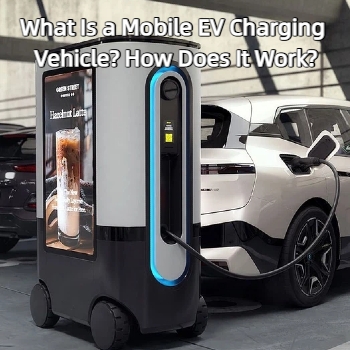
    What Is a Mobile EV Charging Vehicle? How Does It Work?
    Jan 30, 2026
    As electric vehicles (EVs) continue to grow worldwide, charging infrastructure is evolving beyond traditional fixed charging stations. One of the most promising innovations is the Mobile EV Charging Vehicle—a flexible, on-demand charging solution designed to bring power directly to EV users.   But what exactly is a mobile EV charging vehicle, and how does it work? This guide explains the technology, applications, and why it is becoming an important part of the future EV ecosystem. What Is a Mobile EV Charging Vehicle? A Mobile EV Charging Vehicle is a truck, van, or trailer equipped with an onboard battery energy storage system (BESS) and EV charging equipment, allowing it to deliver AC or DC fast charging anywhere, without relying on a fixed grid connection. Instead of EV drivers traveling to charging stations, the charger travels to the vehicle—offering flexibility, convenience, and rapid deployment. These mobile charging units are especially useful in: How Does a Mobile EV Charging Vehicle Work? A mobile EV charging vehicle operates like a self-contained power station on wheels. Its operation can be broken down into four key systems: 1. Energy Storage System (Battery Pack) The vehicle carries a large-capacity lithium battery, typically ranging from 100 kWh to over 600 kWh, which stores electrical energy for EV charging. This battery can be recharged at: 2.Power Conversion System (PCS) The PCS (Power Conversion System) converts stored battery energy into a stable and safe output suitable for EV charging. It manages: 3. EV Charging Interface (AC / DC Fast Charging) Depending on the design, mobile charging vehicles can support: AC charging for slow and overnight use DC fast charging (60 kW–300 kW+) for rapid energy delivery CCS, CHAdeMO, GB/T, or multi-standard connectors This enables compatibility with most EV brands and models. 4. Smart Control & Monitoring System Modern mobile chargers feature IoT-enabled monitoring, allowing operators to: Track battery state of charge Monitor charging sessions Optimize dispatch and fleet scheduling Perform remote diagnostics This transforms mobile charging into a smart, scalable energy service. What Are the Key Advantages of Mobile EV Charging? ✅ No Need for Fixed Infrastructure Mobile chargers eliminate the need for costly civil works, grid upgrades, or long permitting timelines. ✅ Rapid Deployment Unlike fixed charging stations that may take months to install, mobile charging vehicles can be deployed within weeks or even days. ✅ On-Demand & Emergency Support They can rescue stranded EVs, support peak demand, or serve temporary high-traffic areas. ✅ Cost-Effective for Fleets Fleet operators can use mobile charging to reduce downtime, optimize energy costs, and scale charging capacity dynamically. ✅ Ideal for Remote or Temporary Sites Perfect for construction sites, remote projects, outdoor events, or off-grid operations. Common Use Cases for Mobile EV Charging Vehicles 🚗 Roadside Assistance & Emergency Charging Providing fast rescue charging for EV drivers experiencing low battery levels. 🚚 Fleet & Logistics Charging Supporting taxi fleets, delivery vans, rental fleets, and corporate EV operations. 🏙 Urban Residential Charging Serving apartment residents without access to home chargers. 🎪 Events & Temporary Installations Powering EVs at exhibitions, festivals, test-drive events, and pop-up locations. 🏗 Industrial & Remote Operations Delivering energy to EVs in construction zones, mining areas, and rural regions. How Powerful Are Mobile EV Charging Vehicles? Modern mobile charging solutions typically offer: 60 kW–120 kW DC fast charging for passenger vehicles 150 kW–300 kW+ for high-performance or fleet applications Scalable battery capacity to support multiple charging sessions per deployment As battery and power electronics continue to improve, mobile chargers are approaching ultra-fast charging performance. FES Power Mobile EV Charging Solutions At FES Power, we design and manufacture high-performance mobile EV charging systems tailored for commercial, fleet, and emergency applications. Key Features of FES Power Mobile Charging Vehicles: ⚡ High-capacity onboard battery systems 🔌 DC fast charging up to high power levels 🚚 Vehicle-mounted or trailer-based designs 🧠 Smart monitoring & remote management 🔒 Advanced safety and thermal management 🌍 Multi-standard connector compatibility (CCS, GB/T, CHAdeMO) Our mobile charging solutions help customers deploy EV charging faster, reduce infrastructure investment, and unlock new revenue streams in the growing EV market. Is Mobile EV Charging the Future of EV Infrastructure? Mobile EV charging is not designed to replace fixed charging stations—but it complements them by filling infrastructure gaps, managing peak demand, and enabling rapid expansion. As cities electrify transportation and fleets transition to EVs, mobile charging vehicles will play a crucial role in ensuring flexibility, resilience, and accessibility in the charging ecosystem. Conclusion A Mobile EV Charging Vehicle is a smart, flexible, and scalable solution that brings EV charging directly to drivers—wherever and whenever it’s needed. With advancing battery technology, smart energy management, and innovative manufacturers like FES Power, mobile charging is set to become a key pillar of the global EV infrastructure.
    Read More
  • Celebrating the Year of the Horse with Momentum and Progress
    Celebrating the Year of the Horse with Momentum and Progress
    Feb 11, 2026
    As the Lunar New Year of the Horse approaches, FES Power would like to extend our warmest wishes to our global customers, partners, and team members. 🎉 The Horse symbolizes speed, strength, resilience, and continuous progress—values that strongly reflect both the spirit of the new energy industry and our mission in advancing EV charging solutions worldwide. ⚡🌍 Over the past year, we have worked closely with partners across different markets, delivering flexible and reliable EV charging solutions for urban, commercial, and mobile applications. As we enter the new year, FES Power remains committed to supporting the global transition toward smarter and more sustainable electric mobility. 📅 Lunar New Year Holiday Notice Please note that FES Power will observe the Lunar New Year holiday during the following period: 🗓️ Holiday: February 13 – February 25, 2026 🔔 Business resumes on February 26, 2026 During the holiday, responses may be delayed. For urgent matters, please feel free to contact us via email or existing communication channels, and we will follow up promptly after the holiday. 📩 🐎 Best Wishes for the Year of the HorseAs we welcome the Year of the Horse, FES Power wishes you: ✨ Strong momentum and steady progress ✨ Successful partnerships and shared growth ✨ Good health, happiness, and prosperity May the new year bring renewed energy, faster progress, and exciting opportunities ahead. Let us continue moving forward together—toward a cleaner and more electrified future. 
    Read More

leave a message

leave a message
If you are interested in our products and want to know more details,please leave a message here,we will reply you as soon as we can.
submit
Contact Us: bella@fespower.cn

home

products

WhatsApp

Contact Us