Jan 26, 2026
📈As electric vehicle adoption accelerates worldwide, 2026 is shaping up to be a pivotal year for EV charging infrastructure. Global charger deployment, ultra-fast charging expansion, smart energy integration, and cost optimization are reshaping the industry. Backed by the latest data from the IEA, GlobalData, and market intelligence reports, here are the most impactful EV charging trends to watch in 2026.
⚡️Is Ultra-Fast Charging Becoming the New Standard?
🅿️Ultra-fast charging is no longer a premium niche—it is becoming a mainstream requirement. In 2024, global ultra-fast chargers (≥150 kW) grew by over 50% year-over-year, now representing nearly 10% of all fast chargers . The cost of ultra-fast chargers has also fallen by approximately 20% between 2022 and 2024, making high-power deployment more commercially viable .
☕️By 2026, the market is expected to accelerate the rollout of 350 kW–1000 kW ultra-rapid chargers, enabling charge times comparable to conventional refueling.
🦚How FES Power aligns:
FES Power’s high-power DC charging platforms (including 240 kW–960 kW scalable charging systems) are designed to support ultra-fast, modular expansion—future-proofing operators for the next generation of EV demand.
❔Will Global Charger Installations Continue to Scale Rapidly
The global EV charging infrastructure market is projected to grow from 5.8 million units in 2025 to 11 million units by 2030, representing a 13.6% CAGR . In 2024 alone, more than 1.3 million new public chargers were installed worldwide, marking a 30% annual growth rate .
✨China remains the dominant deployment leader, accounting for nearly 80% of global fast-charging growth, while Europe and Southeast Asia are rapidly scaling their public networks.
This indicates that 2026 will remain a high-growth infrastructure year, driven by urban expansion, fleet electrification, and policy incentives.
⁉️Is Smart Charging Becoming Essential for Grid Stability?
As charger density increases, grid-aware and smart charging systems are becoming a necessity rather than an upgrade. Approximately 31% of new charging installations now include smart energy management, while 42% of new stations are cloud-connected for monitoring, pricing, and load optimization .
Additionally, vehicle-to-grid (V2G) and bidirectional charging adoption is rising, with 16% of new installations already supporting V2G-ready hardware .
🎊FES Power advantage:
FES Power integrates intelligent load balancing, remote OCPP management, cloud analytics, and energy-storage-ready architecture to help operators reduce peak load costs and maximize ROI.
🤔Will Battery-Integrated Charging Become More Common?
Energy-storage-integrated charging systems are gaining traction to address grid limitations and demand spikes. Many regions now report that over 29% of charging areas face grid capacity constraints, pushing adoption of battery-buffered charging hubs .
✨Battery-assisted charging enables:
🔸Faster peak-hour charging
🔸Reduced grid upgrade costs
🔸Improved power stability
🔸Better integration with renewable energy
This trend is expected to expand significantly in 2026, especially for fleet depots, logistics hubs, and highway charging corridors.
⁉️Are Charging Networks Shifting Toward Profitability and Efficiency?
Charging network operators are increasingly focused on utilization rates, uptime, and operational efficiency. Tesla’s Supercharging network processed approximately 54 million charging sessions per quarter in 2025, delivering 1.8 TWh of energy, with average stall throughput exceeding 268 kWh per day .
This demonstrates that high-power, high-utilization charging models are becoming economically sustainable—especially when paired with:
🔷Dynamic pricing
🔷Fleet contracts
🔷Subscription charging programs
FES Power’s modular charging architecture allows scalable investment models—supporting operators from pilot deployment to large-scale commercialization.
💥Will EV Charging Markets Continue Expanding in 2026?
The global EV charging stations market is projected to grow from USD 44.5 billion in 2025 to over USD 219 billion by 2033, representing a 22% CAGR .
💫Key growth drivers include:
Rising EV ownership (27% annual growth)
Fleet electrification expansion (43% increase)
Fast-charging installations (38% growth)
Smart charging adoption (31% growth)
This confirms that 2026 will remain a strong expansion year for infrastructure investors, utilities, and charging operators.
📓What Should Businesses Prepare for in 2026?
To stay competitive, charging stakeholders should focus on:
🔷Deploying ultra-fast and modular DC chargers
🔷Integrating smart energy management and cloud platforms
🔷Preparing for battery-assisted and V2G-ready infrastructure
🔷Improving charger uptime, maintenance efficiency, and customer experience
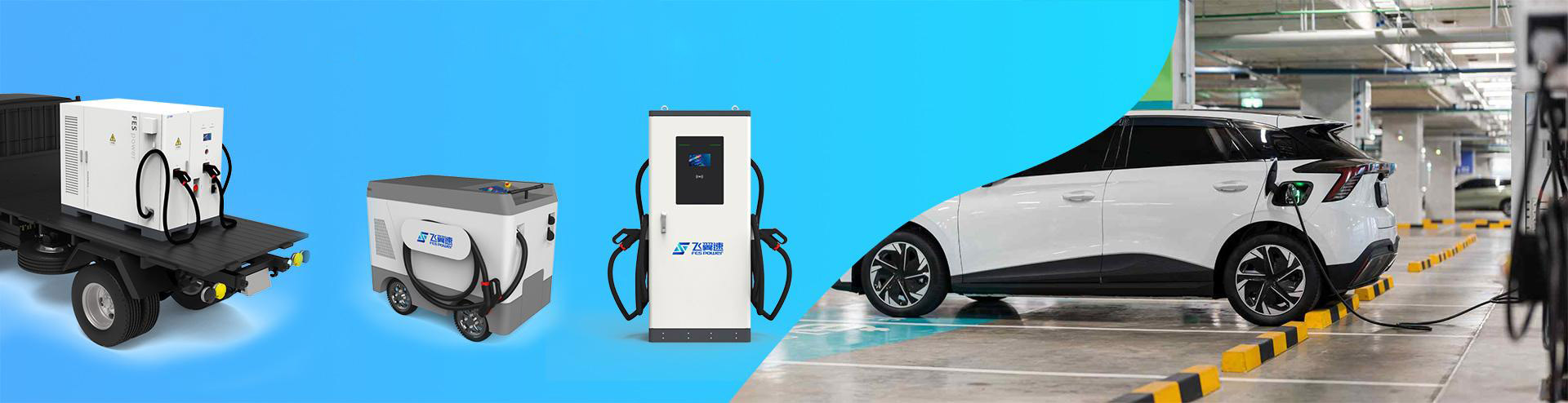
FES Power delivers end-to-end EV charging solutions, covering AC chargers, high-power DC fast chargers, ultra-fast chargerCompanies that invest early in high-power, intelligent, and scalable chagering hubs, and mobile energy-storage charging systems—helping partners stay ahead of the 2026 technology curve.
💫Conclusion: Is 2026 a Turning Point for EV Charging?
Yes. With charger installations accelerating, ultra-fast technology becoming mainstream, energy storage integration rising, and smart charging systems expanding, 2026 is set to become a defining year for EV charging infrastructure worldwide.
Read More







 IPv6 network supported