Customized Electric Vehicle Charger Enterprise
Home

DC Fast Charger

DC Fast Charger

  • How Is Smart Connectivity Transforming EV Charging?
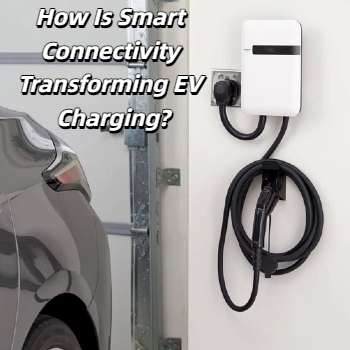
    How Is Smart Connectivity Transforming EV Charging?
    Oct 20, 2025
    As the electric vehicle (EV) industry accelerates, the evolution of charging technology has moved beyond simple power delivery. Today, the future lies in intelligent, connected, and platform-based EV charging solutions. But what does that really mean — and how is it transforming the way we charge our vehicles?  🤖 How Does Intelligence Make EV Charging Smarter? Artificial intelligence (AI) and smart algorithms are becoming the brain of EV charging networks. They analyze usage data, predict demand, and balance grid loads in real time. For fleet operators and public charging networks, this means optimized energy distribution and reduced operating costs. 💡 FES Power’s intelligent DC fast chargers come equipped with smart load management and dynamic power allocation — ensuring each vehicle gets the right charge at the right time. Whether in cities, highways, or fleet depots, our chargers adapt intelligently to energy needs and grid conditions. 🌐 Why Is Connectivity So Important for EV Charging? Connectivity is no longer optional — it’s essential. Through IoT (Internet of Things) integration, charging stations communicate seamlessly with vehicles, users, and management systems. Remote monitoring, predictive maintenance, and user-friendly mobile apps all rely on this digital backbone. 📱 With FES Power’s networked chargers, operators can monitor performance, update firmware remotely, and even provide real-time data to drivers — ensuring reliability and transparency across every charging session. 🧩 What Does Platformization Mean in the EV Ecosystem? Platformization brings together various elements — vehicles, chargers, payment systems, and data analytics — into a single digital ecosystem. Instead of standalone stations, the industry is moving toward integrated energy and data platforms that create long-term value. ⚙️ FES Power’s open platform supports OCPP protocol and connects easily with third-party systems, enabling scalability and interoperability. From billing systems to smart grids, our chargers are built for a future-proof EV infrastructure. 🚀 What’s Next for the Future of EV Charging? As EV adoption grows globally, the convergence of intelligence, connectivity, and platformization will define the next phase of energy innovation. FES Power continues to lead this transformation — delivering reliable, efficient, and intelligent charging solutions that empower both users and operators. 🌿 The journey to smarter, greener mobility starts here. 🔗 Explore our latest charging technologies at www.fespower.com
    Read More
  • Why Is Thailand’s Growing EV Market Worth Attention?
    Why Is Thailand’s Growing EV Market Worth Attention?
    Oct 27, 2025
    Over the past two years, Thailand has become one of the fastest-growing EV markets in Southeast Asia. Supported by strong government incentives and public enthusiasm for green mobility, the number of registered electric vehicles (EVs) in Thailand has grown by more than 50% year-on-year, making the country a regional leader in EV adoption. This rapid growth has also created an urgent demand for high-power, reliable charging infrastructure — a key foundation for Thailand’s sustainable EV ecosystem. ⚡ The Challenge: Expanding Charging Infrastructure While EV ownership is increasing rapidly, many drivers and fleet operators still face concerns about charging availability, speed, and reliability. The Thai government and energy companies are accelerating nationwide infrastructure projects, but private investment and technological innovation remain essential. That’s where FES Power hopes to contribute. 🔋 FES Power’s Smart Charging Solutions As a company specializing in fast-charging and mobile charging technologies, FES Power offers flexible solutions designed for both public and private charging scenarios: ⭐️DC120 Ultra-Fast Charger – 120 kW output, ideal for highway rest areas and commercial fleets. ⭐️Meta+ Mobile Charger – A self-propelled mobile energy storage unit that provides off-grid fast charging anytime, anywhere. ⭐️Meta Portable Series – Compact mobile charging systems suitable for emergency support and temporary events. These products have been successfully deployed in multiple regions, helping partners accelerate the transition toward cleaner transportation. 🌏 Visiting Thailand in November — Let’s Connect To better understand the Thai EV ecosystem and explore potential cooperation, our FES Power team will be visiting Thailand this November with our latest product lineup. We sincerely welcome local partners, EV operators, energy companies, and system integrators to meet with us during our visit. It would be our great honor to exchange ideas, learn about your market needs, and explore collaboration opportunities that benefit both sides. If your company is interested in meeting us, please feel free to contact us in advance through our website: 👉 www.fespower.com 🌿 Together for a Greener Future Thailand’s EV market is entering a golden stage of development. With the right technology and shared vision, we believe it is possible to build a more efficient, sustainable, and accessible charging network for all. FES Power looks forward to contributing our expertise — and learning from local partners who share the same commitment to clean energy and mobility. We truly look forward to meeting you in Thailand soon
    Read More
  • V2H Is Coming Home: When Your Car Becomes a Power Source
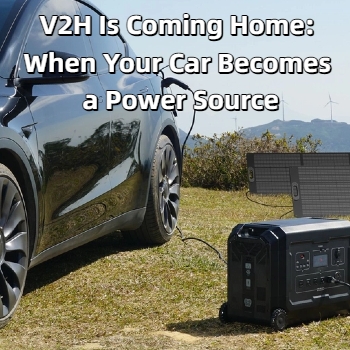
    V2H Is Coming Home: When Your Car Becomes a Power Source
    Oct 29, 2025
    In the evolving world of clean energy, Vehicle-to-Home (V2H) is no longer just a futuristic concept — it’s becoming a real-life solution. 🚗⚡🏡 Imagine this: your electric vehicle not only charges from your home but also powers your home when needed. Sounds amazing, right? 🔄 What Exactly Is V2H? V2H (Vehicle-to-Home) technology allows bidirectional energy flow — meaning energy can move both ways between your EV and your home’s power system. ✅ When electricity is cheap or from renewable sources (like solar ☀️), you charge your EV. ✅ When there’s a blackout or high electricity demand, your car’s battery can send power back to your house. It’s an intelligent way to balance energy, reduce costs, and make our homes more sustainable 🌱. 🌍 Why Is V2H Becoming a Hot Topic Now? The world is facing an energy transformation — and smart energy systems are at its core. As EV adoption grows, millions of cars are turning into mobile energy storage units. In places like Japan and California, V2H is already moving from pilot programs to mass-market adoption. The technology helps stabilize the grid and supports emergency power needs during natural disasters or peak demand. This trend signals something bigger: 💡 The EV is no longer just a vehicle — it’s part of the home energy ecosystem. ⚙️ How FES Power Fits Into the Future 🔋 At FES Power, we’ve been closely following the V2H trend and integrating this forward-thinking concept into our R&D. 🚀 Our EV chargers — from high-power DC chargers to mobile charging systems — are designed with smart communication protocols, making them ready for future bidirectional upgrades. We believe the next generation of chargers won’t just fill batteries — they’ll connect homes, vehicles, and grids. That’s why we’re exploring custom V2H-compatible solutions, tailored for partners and energy innovators who want to join this revolution. ⚡💚 If your team or project is interested in developing or testing V2H applications, we’d love to collaborate. Together, we can bring this technology to life — whether for residential, commercial, or emergency backup scenarios. 💬 Let’s Build Smarter Energy Together 🤝 At FES Power, innovation isn’t just a word — it’s our direction. We see a world where every car is a power station, every charger is intelligent, and every home is energy independent. 🌎🔋 If you’re also passionate about V2H technology or customized smart charging systems, we invite you to reach out to us! 📩 info@fespower.com 🌐 www.fespower.com Let’s make the future of energy smarter, cleaner, and more connected. 💫
    Read More
  • The Future of EV Charging: Smarter, Greener, More Connected
    The Future of EV Charging: Smarter, Greener, More Connected
    Nov 07, 2025
    🚘As electrification accelerates, the EV charging industry is undergoing a profound transformation. In the past, the race was all about speed — who could charge faster. But today, the conversation has evolved. The future isn’t just about faster charging — it’s about intelligence, flexibility, sustainability, and connectivity. At FES Power, we are driving this evolution forward. From our high-performance DC fast chargers to our Meta Series mobile charging systems and V2H/V2G bidirectional chargers, we’re redefining what “charging” can mean — not just for vehicles, but for the entire energy ecosystem. 💡 Because to us, the true future of charging isn’t just power — it’s connection.    ⚙️ Is “Faster Charging” Enough for the Future? Ultra-fast charging has become the industry benchmark — 600kW power, 800V platforms, and advanced liquid-cooled cables are now shaping the next generation of chargers.  ⏩But here’s a question worth asking: Once “fast” becomes standard, what comes next? We believe the answer lies in making charging smarter — where the charger adapts, communicates, and learns to optimize every connection. 🤖 Can a Charger “Think”? Yes — and it already is. 🔍 Smart charging technology is transforming how energy is distributed and managed: ⚙️Dynamic power allocation  🛰️Cloud monitoring & data-driven insights  🧠Predictive maintenance and AI-based diagnostics  Within the FES Power ecosystem, intelligent control systems enable load balancing across multiple chargers, optimizing performance and minimizing power waste. When a charger can think, energy becomes truly intelligent. 🌿 How Can Charging Be Greener? 🌱EVs are only as clean as the energy that powers them.  ☀️🔋That’s why FES Power is advancing integrated solar + storage + DC charging solutions, creating self-sustaining systems that utilize renewable energy wherever possible.  In the cities and industrial parks of tomorrow, sunlight, storage, and smart charging will form a continuous, circular energy loop. Sustainability is no longer just an idea — it’s becoming a real, deployable solution. 🚗 Do We Still Need Fixed Charging Stations? Maybe not everywhere. 💡 As mobility diversifies, flexibility becomes essential. ⚡Our Meta & Meta+ Mobile Charging Vehicles deliver energy wherever it’s needed — ports, mining sites, events, or emergency zones. 🚙 With these mobile systems, charging is no longer tied to a single location — it moves with you. The future of charging is not fixed, but free. 🔄 Can Chargers, Cars, and the Grid “Talk” to Each Other? Absolutely. 🔌 Through V2X (Vehicle-to-Everything) technology, EVs are evolving into mobile power sources: 🏠V2H: Vehicles powering homes during outages  ⚡V2G: Vehicles returning power to the grid to balance demand  FES Power’s bidirectional chargers make this energy dialogue possible. When energy flows both ways, the grid becomes more stable, and users become active participants in the energy ecosystem. 🌐 Conclusion: The Future of Charging Is a Multi-Dimensional Revolution The next era of EV charging isn’t just about “speed”. ⚡ It’s about being smarter, greener, more flexible, and more connected. 🌍FES Power is creating the link between today’s innovation and tomorrow’s energy freedom. 💡🛜https://www.fescharging.com/  
    Read More
  • Can Drivers Stay Inside the Car While Charging an EV?
    Can Drivers Stay Inside the Car While Charging an EV?
    Nov 10, 2025
    As electric vehicles (EVs) become a mainstream mode of transportation, more drivers are starting to wonder: “Can I stay inside my car while it’s charging?” This simple question actually reflects a deeper curiosity about charging safety, comfort, and the evolution of EV charging infrastructure. 🔍 Why Does This Question Arise? Unlike refueling at a gas station, charging an EV often takes much longer—sometimes 30 minutes or more. Naturally, many drivers prefer to stay inside the car to wait. But concerns soon follow: Is it truly safe to remain inside during high-voltage charging? Could there be any risks in enclosed environments, such as lack of ventilation or electromagnetic exposure? From a technical perspective, modern charging systems are well-protected. EV chargers and vehicles communicate through multiple safety layers — including insulation monitoring, ground detection, and connection verification — before power is delivered. In short, staying inside the car is generally safe from an electrical standpoint. The system simply won’t allow charging if there’s any risk. 🚗 Best Practices for Different Charging Scenarios Safety aside, the optimal behavior varies by location: 🏠 Home charging: Drivers can briefly remain inside the car, but stepping out for better air circulation and overall safety is still recommended. 🏙️ Public charging stations (malls, service areas): Modern stations increasingly provide dedicated lounges, cafés, or waiting zones, allowing drivers to rest or work comfortably while their vehicles charge. 🏢 Underground or enclosed areas: In poorly ventilated spaces, it’s best to exit the vehicle to prevent air quality issues and ensure a quick response in case of emergency. 🌿 From “Charging” to “Experience”: The Next Step Charging stations are no longer just about supplying power—they’re becoming experience-driven service hubs. Forward-thinking operators are introducing: ☕Smart rest pods and comfort lounges  📶Mobile workspaces with Wi-Fi  💡Automated vending and ambient lighting systems  This transformation not only enhances driver comfort but also adds commercial value to the charging ecosystem. In the future, “vehicle–charger–driver integration” will define how we design EV infrastructure. ⚙️ FES Power’s Perspective and Innovation At FES Power, we believe that great charging solutions go beyond speed—they deliver safety, flexibility, and a better experience. Our DC Series fast chargers feature intelligent safety protection and high efficiency for both commercial and public use. The Meta+ mobile charging unit provides up to 60kW output, enabling on-demand charging in areas where fixed stations are impractical. We also emphasize scenario-based solutions, bringing adaptable charging services to urban centers, logistics hubs, and smart campuses alike. Through these innovations, FES Power aims to redefine what “charging convenience” means in a smarter energy ecosystem. ⚡ 💬 Final Thought The question “Can drivers stay inside the car while charging?” is not only about safety, but also about experience. As EV adoption grows, charging will evolve from a technical process into a service experience that connects people, vehicles, and energy seamlessly. 🌍At FES Power, we envision a future where charging is smarter, safer, and more human-centered — because true innovation starts with understanding how people live and drive. 🔋
    Read More
  • How Is AI Smart Charging Reshaping the Future of EV Charging?
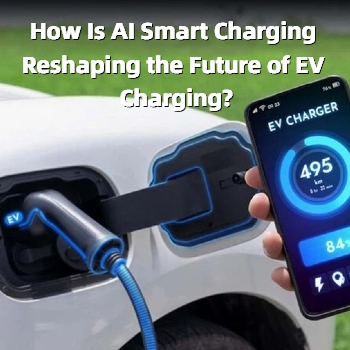
    How Is AI Smart Charging Reshaping the Future of EV Charging?
    Dec 22, 2025
    As electric vehicles (EVs) move from early adoption to mass deployment, charging infrastructure is facing unprecedented pressure. Faster charging, grid stability, lower operating costs, and better user experience are no longer optional—they are essential. In this context, AI smart charging is emerging as a critical enabler, transforming conventional charging piles into intelligent energy nodes 🌍🔌 ⚡Why Is AI Becoming Essential in EV Charging Systems? 🧠 Traditional EV charging systems are largely reactive: power is delivered when a vehicle is plugged in, with limited awareness of grid conditions, user behavior, or energy pricing. This approach is increasingly inefficient at scale. AI changes this paradigm by introducing: Predictive decision-making Real-time data processing Autonomous optimization Through machine learning algorithms and data analytics, AI enables charging systems to anticipate demand, balance loads, and dynamically adjust charging strategies—making the entire charging ecosystem smarter, safer, and more efficient 🚗📊. 🔋How Does AI Smart Charging Improve User Experience? 😊 From a driver’s perspective, AI smart charging significantly enhances convenience and reliability. Key benefits include: ⏱️ Optimized charging schedules based on driving habits 💰 Cost-efficient charging aligned with off-peak electricity pricing 🔔 Smart notifications for charging completion or anomalies 🚘 Multi-vehicle management for households and fleets Instead of adapting to charging infrastructure, users experience infrastructure that adapts to them—an essential shift as EV ownership scales globally 🌐✨. 🌱What Role Does AI Play in Grid Stability and Energy Management? ⚙️ One of the biggest challenges in EV adoption is the impact of large-scale charging on power grids. Uncoordinated charging can lead to peak overloads, voltage fluctuations, and higher infrastructure costs. AI smart charging directly addresses this by: ⚡ Balancing charging loads in real time 📉 Reducing peak demand through intelligent load shifting 🔄 Enabling V2G (Vehicle-to-Grid) and V2B (Vehicle-to-Building) applications 🌞 Integrating renewable energy sources such as solar and wind As a result, EV chargers evolve from passive energy consumers into active grid participants, supporting a more resilient and sustainable energy system 🌍🔋. How Has AI Influenced the Evolution of EV Chargers? 🕰️🔌 The development of EV charging technology can be broadly divided into three stages: 🔹 Stage 1: Basic Power Delivery Early chargers focused solely on providing electricity—minimal intelligence, no connectivity, limited safety logic. 🔹 Stage 2: Connected & Smart Chargers With IoT and cloud platforms, chargers gained remote monitoring, basic scheduling, and fault diagnostics. 🔹 Stage 3: AI-Driven Intelligent Charging Today’s advanced chargers leverage AI for: Predictive maintenance 🛠️ Adaptive power allocation ⚡ Behavioral learning 📈 Autonomous system optimization 🤖 This evolution marks a fundamental shift—from hardware-centric devices to software-defined energy platforms. What Does AI Enable for Operators and Fleet Owners? 🚚📡 For commercial operators, AI smart charging delivers measurable business value: 📊 Operational efficiency through data-driven insights 🔍 Predictive maintenance reducing downtime and service costs 🚛 Fleet charging optimization for logistics and public transport 📈 Scalable network management across regions In competitive markets, AI is rapidly becoming a differentiator—not just a feature. What Is the Industry Expecting from AI Smart Charging in the Future? 🔮🚀 Looking ahead, the EV charging industry has clear expectations for AI integration: 🌐 Full interoperability across vehicles, chargers, and grids 🧩 Standardized AI platforms for global deployment 🔐 Enhanced cybersecurity and data protection ⚡ Megawatt-level intelligent DC charging for trucks and heavy-duty EVs 🤝 Deeper integration with smart cities and energy storage systems AI smart charging is no longer a futuristic concept—it is becoming the foundation of next-generation mobility and energy infrastructure. FES Power is a professional EV charging solution provider focused on the development and manufacturing of AC and DC EV chargers for residential, commercial, and fleet applications. Our products are designed with flexibility and future intelligence in mind, providing a solid hardware foundation for AI-driven smart charging systems. Final Thoughts: Is AI the Brain of Future EV Charging? 🧠 As EV adoption accelerates, the industry is realizing that charging intelligence matters as much as charging speed. AI smart charging brings together efficiency, sustainability, and user-centric design—turning charging stations into intelligent energy hubs. For manufacturers, operators, and energy providers alike, embracing AI is not just an upgrade—it is a strategic necessity in shaping the future of electric mobility 🚘🌍.  
    Read More
  • How Many Types of EV Chargers Are There?
    How Many Types of EV Chargers Are There?
    Dec 24, 2025
    A Simple Guide to EV Charger Types — and How to Choose the Right One As electric vehicles (EVs) become more popular worldwide 🌍, many customers ask the same question: 👉 How many types of EV chargers are there, and which one should I choose? This article explains EV charger types in a simple, visual, and easy-to-understand way, helping you quickly identify the right charging solution — and showing how FES Power supports different charging scenarios 🔋. 🔌 1. EV Chargers by Charging Method (The Most Important Difference) ⚙️ AC EV Chargers — The Everyday Charging Solution AC EV chargers supply alternating current to the vehicle, where the onboard charger converts it into DC power. Key features ✅ Stable and safe for daily use 💰 Lower cost and simpler installation 🏠 Ideal for long parking durations Common power options:7kW/11kW/22kW Typical use cases 🏡 Home garages 🏢 Office parking 🏨 Hotels & shopping centers 🔷 FES Power solution FES Power offers smart AC EV chargers for residential and commercial use, supporting Type 2 connectors, RFID, mobile app control, and OCPP compatibility 📱. These chargers are ideal for customers seeking reliable, cost-effective, and future-ready charging solutions. ⚡ DC EV Chargers — Fast Charging When Time Matters DC EV chargers convert AC to DC inside the charger and deliver power directly to the vehicle battery. Key features 🚀 Much faster charging 🔋 High power output 🏗️ Designed for heavy-duty use Common power options:60kW/120kW/160kW/240kW+ Typical use cases 🛣️ Highway service areas 🏙️ Urban fast-charging stations 🚚 Logistics fleets 🚌 Electric buses & trucks 🔷 FES Power solution FES Power provides customizable DC fast chargers supporting CCS2 connectors, single or dual guns, and flexible power configurations 🔧. Our DC chargers are designed for continuous operation, modular expansion, and long-term reliability. 🧱 2. EV Chargers by Installation Type 🧩 Wall-Mounted Chargers Compact and space-saving Mostly AC chargers Ideal for homes and small parking areas FES Power Wall-mounted AC chargers designed for residential garages and apartment buildings 🏠. 🏗️ Floor-Standing Chargers Strong and professional appearance Suitable for public and commercial locations Available for AC and DC FES Power Floor-standing chargers for shopping malls, workplaces, and public charging stations 🅿️. 🔄 Portable / Mobile Chargers Plug-and-play design Temporary or emergency charging Lower power output FES Power Mobile charging solutions for flexible and on-demand charging needs 🚙. ⏱️ 3. EV Chargers by Charging Speed 🐢 Level 1 Charging Standard household outlet Very slow charging Emergency or backup use 🚶 Level 2 Charging Dedicated AC power supply Balanced speed and cost Most common choice worldwide 🔷 FES Power focus FES Power AC chargers are optimized for Level 2 charging, covering the majority of daily charging scenarios ⚖️. 🏎️ Level 3 Charging (DC Fast Charging) High-power DC output Short charging time Ideal for public and fleet use 🔷 FES Power focus FES Power DC chargers support scalable power expansion, helping customers grow from basic fast charging to high-power hubs 📈. 🔗 4. EV Chargers by Connector Type Different regions use different standards 🌐. Connector Region Type Type 1 North America, Japan AC Type 2 Europe, Global AC CCS1 / CCS2 North America / Europe DC CHAdeMO Japan DC GB/T China AC & DC 🔷 FES Power FES Power chargers support Type 2 and CCS2 standards, fully compliant with European and global market requirements ✅. 🏘️ 5. EV Chargers by Application Scenario 🏡 Home Charging AC chargers Focus on safety and ease of use FES Power Smart home chargers built for daily convenience and long-term safety 🔐. 🏢 Commercial Charging AC + DC combinations Billing and backend management FES Power Commercial chargers supporting OCPP platforms, ideal for operators and property owners 💼. 🚛 Fleet, Bus & Truck Charging High-power DC chargers Designed for intensive use FES Power Heavy-duty DC charging solutions for logistics fleets, bus depots, and industrial applications 🏭. ✅ 6. One Simple Takeaway If you are new to EV charging, remember this: ⚡ AC chargers are best for daily and overnight charging, while DC chargers are essential for fast charging and fleet operations. Understanding these categories makes EV charger selection simple and stress-free. 🌱 Conclusion: Choose the Right EV Charger with Confidence There is no one-size-fits-all EV charger. The right choice depends on: ⚡ Charging speed requirements 🧱 Installation environment 🚗 Vehicle type 📊 Usage frequency FES Power delivers a complete range of AC and DC EV charging solutions, helping customers build reliable, scalable, and future-proof charging infrastructure. With the right knowledge — and the right partner — EV charging becomes easy 🔋✨.
    Read More

leave a message

leave a message
If you are interested in our products and want to know more details,please leave a message here,we will reply you as soon as we can.
submit
Contact Us: bella@fespower.cn

home

products

WhatsApp

Contact Us