Customized Electric Vehicle Charger Enterprise
Home

Blog

Blog

  • How Do EV Charging Business Models Actually Work?
    How Do EV Charging Business Models Actually Work?
    Jan 28, 2026
    As electric vehicles (EVs) continue to grow worldwide, EV charging is no longer just infrastructure—it has become a scalable business opportunity. But how do EV charging operators actually make money? 🤔 What business models are most popular in today’s market? And which models offer the best return on investment? This guide breaks down the most common EV charging business models, explains how they work, and highlights where real profitability lies—especially for commercial and fleet operators. 🔌What Are the Main EV Charging Business Models Today?  The EV charging ecosystem typically operates under several core business models, each designed for different locations, investment levels, and customer segments: Pay-Per-Use Public Charging Subscription-Based Charging Host-Owned & Revenue Sharing Fleet & Depot Charging Mobile & Temporary Charging Energy Storage–Integrated Charging Each model has unique cost structures, revenue streams, and scalability potential. 💳How Does Pay-Per-Use Charging Generate Revenue?  This is the most widely used public charging model. Operators install chargers in high-traffic locations such as shopping malls, highways, and parking lots, and charge drivers based on: Energy consumed (kWh pricing) Charging time (per-minute pricing) Session-based pricing Advantages: ✅ Easy to scale ✅ Predictable revenue per session ✅ Suitable for urban and commercial areas Challenges: ⚠️High installation costs ⚠️ Dependent on traffic volume 📱How Do Subscription-Based Charging Models Work?  Some operators offer monthly membership plans that provide discounted charging rates or unlimited charging. Popular among: Daily commuters Ride-hailing drivers Corporate EV fleets Benefits: ✅ Stable recurring revenue ✅ Strong customer loyalty ✅ Better demand forecasting This model is gaining traction in dense urban EV markets where frequent charging is common. 🏢What Is the Revenue-Sharing Model with Site Hosts?  In this model, property owners partner with charging operators. The operator installs and manages chargers, while the host provides space and shares revenue. Common host sites include: Hotels Shopping centers Office parks Parking operators Why it works: ✅ Lower upfront investment ✅ Faster market expansion ✅ Hosts benefit from increased foot traffic This is one of the fastest-growing models in 2025–2026. 🚚Why Is Fleet & Depot Charging Becoming So Profitable? ⚡ Fleet charging focuses on logistics companies, delivery fleets, corporate vehicles, and ride-hailing platforms. Revenue drivers include: Long-term charging contracts High daily charger utilization Lower marketing costs Key advantages: ✅ Predictable demand ✅ Faster ROI ✅ Strong scalability Fleet charging is expected to be one of the most profitable EV charging segments in the coming years 📈. 🚐🔋How Does Mobile EV Charging Create New Business Opportunities?  Mobile EV charging is an emerging model designed for temporary, emergency, and flexible charging needs. Use cases include: Event charging Roadside assistance Parking overflow Remote or off-grid locations Why it’s growing fast: ✅ No fixed installation required ✅ Fast deployment ✅ Ideal for cities with limited infrastructure 🚀 FES Power’s mobile EV charging solutions support rapid deployment, integrated battery storage, and flexible output—making them ideal for urban backup charging, commercial events, and emergency rescue scenarios. 🔋⚡How Does Battery Storage Improve Charging Profitability?  Energy storage–integrated charging enables operators to store low-cost electricity and reduce peak grid demand. Business benefits include: ✅ Lower electricity costs ✅ Reduced grid upgrade expenses ✅ Peak shaving & demand charge savings ✅ Ability to operate in weak-grid areas 🌱 FES Power’s battery-integrated EV charging systems combine smart energy management with high-efficiency charging, helping operators optimize operating costs and maximize long-term ROI. 📊 Fleet charging + energy storage models are currently seen as top ROI opportunities in 2026. How Can New Operators Choose the Right Business Model? 🤝 Before launching an EV charging business, operators should evaluate: Target customer type Site traffic & demand Grid capacity & power availability Investment budget Long-term expansion goals ⚡ FES Power provides scalable EV charging solutions, including AC chargers, DC fast chargers, mobile charging units, and battery energy storage systems, helping partners build flexible and future-proof business models. 🚀Is the EV Charging Business Still Worth Investing In?  The EV charging industry continues to expand as global EV adoption accelerates. With the right business model, smart site selection, and reliable charging hardware, operators can build sustainable and profitable charging networks. 💡 Whether you are launching a public charging station, building a fleet charging depot, or exploring mobile EV charging, selecting the right technology partner is critical. 🔌 FES Power is committed to delivering efficient, reliable, and globally certified EV charging solutions—empowering businesses to scale smarter and charge faster worldwide.
    Read More
  • What Is a Mobile EV Charging Vehicle? How Does It Work?
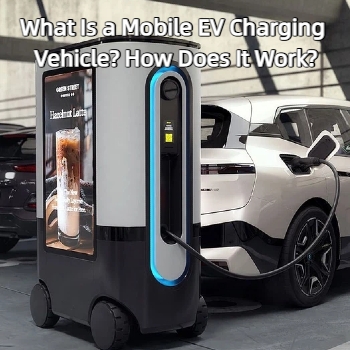
    What Is a Mobile EV Charging Vehicle? How Does It Work?
    Jan 30, 2026
    As electric vehicles (EVs) continue to grow worldwide, charging infrastructure is evolving beyond traditional fixed charging stations. One of the most promising innovations is the Mobile EV Charging Vehicle—a flexible, on-demand charging solution designed to bring power directly to EV users.   But what exactly is a mobile EV charging vehicle, and how does it work? This guide explains the technology, applications, and why it is becoming an important part of the future EV ecosystem. What Is a Mobile EV Charging Vehicle? A Mobile EV Charging Vehicle is a truck, van, or trailer equipped with an onboard battery energy storage system (BESS) and EV charging equipment, allowing it to deliver AC or DC fast charging anywhere, without relying on a fixed grid connection. Instead of EV drivers traveling to charging stations, the charger travels to the vehicle—offering flexibility, convenience, and rapid deployment. These mobile charging units are especially useful in: How Does a Mobile EV Charging Vehicle Work? A mobile EV charging vehicle operates like a self-contained power station on wheels. Its operation can be broken down into four key systems: 1. Energy Storage System (Battery Pack) The vehicle carries a large-capacity lithium battery, typically ranging from 100 kWh to over 600 kWh, which stores electrical energy for EV charging. This battery can be recharged at: 2.Power Conversion System (PCS) The PCS (Power Conversion System) converts stored battery energy into a stable and safe output suitable for EV charging. It manages: 3. EV Charging Interface (AC / DC Fast Charging) Depending on the design, mobile charging vehicles can support: AC charging for slow and overnight use DC fast charging (60 kW–300 kW+) for rapid energy delivery CCS, CHAdeMO, GB/T, or multi-standard connectors This enables compatibility with most EV brands and models. 4. Smart Control & Monitoring System Modern mobile chargers feature IoT-enabled monitoring, allowing operators to: Track battery state of charge Monitor charging sessions Optimize dispatch and fleet scheduling Perform remote diagnostics This transforms mobile charging into a smart, scalable energy service. What Are the Key Advantages of Mobile EV Charging? ✅ No Need for Fixed Infrastructure Mobile chargers eliminate the need for costly civil works, grid upgrades, or long permitting timelines. ✅ Rapid Deployment Unlike fixed charging stations that may take months to install, mobile charging vehicles can be deployed within weeks or even days. ✅ On-Demand & Emergency Support They can rescue stranded EVs, support peak demand, or serve temporary high-traffic areas. ✅ Cost-Effective for Fleets Fleet operators can use mobile charging to reduce downtime, optimize energy costs, and scale charging capacity dynamically. ✅ Ideal for Remote or Temporary Sites Perfect for construction sites, remote projects, outdoor events, or off-grid operations. Common Use Cases for Mobile EV Charging Vehicles 🚗 Roadside Assistance & Emergency Charging Providing fast rescue charging for EV drivers experiencing low battery levels. 🚚 Fleet & Logistics Charging Supporting taxi fleets, delivery vans, rental fleets, and corporate EV operations. 🏙 Urban Residential Charging Serving apartment residents without access to home chargers. 🎪 Events & Temporary Installations Powering EVs at exhibitions, festivals, test-drive events, and pop-up locations. 🏗 Industrial & Remote Operations Delivering energy to EVs in construction zones, mining areas, and rural regions. How Powerful Are Mobile EV Charging Vehicles? Modern mobile charging solutions typically offer: 60 kW–120 kW DC fast charging for passenger vehicles 150 kW–300 kW+ for high-performance or fleet applications Scalable battery capacity to support multiple charging sessions per deployment As battery and power electronics continue to improve, mobile chargers are approaching ultra-fast charging performance. FES Power Mobile EV Charging Solutions At FES Power, we design and manufacture high-performance mobile EV charging systems tailored for commercial, fleet, and emergency applications. Key Features of FES Power Mobile Charging Vehicles: ⚡ High-capacity onboard battery systems 🔌 DC fast charging up to high power levels 🚚 Vehicle-mounted or trailer-based designs 🧠 Smart monitoring & remote management 🔒 Advanced safety and thermal management 🌍 Multi-standard connector compatibility (CCS, GB/T, CHAdeMO) Our mobile charging solutions help customers deploy EV charging faster, reduce infrastructure investment, and unlock new revenue streams in the growing EV market. Is Mobile EV Charging the Future of EV Infrastructure? Mobile EV charging is not designed to replace fixed charging stations—but it complements them by filling infrastructure gaps, managing peak demand, and enabling rapid expansion. As cities electrify transportation and fleets transition to EVs, mobile charging vehicles will play a crucial role in ensuring flexibility, resilience, and accessibility in the charging ecosystem. Conclusion A Mobile EV Charging Vehicle is a smart, flexible, and scalable solution that brings EV charging directly to drivers—wherever and whenever it’s needed. With advancing battery technology, smart energy management, and innovative manufacturers like FES Power, mobile charging is set to become a key pillar of the global EV infrastructure.
    Read More
  • AC vs DC EV Chargers: What’s the Real Difference?
    AC vs DC EV Chargers: What’s the Real Difference?
    Feb 03, 2026
    As electric vehicles (EVs) continue to gain global adoption, EV charging infrastructure has become a critical part of the transition. One of the most common — and confusing — questions for newcomers and business operators alike is:Should I choose an AC EV charger or a DC EV charger? 🤔While both serve the same purpose — charging electric vehicles — the difference between AC and DC chargers goes far beyond charging speed. It impacts installation cost, user experience, business models, and long-term return on investment. Let’s break it down step by step. 👇What Is an AC EV Charger? 🔌An AC (Alternating Current) EV charger supplies AC power directly to the vehicle. Inside the EV, an onboard charger converts AC electricity into DC power to charge the battery.Key Characteristics of AC Chargers:⚡ Power Range: Typically 3.7 kW – 22 kW🚗 Charging Speed: Slow to medium (several hours for a full charge)🏠 Common Use Cases: Homes, offices, hotels, residential parking💰 Lower Cost: More affordable equipment and installationAC chargers are ideal where vehicles are parked for long periods — such as overnight or during working hours.✅ Pros:Lower upfront investmentSimpler installationSuitable for daily, low-demand charging ❌ Cons: Long charging timeLimited suitability for commercial fast-turnover locationsWhat Is a DC EV Charger? ⚡⚡A DC (Direct Current) EV charger converts AC power into DC inside the charger itself, delivering DC electricity directly to the vehicle’s battery — bypassing the onboard charger.Key Characteristics of DC Chargers:⚡Power Range: 30 kW – 400 kW+🚀Charging Speed: Fast to ultra-fast🏢Common Use Cases: Highways, fleet depots, public charging hubs🔋High Efficiency: Ideal for quick top-upsDC fast chargers are the backbone of modern commercial and public charging networks.✅ Pros:Extremely fast chargingHigher user turnoverStrong revenue potential for operators❌ Cons:Higher equipment and installation costRequires stronger grid connectionAC vs DC EV Chargers: Side-by-Side Comparison  Feature AC Charger DC Charger Charging Speed Slow–Medium 🐢 Fast–Ultra Fast 🚀 Power Conversion Inside the vehicle Inside the charger Typical Power Up to 22 kW 30 kW–400 kW+ Installation Cost Low Higher Best For Home & workplace Commercial & public ROI Potential Moderate High   Which EV Charger Should You Choose? 🤔The right choice depends on application, budget, and charging demand:🏠 Residential or workplace charging: AC chargers are sufficient🅿️ Shopping malls, parking operators: Mix of AC + DC🚛 Fleets, logistics, taxis: DC fast chargers🛣️ Highway & public stations: High-power DC charging is essentialIn many real-world projects, a hybrid deployment strategy delivers the best balance between cost and performance.How FES Power Supports Both AC & DC Charging Needs 🔋⚙️At FES Power, we provide a full range of commercial-grade EV charging solutions designed for global markets.🚀 Our DC Fast Charging SolutionsHigh-power DC chargers (120 kW, 160 kW and scalable configurations)Split-type architecture with power cabinets and charging terminalDesigned for public charging, fleets, and high-utilization sitesSmart protection, stable performance, and flexible expansion🔌Our AC Charging SolutionsReliable AC chargers for commercial and semi-public useIdeal for hotels, offices, residential parkingCompatible with international standards and certifications🌍 All FES Power products are built with export markets in mind, supporting major charging standards and compliance requirements.Final Thoughts: It’s Not AC or DC — It’s the Right Tool for the Job ✅ There is no “one-size-fits-all” answer when it comes to EV charging. AC chargers offer affordability and simplicity, while DC chargers deliver speed, efficiency, and higher commercial returns.Understanding the real difference between AC and DC EV chargers allows you to:Design better charging infrastructureOptimize investment and operating costsDeliver a better charging experience to EV drivers If you’re planning a charging project or exploring commercial opportunities, choosing the right charging technology is the first step toward long-term success.
    Read More
  • Why Are Traditional EV Charging Stations Struggling to Stay Profitable?
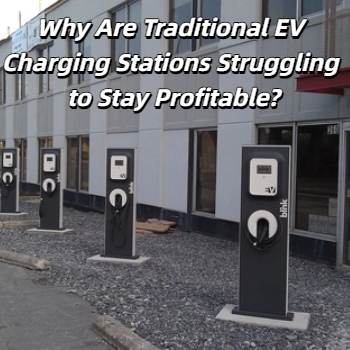
    Why Are Traditional EV Charging Stations Struggling to Stay Profitable?
    Feb 05, 2026
    As EV adoption accelerates worldwide 🚗⚡, charging stations are being deployed faster than ever. However, many operators are discovering a hard truth: traditional EV charging stations are struggling to remain profitable.Behind the growing demand lies a combination of high costs, low utilization, and inflexible infrastructure. So what’s really holding profitability back—and how can operators fix it? Are High Upfront Costs Draining Profit Before Operations Even Begin? 💰⚠️Traditional EV charging stations typically require a heavy upfront investment. Fixed-power DC chargers demand dedicated power modules, complex civil works, and expensive grid upgrades 🔌🏗️.By the time a station goes live, operators are already facing long payback periods and tight margins. In many cases, profitability feels out of reach before the first vehicle even plugs in.Is Low Utilization the Silent Revenue Killer? 📉🚘While EV numbers are increasing, charger usage is often uneven throughout the day. Peak hours bring congestion ⏱️, while off-peak hours leave chargers idle 😴.A fixed 120 kW or 180 kW charger often runs far below its full capacity, meaning expensive assets are underutilized most of the time. Low utilization directly translates into weak revenue performance and poor ROI.Are Fixed-Power Chargers Too Rigid for a Changing EV Market? 🔒⚡Traditional chargers allocate a fixed amount of power to a single vehicle, regardless of real-time demand. This rigidity causes power waste when vehicles don’t need full output and limits the ability to serve multiple vehicles efficiently 🔄.As EV battery sizes grow and fast-charging expectations rise 🚀, fixed-power systems quickly become outdated, forcing operators to reinvest sooner than planned.Do High Maintenance and Downtime Reduce Profitability Further? 🛠️❌All-in-one chargers concentrate power modules, control systems, and interfaces into a single unit. When something fails, the entire charger may go offline 🚫⚡.This increases maintenance costs, prolongs downtime, and directly impacts revenue—especially at high-traffic locations where availability is critical.Is Limited Grid Capacity Blocking Expansion? 🌍🔋Many charging sites face strict grid limitations. Expanding a traditional charging station often requires transformer upgrades, lengthy utility approvals, and high connection fees ⏳💵.As a result, scaling becomes slow, expensive, or simply impossible—especially in urban areas and emerging markets. Is There a Smarter, More Profitable Charging Model? 🤔⚡To overcome these challenges, forward-thinking operators are shifting toward split-type flexible EV charging systems—a fundamentally different architecture designed for efficiency and scalability.How FES Power’s Split-Type Flexible Charging System Changes the Game 🚀FES Power’s solution separates the power supply from the charging terminals, creating a centralized and intelligent charging architecture ⚙️⚡. A high-capacity power cabinet—up to 720 kW—dynamically distributes power to multiple front-end terminals in real time.Instead of wasting capacity, power is allocated exactly where it’s needed, when it’s needed 🔄📊. This dramatically improves utilization rates and allows operators to serve more vehicles with the same grid connection.Why Does This Mean Faster ROI and Lower Risk? 📈💡With flexible power sharing, operators no longer need to oversize infrastructure for peak demand alone. The system adapts automatically to real charging behavior, improving revenue per site and shortening payback periods 💰⚡.The modular design also makes future expansion simple—new terminals can be added without installing entirely new power units.How Does This Reduce Operating and Maintenance Costs? 🛠️✅Centralized power cabinets simplify maintenance by reducing scattered failure points. Modular power units allow fast replacement and minimize downtime ⏱️.More uptime means happier drivers 😊 and more consistent charging revenue. Is This the Future of Profitable EV Charging? 🔮⚡For public fast-charging operators, fleet depots, highway service areas, and commercial charging sites, flexibility is no longer optional. Profitability depends on smarter power management, scalable design, and grid-friendly deployment 🌱⚡.Final Thought: Profitability Comes from Flexibility 💡Traditional EV charging stations are struggling not because demand is weak—but because their infrastructure is inefficient and inflexible.To succeed in 2026 and beyond, charging operators must rethink how power is delivered, shared, and scaled. Split-type flexible charging systems represent the next generation of profitable EV infrastructure.At FES Power, we help operators transform charging stations from cost centers into scalable, revenue-generating assets .
    Read More
  • What No One Tells You Before You Invest in EV Charging Stations
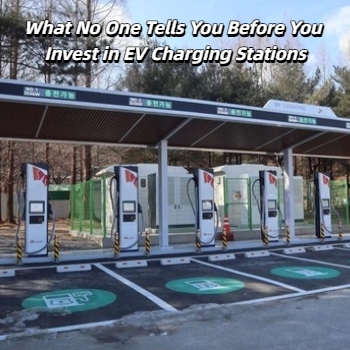
    What No One Tells You Before You Invest in EV Charging Stations
    Feb 09, 2026
    The EV charging industry looks like a golden opportunity. Governments promote electrification, EV sales keep rising, and charging demand seems guaranteed.But behind the optimistic headlines, many first-time investors discover a very different reality. Here’s what most people don’t tell you before you invest in EV charging stations — explained clearly, without hype.🚧 1. High Power Doesn’t Automatically Mean High ProfitMany new investors assume:“If I install a 120 kW or 240 kW fast charger, I’ll earn more.”In reality, power utilization matters more than peak power.Fast chargers often run at low utilization ratesVehicles rarely charge at full power for longIdle power capacity still costs money (grid fees, demand charges)📌 Result: High-capex chargers with long ROI periods.👉 What works better? Smart power distribution — allocating available power dynamically based on real demand, not theoretical maximums.💰 2. Grid Connection Is Often the Real Cost DriverFew investors realize that grid upgrades can cost as much as the charger itself.Hidden costs includeTransformer upgradesUtility approval delaysDemand charges during peak hoursLimited grid capacity at commercial sites⚠️ In many regions, grid constraints, not hardware, limit expansion.👉 This is why modular and centralized power architectures matter. With a shared power cabinet, operators can scale charging points without repeating grid investments.🧩 3. Traditional “All-in-One” Chargers Are InflexibleAll-in-one DC chargers look simple — until your business grows.Problems appear when:Demand varies across time and locationsOne charger fails and capacity is lostPower cannot be redistributed efficientlyEach charger acts as a standalone island, leading to:Low overall utilizationDifficult maintenancePoor scalability🔄 4. Scalability Is More Important Than SpeedThe most profitable charging operators think long-term:How easily can I add more charging points?Can I upgrade power without replacing hardware?Can one system serve cars, fleets, buses, or trucks?This is where split-type and flexible charging systems outperform traditional designs. 🔌 How FES Power Approaches EV Charging DifferentlyAt FES Power, we design EV charging systems around real-world operation, not just headline power numbers.⚙️ Our Key Solution: Split-Type Flexible Charging SystemInstead of installing multiple independent fast chargers, our system uses:🧠 Centralized Power Cabinets (up to 720 kW)🔗 Multiple Front-End Charging Terminals⚡ Dynamic Power Allocation based on vehicle demand✅ What This Means for InvestorsLower initial grid capacity requirementHigher overall power utilizationEasier site expansionReduced downtime riskBetter long-term ROI📊 One power cabinet can serve multiple charging points — power goes where it’s needed, when it’s needed.📈 5. EV Charging Is an Infrastructure Business, Not a Gadget BusinessThis is perhaps the biggest misconception.Successful EV charging projects focus on:System architectureEnergy managementLifecycle costOperational flexibilityNot just charger appearance or peak kW numbers.🚀 Final Thought: Smart Design Beats Blind ExpansionEV charging is still a strong long-term opportunity — but only for those who design intelligently from day one.Before investing, ask:Can my system adapt as demand changes?Am I paying for unused power?Will this design still make sense in 5 years? At FES Power, we help operators and investors build charging infrastructure that grows sustainably — not expensively.If you’re evaluating your first (or next) EV charging project, system design matters more than you think.
    Read More
  • Celebrating the Year of the Horse with Momentum and Progress
    Celebrating the Year of the Horse with Momentum and Progress
    Feb 11, 2026
    As the Lunar New Year of the Horse approaches, FES Power would like to extend our warmest wishes to our global customers, partners, and team members. 🎉 The Horse symbolizes speed, strength, resilience, and continuous progress—values that strongly reflect both the spirit of the new energy industry and our mission in advancing EV charging solutions worldwide. ⚡🌍 Over the past year, we have worked closely with partners across different markets, delivering flexible and reliable EV charging solutions for urban, commercial, and mobile applications. As we enter the new year, FES Power remains committed to supporting the global transition toward smarter and more sustainable electric mobility. 📅 Lunar New Year Holiday Notice Please note that FES Power will observe the Lunar New Year holiday during the following period: 🗓️ Holiday: February 13 – February 25, 2026 🔔 Business resumes on February 26, 2026 During the holiday, responses may be delayed. For urgent matters, please feel free to contact us via email or existing communication channels, and we will follow up promptly after the holiday. 📩 🐎 Best Wishes for the Year of the HorseAs we welcome the Year of the Horse, FES Power wishes you: ✨ Strong momentum and steady progress ✨ Successful partnerships and shared growth ✨ Good health, happiness, and prosperity May the new year bring renewed energy, faster progress, and exciting opportunities ahead. Let us continue moving forward together—toward a cleaner and more electrified future. 
    Read More
1 2 3 4 5 6 7 8

leave a message

leave a message
If you are interested in our products and want to know more details,please leave a message here,we will reply you as soon as we can.
submit
Contact Us: bella@fespower.cn

home

products

WhatsApp

Contact Us