Customized Electric Vehicle Charger Enterprise
Home

Commercial EV Charging

Commercial EV Charging

  • Why Are More B2B Customers Choosing Customizable-Power DC EV Chargers?
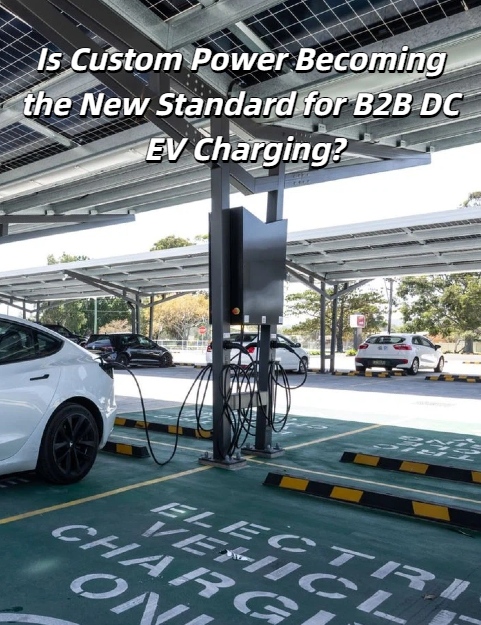
    Why Are More B2B Customers Choosing Customizable-Power DC EV Chargers?
    Dec 17, 2025
    For B2B customers, EV chargers are not showcase products—they are long-term infrastructure investments that must operate reliably and deliver a measurable return. Fixed-power DC chargers often create challenges in real deployments: ⚠️ Grid capacity constraints Many commercial sites—parking facilities, hotels, industrial parks, or logistics hubs—cannot support high-power chargers without costly grid upgrades. 💰 Unnecessary upfront investment (CAPEX) Over-specifying power often increases costs without improving utilization. 🔒 Limited flexibility for future expansion Fixed configurations can make scaling or adjusting power difficult later on. The result? Impressive specifications on paper, but suboptimal ROI in practice. ❓ What Do B2B Charging Scenarios Actually Need? Different B2B applications place very different demands on charging infrastructure: 🏨 Hotels & commercial parking Focus on balanced power distribution, simultaneous charging, and energy efficiency. 🚗 Dealers & showroom facilities Need compatibility with multiple vehicle models rather than maximum charging speed. 🚚 Fleet & logistics operations Prioritize stability, uptime, and predictable performance. 🏭 Industrial parks & business campuses Require phased deployment aligned with existing grid capacity. As a result, B2B buyers are increasingly asking: 🔸Can the charging power be customized to match current grid conditions? 🔸Can we start with lower power and scale up later? 🔸Is small-batch deployment supported for pilot projects? These questions explain why customizable-power DC chargers are gaining traction. ❓ What Are the Key Advantages of Customizable-Power DC Chargers? 🔹 1. How Can Custom Power Reduce Initial Investment? By aligning charger power with actual demand, businesses can: Avoid unnecessary grid expansion Reduce upfront equipment costs Improve overall project economics 🔹 2. How Does Custom Power Improve Flexibility and Scalability? Customizable configurations allow: Power levels that are not locked into a single fixed model Phased deployment strategies Easier future upgrades as demand grows 🔹 3. Why Does Power Matching Support Long-Term Operations? For B2B projects, reliability matters more than peak performance. Optimized power configurations help: Reduce long-term equipment stress Improve system stability Lower maintenance and operational costs 🛠️ ❓ How Does FES Power Support Customizable DC Charging for B2B Projects? At FES Power, our DC charging solutions are designed from the ground up with flexibility and real-world deployment in mind. 🚀 What We Offer B2B Customers: ⚡ Customizable DC charging power Configured based on site conditions and application requirements 📦 Small-batch customization support Ideal for pilot projects, regional rollouts, and specialized use cases 🧩 Modular system design Enables easier expansion and long-term maintenance 🏢 B2B-focused application support, including: Commercial real estate Fleet & logistics charging Dealer and distributor facilities Industrial parks and campuses Rather than simply delivering the highest power rating, we focus on one essential question: Does this configuration truly fit your project, grid capacity, and operating model? ❓ Is Power Customization the Future of B2B EV Charging? As the EV charging market becomes more mature, B2B customers are making more data-driven and practical decisions. Customizable-power DC chargers represent a shift from selling equipment to enabling successful projects. If you are planning a DC charging deployment—or looking for a flexible solution that can adapt to uncertain grid conditions and evolving demand—FES Power is ready to support your project with reliable, scalable DC charging solutions. 🔋 👉 Contact us to discuss your application scenario and customized power requirements.
    Read More
  • How Many Types of EV Chargers Are There?
    How Many Types of EV Chargers Are There?
    Dec 24, 2025
    A Simple Guide to EV Charger Types — and How to Choose the Right One As electric vehicles (EVs) become more popular worldwide 🌍, many customers ask the same question: 👉 How many types of EV chargers are there, and which one should I choose? This article explains EV charger types in a simple, visual, and easy-to-understand way, helping you quickly identify the right charging solution — and showing how FES Power supports different charging scenarios 🔋. 🔌 1. EV Chargers by Charging Method (The Most Important Difference) ⚙️ AC EV Chargers — The Everyday Charging Solution AC EV chargers supply alternating current to the vehicle, where the onboard charger converts it into DC power. Key features ✅ Stable and safe for daily use 💰 Lower cost and simpler installation 🏠 Ideal for long parking durations Common power options:7kW/11kW/22kW Typical use cases 🏡 Home garages 🏢 Office parking 🏨 Hotels & shopping centers 🔷 FES Power solution FES Power offers smart AC EV chargers for residential and commercial use, supporting Type 2 connectors, RFID, mobile app control, and OCPP compatibility 📱. These chargers are ideal for customers seeking reliable, cost-effective, and future-ready charging solutions. ⚡ DC EV Chargers — Fast Charging When Time Matters DC EV chargers convert AC to DC inside the charger and deliver power directly to the vehicle battery. Key features 🚀 Much faster charging 🔋 High power output 🏗️ Designed for heavy-duty use Common power options:60kW/120kW/160kW/240kW+ Typical use cases 🛣️ Highway service areas 🏙️ Urban fast-charging stations 🚚 Logistics fleets 🚌 Electric buses & trucks 🔷 FES Power solution FES Power provides customizable DC fast chargers supporting CCS2 connectors, single or dual guns, and flexible power configurations 🔧. Our DC chargers are designed for continuous operation, modular expansion, and long-term reliability. 🧱 2. EV Chargers by Installation Type 🧩 Wall-Mounted Chargers Compact and space-saving Mostly AC chargers Ideal for homes and small parking areas FES Power Wall-mounted AC chargers designed for residential garages and apartment buildings 🏠. 🏗️ Floor-Standing Chargers Strong and professional appearance Suitable for public and commercial locations Available for AC and DC FES Power Floor-standing chargers for shopping malls, workplaces, and public charging stations 🅿️. 🔄 Portable / Mobile Chargers Plug-and-play design Temporary or emergency charging Lower power output FES Power Mobile charging solutions for flexible and on-demand charging needs 🚙. ⏱️ 3. EV Chargers by Charging Speed 🐢 Level 1 Charging Standard household outlet Very slow charging Emergency or backup use 🚶 Level 2 Charging Dedicated AC power supply Balanced speed and cost Most common choice worldwide 🔷 FES Power focus FES Power AC chargers are optimized for Level 2 charging, covering the majority of daily charging scenarios ⚖️. 🏎️ Level 3 Charging (DC Fast Charging) High-power DC output Short charging time Ideal for public and fleet use 🔷 FES Power focus FES Power DC chargers support scalable power expansion, helping customers grow from basic fast charging to high-power hubs 📈. 🔗 4. EV Chargers by Connector Type Different regions use different standards 🌐. Connector Region Type Type 1 North America, Japan AC Type 2 Europe, Global AC CCS1 / CCS2 North America / Europe DC CHAdeMO Japan DC GB/T China AC & DC 🔷 FES Power FES Power chargers support Type 2 and CCS2 standards, fully compliant with European and global market requirements ✅. 🏘️ 5. EV Chargers by Application Scenario 🏡 Home Charging AC chargers Focus on safety and ease of use FES Power Smart home chargers built for daily convenience and long-term safety 🔐. 🏢 Commercial Charging AC + DC combinations Billing and backend management FES Power Commercial chargers supporting OCPP platforms, ideal for operators and property owners 💼. 🚛 Fleet, Bus & Truck Charging High-power DC chargers Designed for intensive use FES Power Heavy-duty DC charging solutions for logistics fleets, bus depots, and industrial applications 🏭. ✅ 6. One Simple Takeaway If you are new to EV charging, remember this: ⚡ AC chargers are best for daily and overnight charging, while DC chargers are essential for fast charging and fleet operations. Understanding these categories makes EV charger selection simple and stress-free. 🌱 Conclusion: Choose the Right EV Charger with Confidence There is no one-size-fits-all EV charger. The right choice depends on: ⚡ Charging speed requirements 🧱 Installation environment 🚗 Vehicle type 📊 Usage frequency FES Power delivers a complete range of AC and DC EV charging solutions, helping customers build reliable, scalable, and future-proof charging infrastructure. With the right knowledge — and the right partner — EV charging becomes easy 🔋✨.
    Read More
  • Thinking About Installing Commercial EV Chargers? Are You Truly Prepared?
    Thinking About Installing Commercial EV Chargers? Are You Truly Prepared?
    Jan 16, 2026
    As electric vehicle adoption continues to accelerate worldwide, commercial EV charging has evolved from a “nice-to-have” amenity into a strategic infrastructure investment. Parking operators, shopping malls, office buildings, hotels, and industrial parks are increasingly exploring charging deployment. However, installing commercial EV chargers is far more complex than simply purchasing equipment and connecting power. Proper upfront preparation is critical to ensure long-term reliability, compliance, and profitability. 📍Is Your Site Actually Suitable for Commercial EV Charging?  The first step in any commercial charging project is a realistic site assessment. Key considerations include the number of parking spaces, traffic flow, average parking duration, and future expansion potential. For example, retail locations and office buildings typically benefit from AC chargers or medium-power DC chargers, while fleet depots, logistics hubs, and highway service areas require high-power DC fast or ultra-fast charging solutions. Clear vehicle access, safe cable routing, and adequate spacing for electrical equipment are also essential to meet operational and safety standards. 🔌Can Your Electrical Infrastructure Support Charging Demand?  Power availability is one of the most decisive factors in commercial EV charging. Before installation, operators must evaluate transformer capacity, existing load levels, and grid stability. In many cases, grid upgrades or transformer expansion may be required—especially for DC fast charging applications. Modular solutions, such as FES Power’s DC charging systems, allow power capacity to be scaled gradually. This approach helps reduce initial investment pressure while preserving flexibility for future growth, making it particularly suitable for commercial and semi-public charging projects. 📄Are You Familiar With Local Regulations and Approval Processes?  Commercial EV charger installation often involves multiple regulatory steps, including utility coordination, grid connection approval, construction permits, and fire safety inspections. These requirements vary significantly by country and region, and insufficient preparation can lead to costly delays. Engaging experienced charging solution providers early in the planning phase can help align technical designs with regulatory expectations, ensuring smoother approvals and faster project execution. 💰Have You Defined a Clear Business and Revenue Model?  Commercial EV charging revenue extends beyond electricity sales. Common models include charging service fees, membership programs, fleet contracts, and even value-added services such as advertising or data integration. The optimal business model depends heavily on charger power level, user behavior, and site type. With a comprehensive portfolio ranging from AC chargers to high-power DC charging cabinets and charging hubs, FES Power enables operators to tailor infrastructure deployment to specific commercial scenarios, balancing capital expenditure and return on investment. 🛠️Are You Selecting Equipment Designed for Long-Term Operation?  Commercial EV chargers are high-utilization assets that must operate reliably in diverse environmental conditions. Equipment quality, protocol compatibility, intelligent load management, and remote monitoring capabilities are essential for minimizing downtime and maintenance costs. Choosing chargers that support multiple standards, offer real-time diagnostics, and enable centralized management can significantly improve operational efficiency. Reliable manufacturers with proven field experience and professional after-sales support are crucial for long-term success. 🔄Have You Considered Scalability and Future-Proofing?  EV technology and charging demand continue to evolve rapidly. A well-designed charging site should allow for future power upgrades, additional charging points, and software enhancements without requiring complete system replacement. Flexible architectures—such as distributed power cabinets and dynamic power allocation—help operators adapt to increasing EV adoption while protecting their initial investment. ✅Conclusion: Preparation Determines the Success of Commercial EV Charging  Installing commercial EV chargers is a strategic infrastructure decision, not a short-term installation task. Thorough preparation—covering site assessment, power capacity, regulatory compliance, business modeling, and equipment selection—lays the foundation for stable operation and sustainable returns. By partnering with experienced solution providers like FES Power, commercial operators can deploy reliable, scalable, and future-ready charging infrastructure that supports both today’s needs and tomorrow’s growth in electric mobility.
    Read More

leave a message

leave a message
If you are interested in our products and want to know more details,please leave a message here,we will reply you as soon as we can.
submit
Contact Us: bella@fespower.cn

home

products

WhatsApp

Contact Us