Customized Electric Vehicle Charger Enterprise
Home

Commercial EV Charging Solutions

Commercial EV Charging Solutions

  • Reflections on EV Charging and What Lies Ahead
    Reflections on EV Charging and What Lies Ahead
    Dec 31, 2025
    As the year comes to a close, we would like to take this moment to extend our sincere New Year wishes to all our partners, clients, and industry peers. Thank you for the trust, conversations, and collaborations that have shaped the past year 🙏. Your engagement continues to motivate progress across the EV charging ecosystem 🚗⚡. The transition toward electrified transportation is no longer a future concept—it is a reality unfolding at different speeds across regions 🌍. Over the past year, the EV charging industry has seen both rapid deployment and growing complexity 📈. From grid constraints ⚡🔌 and site limitations 🏢 to rising expectations around reliability and scalability, charging infrastructure is being asked to do more than ever before. Looking ahead to the new year, several industry directions are becoming increasingly clear: 💫Charging infrastructure must be designed with long-term flexibility in mind 🔧. As vehicle power requirements increase and fleet electrification accelerates 🚛⚡, solutions that allow modular expansion and staged investment will be better positioned to support sustainable growth. 💫Operational reliability is becoming just as important as charging power 🛠️. Downtime, maintenance challenges, and inconsistent user experience are no longer acceptable for commercial operators and public charging networks. 💫Local adaptation will matter more than standardized deployment 🌐. Grid conditions, regulatory frameworks, and user behavior vary significantly by market, and charging solutions must respond accordingly. At FES Power, we believe the coming year will be defined not by how fast charging infrastructure is deployed, but by how intelligently it is planned 🧠💡. Our focus remains on developing practical, scalable EV charging solutions that support real-world operating conditions—whether for residential use 🏡, commercial sites 🏢, or high-power DC charging applications ⚡. By prioritizing system stability, modular design, and future readiness, we aim to support our partners as they navigate an increasingly complex charging landscape. As we step into the new year, we look forward to continued dialogue, shared learning, and new opportunities to contribute to the global transition toward cleaner mobility 🌱🚗⚡. We wish you a successful, innovative, and rewarding year ahead. Happy New Year from all of us at FES Power! 🎉⚡
    Read More
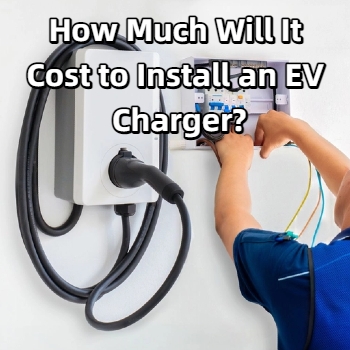
  • How Much Will It Cost to Install an EV Charger?
    How Much Will It Cost to Install an EV Charger?
    Jan 09, 2026
    Installing an EV charger is no longer just a technical decision—it is a strategic investment. But how much does it really cost? The answer depends heavily on the type of charger, where it is installed, and how it will be used. Let’s break it down by application scenario 👇 🔌How much does it cost to install a home EV charger? 🏠 For residential use, AC chargers (Level 2) are the most common choice. Typical cost range: Charger unit: USD 500 – 2,000 Installation & wiring: USD 300 – 1,500 Total installed cost: USD 800 – 3,500 Key cost factors include: Electrical panel capacity Cable length and routing Indoor vs outdoor installation ✅ Best for: private homes, villas, apartments with fixed parking ⚡ Charging power: 7kW / 11kW / 22kW 💡 Cost-effective, stable, and easy to maintain 🛍️How much does it cost to install a commercial AC charging station? 🅿️ For offices, hotels, and retail locations, AC chargers focus more on destination charging rather than speed. Typical cost range: Charger unit: USD 1,000 – 3,000 Installation & networking: USD 1,000 – 3,000 Total installed cost: USD 2,000 – 6,000 Why businesses choose AC chargers: Longer parking duration ⏱️ Lower upfront investment Brand image & customer attraction 🌱 ✅ Best for: hotels, offices, shopping malls ⚡ Charging during work or overnight stays 🚀How much does it cost to install a DC fast charger? ⚡ DC fast chargers deliver high power and fast turnaround, but with higher investment. Typical cost range: DC charger unit: USD 20,000 – 80,000 Installation & grid upgrade: USD 10,000 – 50,000 Total installed cost: USD 30,000 – 130,000+ Major cost drivers: Power level (60kW / 120kW / 240kW+) Transformer & grid connection 🏗️ Cooling system (air or liquid) ❄️ ✅ Best for: highways, fleet depots, urban fast-charging hubs ⚡ Charging time: 15–40 minutes ⚡How much does it cost to build an ultra-fast charging hub? ⚡ Ultra-fast charging hubs use distributed DC systems or charging power cabinets. Typical cost range (per site): Charging power cabinet: USD 100,000 – 300,000 Dispensers & cables: USD 30,000 – 80,000 Infrastructure & civil work: USD 50,000 – 150,000 Total project cost: USD 180,000 – 500,000+ Why investors choose ultra-fast charging: High vehicle throughput 🚗 Future-proof for 800–1000V platforms Flexible power allocation across multiple vehicles ✅ Best for: public charging operators, logistics hubs, EV fleets ⚡ Power range: 480kW – 960kW+ 💡What other hidden costs should you consider? ⚠️ Beyond the charger itself, many projects underestimate these costs: Grid connection & utility approval 📄 Software platforms & OCPP integration 🖥️ Operation & maintenance (O&M) 🔧 Land use or parking modification 🚧 A proper feasibility study can significantly reduce long-term risk. 🌍Can you purchase all these EV chargers from one supplier? ✅ Yes. At FES Power, we provide a full range of EV charging solutions: 🔹 Home & residential AC chargers 🔹 Commercial AC charging stations 🔹 DC fast chargers (60kW–240kW) 🔹 Ultra-fast charging power cabinets (480kW–960kW) 🔹 Smart charging software & energy management From single chargers to complete charging hubs, we support projects across residential, commercial, fleet, and public infrastructure scenarios. So, how much will your EV charger installation really cost? 🤔 The real answer is: 👉 It depends on your application, power demand, and long-term goals. Choosing the right charger type from the start can save significant CAPEX and OPEX over time. If you are planning an EV charging project and want a clear cost estimate and solution design, our team at FES Power is ready to support you.
    Read More
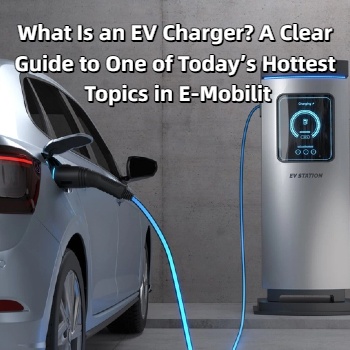
  • What Is an EV Charger? A Clear Guide to One of Today’s Hottest Topics in E-Mobility
    What Is an EV Charger? A Clear Guide to One of Today’s Hottest Topics in E-Mobility
    Jan 19, 2026
    🚗As electric vehicles (EVs) continue to gain global momentum, EV chargers have quickly become one of the most talked-about topics in the energy and transportation sectors. Governments are accelerating electrification policies, automakers are expanding EV lineups, and businesses are investing in charging infrastructure. Yet despite the growing attention, many people still ask a very basic question: what exactly is an EV charger? This article aims to provide a clear, practical, and easy-to-understand explanation of EV chargers—what they are, how they work, what key components they include, and why choosing the right charger matters. ❔What Does “EV Charger” Actually Mean? An EV charger (Electric Vehicle Charger) is a device that supplies electrical energy to recharge the battery of an electric vehicle. In simple terms, it acts as the bridge between the power grid and the EV battery, converting and controlling electricity so it can be safely and efficiently stored in the vehicle. Unlike conventional fuel pumps, EV chargers are not just “power outlets.” They are intelligent power systems that communicate with vehicles, monitor safety conditions, and manage charging performance in real time. 🔥Why Are EV Chargers Such a Hot Topic Right Now? The rapid rise of EV chargers is driven by several global trends: 🌍 Carbon neutrality and emission reduction policies 🚘 Fast growth in EV sales worldwide 🏙️ Expansion of public and commercial charging networks 🏢 New business models for parking operators, fleets, and energy companies As EV adoption accelerates, charging infrastructure has become a critical foundation of the entire EV ecosystem—making EV chargers a key area of investment and innovation. What Are the Main Components of an EV Charger? A modern EV charger is made up of several core components, each with a specific function: 🔌 Power Input & Distribution System This section connects the charger to the electrical grid and distributes power internally. It ensures stable voltage and current delivery while protecting against overloads and faults. ⚙️ Power Conversion Module One of the most critical components. AC chargers primarily manage and control power delivery DC fast chargers convert AC grid power into DC power suitable for direct battery charging High-quality power modules directly impact charging speed, efficiency, and reliability. 🧠 Control & Communication Unit This is the “brain” of the EV charger. It: Communicates with the vehicle (via protocols like OCPP or CAN) Adjusts charging power based on battery status Enables smart features such as load balancing, authentication, and remote monitoring 🛡️ Safety & Protection System Safety is non-negotiable. EV chargers include: Over-current and over-voltage protection Temperature monitoring Insulation and grounding protection These systems ensure safe operation for both users and vehicles. 📺 User Interface & Connectivity Displays, indicators, RFID readers, or app connectivity allow users to: Start and stop charging Check charging status Manage payments or access control Are All EV Chargers the Same? Not at all. EV chargers vary by: Charging speed (AC vs. DC fast charging) Power level (from a few kW to hundreds of kW) Application scenario (home, commercial parking, highways, fleets) Choosing the right charger depends on usage frequency, vehicle types, grid capacity, and business goals. ⚡How Does FES Power Support EV Charging Solutions?  At FES Power, we focus on delivering reliable, scalable, and high-performance EV charging solutions for commercial and public applications. Our product portfolio includes: 🚀 DC fast chargers and ultra-fast charging systems 🔋 Flexible power cabinet solutions with dynamic power distribution 🧩 Modular designs that support future expansion 🌐 Smart control systems compatible with modern charging platforms Whether for public charging stations, fleet depots, or commercial parking facilities, FES Power chargers are designed to maximize efficiency, safety, and long-term value. Final Thoughts: EV Chargers Are More Than Just Hardware An EV charger is not simply a device—it is a core infrastructure element of the electric mobility era. Understanding what an EV charger is, how it works, and what components it includes helps businesses, investors, and users make better decisions as the industry continues to evolve. 🌱As EV adoption grows, knowledge will be just as important as technology. And EV chargers will remain at the center of this transformation. ⚡
    Read More
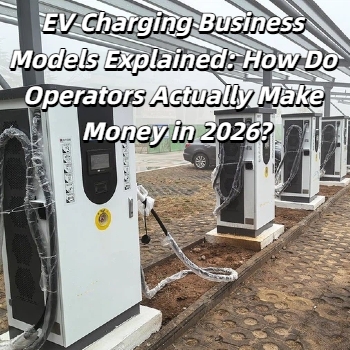
  • How Do EV Charging Business Models Actually Work?
    How Do EV Charging Business Models Actually Work?
    Jan 28, 2026
    As electric vehicles (EVs) continue to grow worldwide, EV charging is no longer just infrastructure—it has become a scalable business opportunity. But how do EV charging operators actually make money? 🤔 What business models are most popular in today’s market? And which models offer the best return on investment? This guide breaks down the most common EV charging business models, explains how they work, and highlights where real profitability lies—especially for commercial and fleet operators. 🔌What Are the Main EV Charging Business Models Today?  The EV charging ecosystem typically operates under several core business models, each designed for different locations, investment levels, and customer segments: Pay-Per-Use Public Charging Subscription-Based Charging Host-Owned & Revenue Sharing Fleet & Depot Charging Mobile & Temporary Charging Energy Storage–Integrated Charging Each model has unique cost structures, revenue streams, and scalability potential. 💳How Does Pay-Per-Use Charging Generate Revenue?  This is the most widely used public charging model. Operators install chargers in high-traffic locations such as shopping malls, highways, and parking lots, and charge drivers based on: Energy consumed (kWh pricing) Charging time (per-minute pricing) Session-based pricing Advantages: ✅ Easy to scale ✅ Predictable revenue per session ✅ Suitable for urban and commercial areas Challenges: ⚠️High installation costs ⚠️ Dependent on traffic volume 📱How Do Subscription-Based Charging Models Work?  Some operators offer monthly membership plans that provide discounted charging rates or unlimited charging. Popular among: Daily commuters Ride-hailing drivers Corporate EV fleets Benefits: ✅ Stable recurring revenue ✅ Strong customer loyalty ✅ Better demand forecasting This model is gaining traction in dense urban EV markets where frequent charging is common. 🏢What Is the Revenue-Sharing Model with Site Hosts?  In this model, property owners partner with charging operators. The operator installs and manages chargers, while the host provides space and shares revenue. Common host sites include: Hotels Shopping centers Office parks Parking operators Why it works: ✅ Lower upfront investment ✅ Faster market expansion ✅ Hosts benefit from increased foot traffic This is one of the fastest-growing models in 2025–2026. 🚚Why Is Fleet & Depot Charging Becoming So Profitable? ⚡ Fleet charging focuses on logistics companies, delivery fleets, corporate vehicles, and ride-hailing platforms. Revenue drivers include: Long-term charging contracts High daily charger utilization Lower marketing costs Key advantages: ✅ Predictable demand ✅ Faster ROI ✅ Strong scalability Fleet charging is expected to be one of the most profitable EV charging segments in the coming years 📈. 🚐🔋How Does Mobile EV Charging Create New Business Opportunities?  Mobile EV charging is an emerging model designed for temporary, emergency, and flexible charging needs. Use cases include: Event charging Roadside assistance Parking overflow Remote or off-grid locations Why it’s growing fast: ✅ No fixed installation required ✅ Fast deployment ✅ Ideal for cities with limited infrastructure 🚀 FES Power’s mobile EV charging solutions support rapid deployment, integrated battery storage, and flexible output—making them ideal for urban backup charging, commercial events, and emergency rescue scenarios. 🔋⚡How Does Battery Storage Improve Charging Profitability?  Energy storage–integrated charging enables operators to store low-cost electricity and reduce peak grid demand. Business benefits include: ✅ Lower electricity costs ✅ Reduced grid upgrade expenses ✅ Peak shaving & demand charge savings ✅ Ability to operate in weak-grid areas 🌱 FES Power’s battery-integrated EV charging systems combine smart energy management with high-efficiency charging, helping operators optimize operating costs and maximize long-term ROI. 📊 Fleet charging + energy storage models are currently seen as top ROI opportunities in 2026. How Can New Operators Choose the Right Business Model? 🤝 Before launching an EV charging business, operators should evaluate: Target customer type Site traffic & demand Grid capacity & power availability Investment budget Long-term expansion goals ⚡ FES Power provides scalable EV charging solutions, including AC chargers, DC fast chargers, mobile charging units, and battery energy storage systems, helping partners build flexible and future-proof business models. 🚀Is the EV Charging Business Still Worth Investing In?  The EV charging industry continues to expand as global EV adoption accelerates. With the right business model, smart site selection, and reliable charging hardware, operators can build sustainable and profitable charging networks. 💡 Whether you are launching a public charging station, building a fleet charging depot, or exploring mobile EV charging, selecting the right technology partner is critical. 🔌 FES Power is committed to delivering efficient, reliable, and globally certified EV charging solutions—empowering businesses to scale smarter and charge faster worldwide.
    Read More
  • AC vs DC EV Chargers: What’s the Real Difference?
    AC vs DC EV Chargers: What’s the Real Difference?
    Feb 03, 2026
    As electric vehicles (EVs) continue to gain global adoption, EV charging infrastructure has become a critical part of the transition. One of the most common — and confusing — questions for newcomers and business operators alike is:Should I choose an AC EV charger or a DC EV charger? 🤔While both serve the same purpose — charging electric vehicles — the difference between AC and DC chargers goes far beyond charging speed. It impacts installation cost, user experience, business models, and long-term return on investment. Let’s break it down step by step. 👇What Is an AC EV Charger? 🔌An AC (Alternating Current) EV charger supplies AC power directly to the vehicle. Inside the EV, an onboard charger converts AC electricity into DC power to charge the battery.Key Characteristics of AC Chargers:⚡ Power Range: Typically 3.7 kW – 22 kW🚗 Charging Speed: Slow to medium (several hours for a full charge)🏠 Common Use Cases: Homes, offices, hotels, residential parking💰 Lower Cost: More affordable equipment and installationAC chargers are ideal where vehicles are parked for long periods — such as overnight or during working hours.✅ Pros:Lower upfront investmentSimpler installationSuitable for daily, low-demand charging ❌ Cons: Long charging timeLimited suitability for commercial fast-turnover locationsWhat Is a DC EV Charger? ⚡⚡A DC (Direct Current) EV charger converts AC power into DC inside the charger itself, delivering DC electricity directly to the vehicle’s battery — bypassing the onboard charger.Key Characteristics of DC Chargers:⚡Power Range: 30 kW – 400 kW+🚀Charging Speed: Fast to ultra-fast🏢Common Use Cases: Highways, fleet depots, public charging hubs🔋High Efficiency: Ideal for quick top-upsDC fast chargers are the backbone of modern commercial and public charging networks.✅ Pros:Extremely fast chargingHigher user turnoverStrong revenue potential for operators❌ Cons:Higher equipment and installation costRequires stronger grid connectionAC vs DC EV Chargers: Side-by-Side Comparison  Feature AC Charger DC Charger Charging Speed Slow–Medium 🐢 Fast–Ultra Fast 🚀 Power Conversion Inside the vehicle Inside the charger Typical Power Up to 22 kW 30 kW–400 kW+ Installation Cost Low Higher Best For Home & workplace Commercial & public ROI Potential Moderate High   Which EV Charger Should You Choose? 🤔The right choice depends on application, budget, and charging demand:🏠 Residential or workplace charging: AC chargers are sufficient🅿️ Shopping malls, parking operators: Mix of AC + DC🚛 Fleets, logistics, taxis: DC fast chargers🛣️ Highway & public stations: High-power DC charging is essentialIn many real-world projects, a hybrid deployment strategy delivers the best balance between cost and performance.How FES Power Supports Both AC & DC Charging Needs 🔋⚙️At FES Power, we provide a full range of commercial-grade EV charging solutions designed for global markets.🚀 Our DC Fast Charging SolutionsHigh-power DC chargers (120 kW, 160 kW and scalable configurations)Split-type architecture with power cabinets and charging terminalDesigned for public charging, fleets, and high-utilization sitesSmart protection, stable performance, and flexible expansion🔌Our AC Charging SolutionsReliable AC chargers for commercial and semi-public useIdeal for hotels, offices, residential parkingCompatible with international standards and certifications🌍 All FES Power products are built with export markets in mind, supporting major charging standards and compliance requirements.Final Thoughts: It’s Not AC or DC — It’s the Right Tool for the Job ✅ There is no “one-size-fits-all” answer when it comes to EV charging. AC chargers offer affordability and simplicity, while DC chargers deliver speed, efficiency, and higher commercial returns.Understanding the real difference between AC and DC EV chargers allows you to:Design better charging infrastructureOptimize investment and operating costsDeliver a better charging experience to EV drivers If you’re planning a charging project or exploring commercial opportunities, choosing the right charging technology is the first step toward long-term success.
    Read More

leave a message

leave a message
If you are interested in our products and want to know more details,please leave a message here,we will reply you as soon as we can.
submit
Contact Us: bella@fespower.cn

home

products

WhatsApp

Contact Us