
- Call Us : +86-15060765919
- Mail Us : bella@fespower.cn
Fast charging has become one of the most frequently used — and most misunderstood — terms in the EV industry. But how fast is “fast,” really? Is 50 kW still considered fast charging today? And does higher power always mean better performance?
Let’s break it down with real data, real-world use cases, and practical insights.
🔍What Does “Fast Charging” Actually Mean?
In technical terms, fast charging usually refers to DC (direct current) charging, where power is delivered directly to the vehicle’s battery, bypassing the onboard charger.
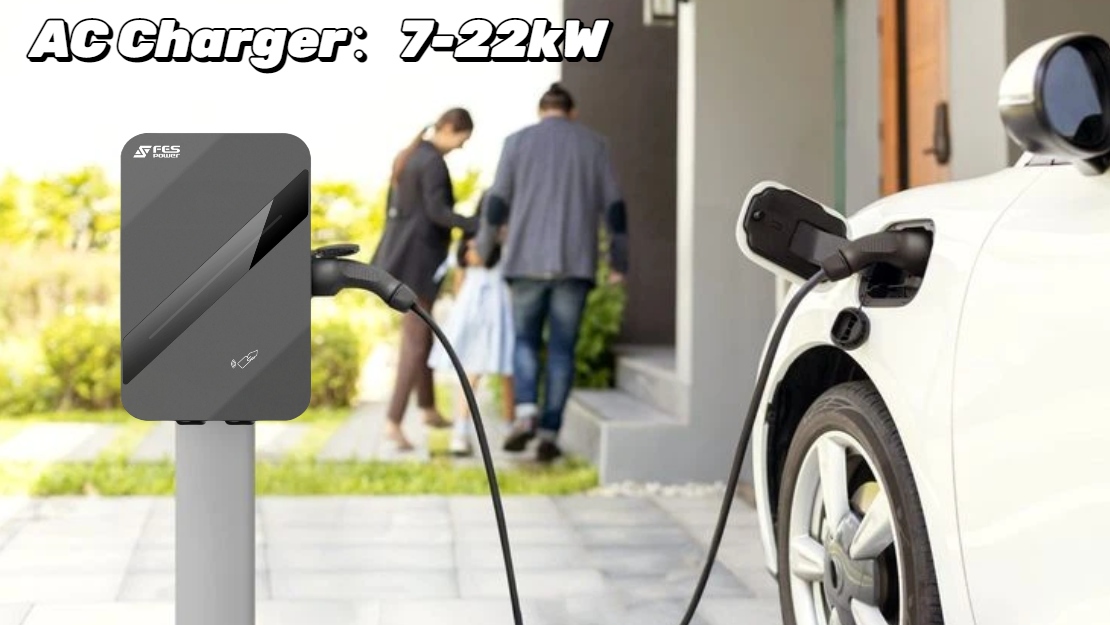
✨AC charging: typically 7–22 kW
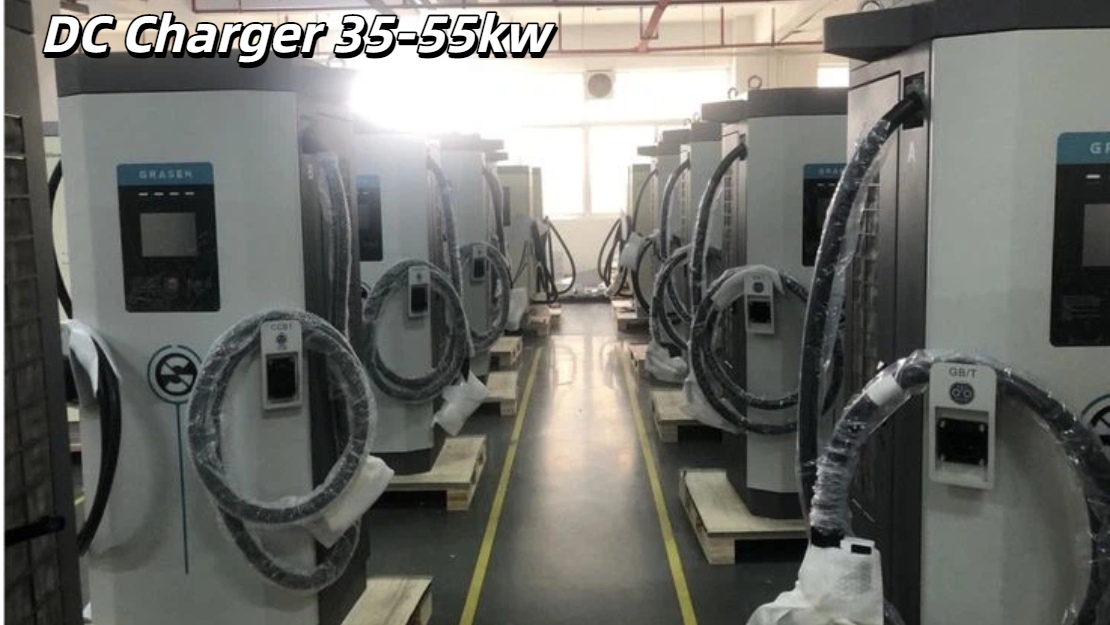
✨DC fast charging: starts around 50 kW
✨Ultra-fast charging: commonly 150 kW and above
However, calling something “fast” without context can be misleading. A charger’s speed must always be evaluated against battery size, vehicle acceptance rate, and charging curve behavior, not just the kW number.
⏱️How Long Does Fast Charging Take in Real Numbers?
Let’s look at a typical example using a 70 kWh EV battery, charging from 20% to 80% (the most common fast-charging window):
✨50 kW DC charger: ~45–60 minutes
✨150 kW DC charger: ~20–30 minutes
✨250 kW DC charger: ~15–20 minutes
On paper, higher power dramatically reduces charging time. In reality, the actual speed depends on whether the vehicle can sustain high power throughout the session — something many EVs cannot.
🔋Why Don’t EVs Charge at Maximum Power All the Time?
EV batteries follow a charging curve, not a straight line.
✨Peak power is usually reached between 20%–40% SOC
✨Power gradually tapers down after 60% SOC
✨Above 80%, charging slows significantly to protect battery health
This means a 250 kW charger does not deliver 250 kW for the entire session. The benefit of high-power charging lies in shortening the high-demand window, especially during peak operating hours.
🚀When Does Ultra-Fast Charging Truly Make Sense?
Ultra-fast charging (300 kW–960 kW systems) is not designed for every scenario. It delivers the most value in environments where time equals revenue:
💫Highway service areas
💫Public fast-charging hubs
💫Logistics and fleet depots
💫Bus and heavy-duty vehicle operations
In these scenarios, throughput matters more than individual session efficiency. Reducing charging time by even 10 minutes can significantly increase daily station utilization.
⚙️Is More Power Always Better for Charging Stations?
Not necessarily.
Installing higher power without a flexible architecture often leads to:
Underutilized capacity
Higher grid connection costs
Inefficient energy allocation during off-peak hours
This is why modern charging infrastructure is shifting toward centralized, modular power systems with dynamic power distribution, rather than fixed-power standalone chargers.
🔌📊How Can Charging Power Be Used More Efficiently?
Advanced DC charging systems now rely on:
Wide voltage output ranges (e.g. 150–1000V)
Dynamic power allocation across multiple connectors
Scalable power modules
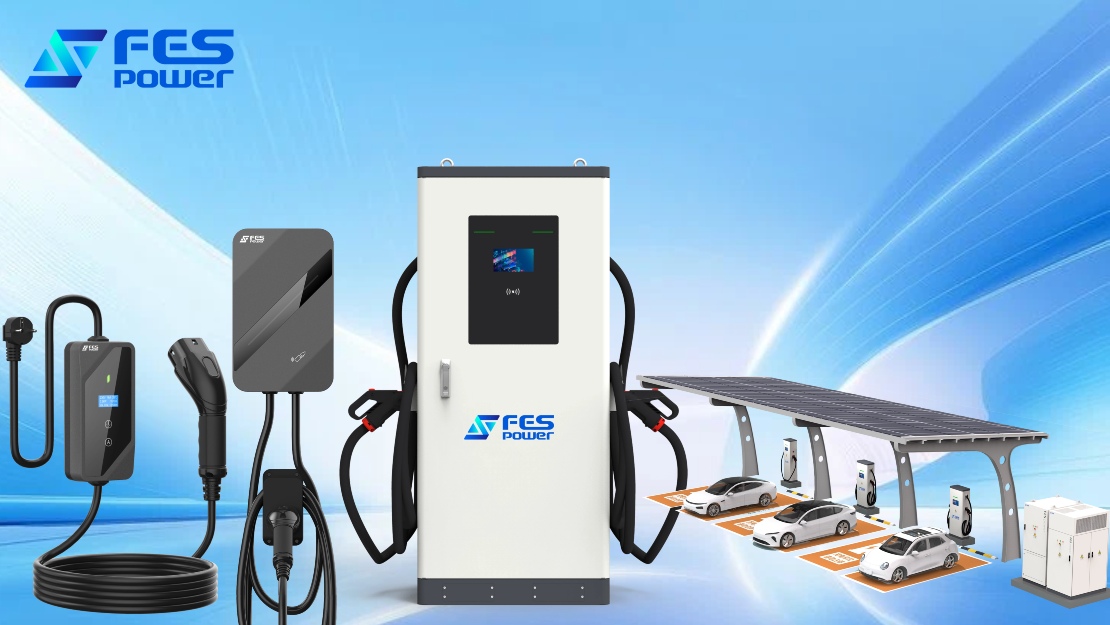
For example, FES Power’s high-power DC charging solutions are designed to adapt power output in real time, allowing:
Multiple vehicles to charge simultaneously
Power to be distributed based on actual demand
Future expansion without replacing the entire system
This approach ensures that “fast charging” remains fast — even during peak usage.
🌍What Does “Fast Charging” Mean for the Future?
As EV adoption accelerates, the industry is moving beyond single-vehicle speed toward system-level efficiency:
Faster turnover, not just faster sessions
Smarter power management, not just higher kW
Infrastructure designed for scalability, not short-term demand
In this context, fast charging is no longer defined by a single number, but by how intelligently power is delivered.
✅So, How Fast Is “Fast Charging”, Really?
Fast charging is not just about reaching the highest kW rating. It is about:
Delivering the right power at the right time
Matching charger capability with vehicle behavior
Designing systems that maximize uptime and utilization
When these elements come together, fast charging becomes not just fast — but truly effective.



 IPv6 network supported