Apr 27, 2026
In 2026, the global EV charging landscape is undergoing a seismic shift⚡:ultra-fast charging stations with 600kW+ power are no longer a luxury but a standard, driven by the proliferation of 800V high-voltage platform EVs and the demand for "10-minute charging, 500km range". However, traditional air-cooled charging cables have hit a bottleneck🔥—extreme heat generation under high power leads to power reduction, slow charging, and even safety hazards.
The game-changer? Liquid-cooled charging cables❄️. As the core solution to the high-power heating pain point, they are quickly becoming the standard configuration for 2026 ultra-fast charging stations. In this blog, we’ll break down the working principle, data-backed advantages of liquid-cooled cables, and introduce our flagship product—the C-960 Station, a 960kW split-type ultra-fast charging system equipped with advanced liquid-cooled ultra-fast charging front ends.
Why High-Power Charging Struggles with Heat
When charging an EV at high power (350kW+), the cable carries a current of 500A+🌡️, generating massive Joule heat due to conductor resistance. Traditional air-cooled cables rely on natural convection or fan-assisted heat dissipation, which has three critical flaws.
🔥 Severe temperature rise: At 350kW, the cable surface temperature can exceed 60°C, triggering automatic power reduction to avoid overheating.
⚖️ Bulky & heavy: To withstand high currents, air-cooled cables require large cross-sections, making them heavy and hard to operate.
🔇 Inefficient & noisy: High-speed cooling fans produce loud noise, affecting surrounding commercial and residential environments.
Data from a 2026 industry survey of 500 public charging stations highlights the problem📊.
82% of 350kW air-cooled stations experience power reduction during peak hours.
67% of users complain about slow charging caused by thermal throttling.
45% of station operators face rising maintenance costs from cable aging and fan damage.
The conclusion is clear💡:Air-cooled cables can no longer support the 600kW–1MW ultra-fast charging era. Liquid-cooled technology is the only viable solution.
How Liquid-Cooled Charging Cables Work: A Closed-Loop Cooling System
Liquid-cooled charging cables are a sophisticated closed-loop thermal management system❄️, designed to remove heat directly at the source with stable and efficient performance.
🌊 Heat Absorption
The cable integrates sealed micro liquid cooling channels alongside power conductors. Eco-friendly coolant flows inside the pipeline and instantly absorbs high-temperature heat generated by high-current operation.
🔁 Rapid Circulation
A high-efficiency silent pump drives continuous coolant circulation, ensuring heat is transported away in real time without accumulation.
♻️ Heat Dissipation & Exchange
The heated coolant flows back to the heat exchanger inside the power cabinet. Low-speed silent fans complete external heat dissipation to stabilize the overall temperature.
✅ Closed-Loop Recycling
The fully sealed circulating system realizes repeated coolant use, with zero leakage risk, low consumption and long-term stable operation.
Key industry data shows📈:The whole heat circulation cycle is completed in 0.5 seconds, absorbing over 90% of charging heat in real time. Even under continuous 600kW high-power operation, the cable surface maintains a stable temperature of 35–40°C, safe and touchable.
Data-Backed Advantages of Liquid-Cooled Cables
Liquid-cooled cables reshape the high-power charging experience with tangible data support, bringing long-term value to users and operators alike💸.
🔥 Excellent Heat Dissipation & Continuous Full Power
Third-party laboratory test data fully proves the gap between air cooling and liquid cooling.
Under high-load operation, the surface temperature of air-cooled cables reaches 62°C, while liquid-cooled cables stay stable at 38°C.
Traditional air-cooled equipment will be forced to reduce power to 200kW, while liquid-cooled systems maintain 600kW continuous output.
The 10%-80% charging time is shortened from 25 minutes to 12 minutes, greatly improving charging efficiency.
🤏 Lightweight & Flexible for Better User Experience
With liquid cooling assistance, the cable cross-section is effectively optimized.
The overall weight is reduced by nearly 50%, easy for single-hand plug-in operation.
Small bending radius and high flexibility, solving the pain point of stiff and bulky high-power charging guns.
🔕 Low Noise & Longer Service Life to Cut OPEX
The centralized heat dissipation design of the power cabinet greatly reduces operating noise.
The overall operating noise is controlled below 55 decibels, suitable for shopping malls, highways and residential surrounding stations.
Stable low-temperature operation slows down material aging. The service life of liquid-cooled cables is increased to 8–10 years, helping operators reduce later maintenance and replacement costs.
Meet Our C-960 Station: 960kW Split-Type Ultra-Fast Charging System
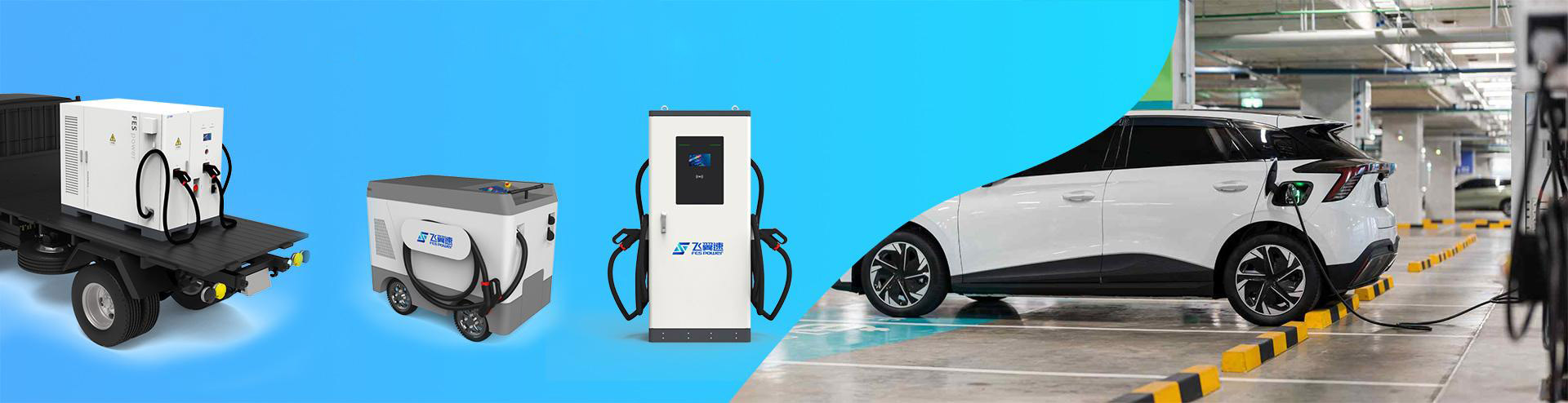
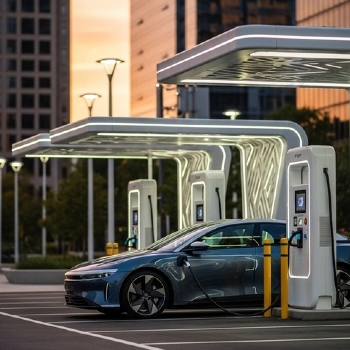
To adapt to the global ultra-fast charging upgrade trend⚙️, we launch the C-960 Station, a high-performance 960kW split-type ultra-fast charging device, fully equipped with self-developed liquid-cooled fast charging front-end modules.
🏗️ Split-Type Scientific Structure Design
The C-960 Station adopts a mature split layout of power cabinet + charging terminal.
The centralized power cabinet integrates 960kW high-power modules and a complete liquid circulation cooling system.
The compact liquid-cooled charging front end is placed in the charging area, realizing flexible layout and saving station construction space.
One main power cabinet can match multiple charging terminals, and intelligently distribute power on demand to improve equipment utilization.
❄️ Core Strength of Liquid-Cooled Ultra-Fast Charging Front End
Our customized liquid-cooled front end is tailor-made for high-power scenarios, with outstanding comprehensive performance.
Total system rated power up to 960kW, single terminal supports 600kW stable continuous charging.
Built-in independent liquid cooling cycle module, constant temperature cooling throughout the whole process, no power reduction in high temperature environment.
Wide voltage design of 200V–1000V, fully compatible with 400V and 800V new energy vehicle models worldwide.
IP65 high waterproof and dustproof grade, adapting to complex outdoor working conditions, strong environmental adaptability.
🚗 On-Site Practical Performance
Equipped with liquid cooling configuration, the C-960 Station realizes true ultra-fast charging experience.
For mainstream 800V high-voltage models, it only takes 10–12 minutes to complete 10%-80% charging.
All-weather stable output, no frequency reduction in high temperature summer or low temperature winter.
Silent operation and compact appearance, suitable for highway service areas, commercial plazas, logistics parks and other scenarios.
Conclusion: Liquid-Cooled Tech & C-960 Station Lead The Charging Future
2026 marks the comprehensive popularization of liquid-cooled charging technology🌟. It completely solves the high-temperature overheating bottleneck of high-power charging, and becomes the core standard of new generation ultra-fast charging stations.
With high efficiency, safety and low operation cost, liquid-cooled charging cables have become an indispensable upgrade choice for global charging operators.
Our C-960 Station combines 960kW high-power split design and professional liquid-cooled front-end cooling technology✅, providing reliable, efficient and cost-effective ultra-fast charging overall solutions for global customers.
If you are looking for high-power charging station upgrading and new energy investment plans, welcome to contact our team📩 to get the detailed parameter list and customized solution of C-960 Station.
Read More







 IPv6 network supported