Jan 28, 2026
As electric vehicles (EVs) continue to grow worldwide, EV charging is no longer just infrastructure—it has become a scalable business opportunity. But how do EV charging operators actually make money? 🤔 What business models are most popular in today’s market? And which models offer the best return on investment?
This guide breaks down the most common EV charging business models, explains how they work, and highlights where real profitability lies—especially for commercial and fleet operators.
🔌What Are the Main EV Charging Business Models Today?
The EV charging ecosystem typically operates under several core business models, each designed for different locations, investment levels, and customer segments:
Pay-Per-Use Public Charging
Subscription-Based Charging
Host-Owned & Revenue Sharing
Fleet & Depot Charging
Mobile & Temporary Charging
Energy Storage–Integrated Charging
Each model has unique cost structures, revenue streams, and scalability potential.
💳How Does Pay-Per-Use Charging Generate Revenue?
This is the most widely used public charging model. Operators install chargers in high-traffic locations such as shopping malls, highways, and parking lots, and charge drivers based on:
Energy consumed (kWh pricing)
Charging time (per-minute pricing)
Session-based pricing
Advantages:
✅ Easy to scale
✅ Predictable revenue per session
✅ Suitable for urban and commercial areas
Challenges:
⚠️High installation costs
⚠️ Dependent on traffic volume
📱How Do Subscription-Based Charging Models Work?
Some operators offer monthly membership plans that provide discounted charging rates or unlimited charging.
Popular among:
Daily commuters
Ride-hailing drivers
Corporate EV fleets
Benefits:
✅ Stable recurring revenue
✅ Strong customer loyalty
✅ Better demand forecasting
This model is gaining traction in dense urban EV markets where frequent charging is common.
🏢What Is the Revenue-Sharing Model with Site Hosts?
In this model, property owners partner with charging operators. The operator installs and manages chargers, while the host provides space and shares revenue.
Common host sites include:
Hotels
Shopping centers
Office parks
Parking operators
Why it works:
✅ Lower upfront investment
✅ Faster market expansion
✅ Hosts benefit from increased foot traffic
This is one of the fastest-growing models in 2025–2026.
🚚Why Is Fleet & Depot Charging Becoming So Profitable? ⚡
Fleet charging focuses on logistics companies, delivery fleets, corporate vehicles, and ride-hailing platforms.
Revenue drivers include:
Long-term charging contracts
High daily charger utilization
Lower marketing costs
Key advantages:
✅ Predictable demand
✅ Faster ROI
✅ Strong scalability
Fleet charging is expected to be one of the most profitable EV charging segments in the coming years 📈.
🚐🔋How Does Mobile EV Charging Create New Business Opportunities?
Mobile EV charging is an emerging model designed for temporary, emergency, and flexible charging needs.
Use cases include:
Event charging
Roadside assistance
Parking overflow
Remote or off-grid locations
Why it’s growing fast:
✅ No fixed installation required
✅ Fast deployment
✅ Ideal for cities with limited infrastructure
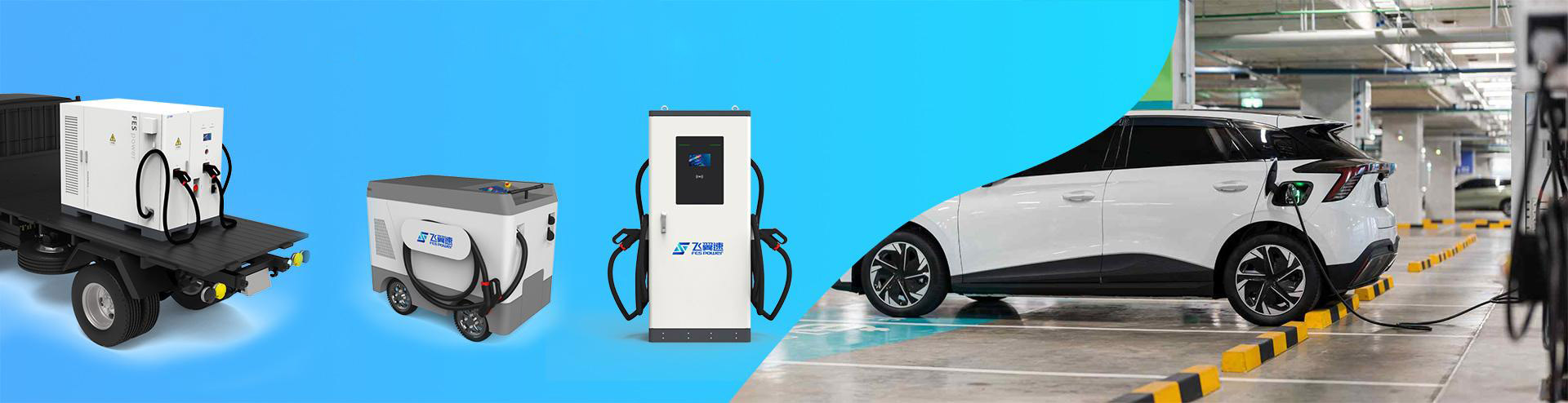
🚀 FES Power’s mobile EV charging solutions support rapid deployment, integrated battery storage, and flexible output—making them ideal for urban backup charging, commercial events, and emergency rescue scenarios.
🔋⚡How Does Battery Storage Improve Charging Profitability?
Energy storage–integrated charging enables operators to store low-cost electricity and reduce peak grid demand.
Business benefits include:
✅ Lower electricity costs
✅ Reduced grid upgrade expenses
✅ Peak shaving & demand charge savings
✅ Ability to operate in weak-grid areas
🌱 FES Power’s battery-integrated EV charging systems combine smart energy management with high-efficiency charging, helping operators optimize operating costs and maximize long-term ROI.
📊 Fleet charging + energy storage models are currently seen as top ROI opportunities in 2026.
How Can New Operators Choose the Right Business Model? 🤝
Before launching an EV charging business, operators should evaluate:
Target customer type
Site traffic & demand
Grid capacity & power availability
Investment budget
Long-term expansion goals
⚡ FES Power provides scalable EV charging solutions, including AC chargers, DC fast chargers, mobile charging units, and battery energy storage systems, helping partners build flexible and future-proof business models.
🚀Is the EV Charging Business Still Worth Investing In?
The EV charging industry continues to expand as global EV adoption accelerates. With the right business model, smart site selection, and reliable charging hardware, operators can build sustainable and profitable charging networks.
💡 Whether you are launching a public charging station, building a fleet charging depot, or exploring mobile EV charging, selecting the right technology partner is critical.
🔌 FES Power is committed to delivering efficient, reliable, and globally certified EV charging solutions—empowering businesses to scale smarter and charge faster worldwide.
Read More






 IPv6 network supported