Customized Electric Vehicle Charger Enterprise
Home

Smart EV Charger

Smart EV Charger

  • Future Charging: PV-Storage & Cannon 300
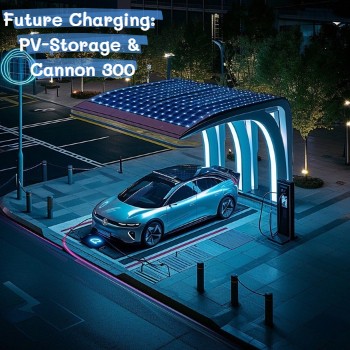
    Future Charging: PV-Storage & Cannon 300
    Jul 30, 2025
    With the surge in new energy vehicles, building supporting charging piles is crucial for urban infrastructure. Let's analyze a photovoltaic + energy storage integrated charging station and explore its green electricity conversion and intelligent supply.​ ☀️Working Principle of Photovoltaic-Storage Charging Station: The Intelligent Code of Energy Cycle​A photovoltaic-storage charging station is a green energy hub integrating photovoltaic power generation, energy storage system and intelligent charging. Its core logic can be broken down into three major links:​ ⚡️Light Energy Capture and Conversion​High-conversion-efficiency photovoltaic panels (such as monocrystalline silicon or cadmium telluride materials) convert solar energy into direct current, which is then converted into alternating current through a photovoltaic inverter to directly power the charging pile or be connected to the power grid.​ 🔋Energy Buffering of Energy Storage System​A lithium battery energy storage system (such as a 215kWh lithium iron phosphate battery pack) acts as a "power bank", storing electricity when there is excess photovoltaic power and releasing it during peak electricity consumption or at night. Through the intelligent management system (EMS), it monitors electricity prices and loads in real time, dynamically adjusts charging and discharging strategies, and realizes peak-valley arbitrage and grid peak regulation.​ 💵Precise Release of Ultra-Fast Charging Technology​Liquid-cooled ultra-fast charging terminals (such as the 300kW-600kW power segment) adopt flexible power distribution technology, dynamically adjusting current and voltage according to the state of the vehicle battery, achieving the ultimate experience of "5 minutes of charging, 200 kilometers of range".​ ☀️ Cannon 300: Redefining the Industry Benchmark of Photovoltaic-Storage Ultra-Fast Charging​As an independently developed photovoltaic-storage ultra-fast charging system by our company, Cannon 300 integrates four disruptive innovations with "efficiency, intelligence and safety" as its core:​ 🦋Integrated Photovoltaic-Storage-Charging Architecture​|⭐️25% Improvement in Photovoltaic Direct Supply Efficiency: Adopts a dual MPPT photovoltaic controller, compatible with 180-1500V wide input, and can adapt to photovoltaic arrays under different lighting conditions.​⭐️Bidirectional Empowerment of Energy Storage System: Integrates a liquid-cooled ultra-fast charging module and a 215kWh energy storage container, supporting grid-connected/off-grid dual-mode switching. In case of grid failure, it can independently provide emergency charging for 10 electric vehicles for 3 hours.​ 🦖 Technological Breakthroughs in Liquid-Cooled Ultra-Fast Charging​⭐️300kW Liquid-Cooled Ultra-Fast Charging Terminal: Uses silicon carbide (SiC) power devices, with a charging efficiency of over 96%. The cable weight is only 1/3 of that of traditional copper cables, greatly reducing the user's operational burden.​⭐️Intelligent Thermal Management System: Predicts battery temperature rise through AI algorithms, dynamically adjusts liquid cooling flow, ensures that the temperature difference of battery cells during charging is ≤2℃, and extends battery life by 30%.​ 👩‍🔧Full-Scenario Intelligent Management​⭐️Energy Dispatching Brain: Features an in-house developed EMS system. It analyzes real-time meteorological data, electricity price curves, and charging demand, optimizing photovoltaic-storage-charging collaboration. For instance, it stores energy during off-peak hours (23:00–7:00) and discharges during peak hours (18:00–22:00), slashing operating costs by 40%.​⭐️Enhanced User Experience: Offers reserved charging, plug-and-charge, and seamless fee settlement via a mobile APP. While charging, users can monitor real-time photovoltaic contribution and carbon savings (e.g., 1.2kg CO₂ reduction per charge).​ 👷‍♀️ Safety Protection​⭐️Five-Level Protection System: Includes overvoltage protection, leakage monitoring, fire sprinkler, smoke alarm and remote shutdown, ensuring reliable operation in extreme environments.​ ☀️ Core Application Scenarios of Cannon 300​ 🏙️Urban Commercial Complexes​Deploying Cannon 300 in shopping mall and office building parking lots, using rooftop photovoltaics to achieve "self-generation and self-use", and suppressing the impact of charging peaks on the power grid through energy storage.​ 🚘Highway Service Areas​Meeting long-distance travel needs, the liquid-cooled ultra-fast charging module of Cannon 300 can replenish 300 kilometers of range for electric trucks in 10 minutes. Cooperating with photovoltaic canopies and energy storage systems, it reduces the dependence on grid expansion.​ 🏭Industrial Parks and Logistics Hubs​Provides customized charging solutions for electric forklifts and logistics vehicles, and combines peak-valley electricity price strategies to achieve low-cost operation of "photovoltaic power supply during the day and off-peak electricity storage at night".​ Conclusion: Energy Revolution from Technology to Scenarios​ Photovoltaic-storage charging stations create a "power generation - energy storage - electricity consumption" closed-loop ecosystem, with Cannon 300 as the prime carrier. Ideal for urban microgrids, highway nodes, and industrial parks, it drives new energy infrastructure towards decarbonization, intelligence, and high efficiency through superior technical and economic value.​ Click https://www.fescharging.com/ now to obtain a customized solution for Cannon 300 and jointly embark on the golden age of green energy!​
    Read More
  • The Future of EV Charging: Smarter, Greener, More Connected
    The Future of EV Charging: Smarter, Greener, More Connected
    Nov 07, 2025
    🚘As electrification accelerates, the EV charging industry is undergoing a profound transformation. In the past, the race was all about speed — who could charge faster. But today, the conversation has evolved. The future isn’t just about faster charging — it’s about intelligence, flexibility, sustainability, and connectivity. At FES Power, we are driving this evolution forward. From our high-performance DC fast chargers to our Meta Series mobile charging systems and V2H/V2G bidirectional chargers, we’re redefining what “charging” can mean — not just for vehicles, but for the entire energy ecosystem. 💡 Because to us, the true future of charging isn’t just power — it’s connection.    ⚙️ Is “Faster Charging” Enough for the Future? Ultra-fast charging has become the industry benchmark — 600kW power, 800V platforms, and advanced liquid-cooled cables are now shaping the next generation of chargers.  ⏩But here’s a question worth asking: Once “fast” becomes standard, what comes next? We believe the answer lies in making charging smarter — where the charger adapts, communicates, and learns to optimize every connection. 🤖 Can a Charger “Think”? Yes — and it already is. 🔍 Smart charging technology is transforming how energy is distributed and managed: ⚙️Dynamic power allocation  🛰️Cloud monitoring & data-driven insights  🧠Predictive maintenance and AI-based diagnostics  Within the FES Power ecosystem, intelligent control systems enable load balancing across multiple chargers, optimizing performance and minimizing power waste. When a charger can think, energy becomes truly intelligent. 🌿 How Can Charging Be Greener? 🌱EVs are only as clean as the energy that powers them.  ☀️🔋That’s why FES Power is advancing integrated solar + storage + DC charging solutions, creating self-sustaining systems that utilize renewable energy wherever possible.  In the cities and industrial parks of tomorrow, sunlight, storage, and smart charging will form a continuous, circular energy loop. Sustainability is no longer just an idea — it’s becoming a real, deployable solution. 🚗 Do We Still Need Fixed Charging Stations? Maybe not everywhere. 💡 As mobility diversifies, flexibility becomes essential. ⚡Our Meta & Meta+ Mobile Charging Vehicles deliver energy wherever it’s needed — ports, mining sites, events, or emergency zones. 🚙 With these mobile systems, charging is no longer tied to a single location — it moves with you. The future of charging is not fixed, but free. 🔄 Can Chargers, Cars, and the Grid “Talk” to Each Other? Absolutely. 🔌 Through V2X (Vehicle-to-Everything) technology, EVs are evolving into mobile power sources: 🏠V2H: Vehicles powering homes during outages  ⚡V2G: Vehicles returning power to the grid to balance demand  FES Power’s bidirectional chargers make this energy dialogue possible. When energy flows both ways, the grid becomes more stable, and users become active participants in the energy ecosystem. 🌐 Conclusion: The Future of Charging Is a Multi-Dimensional Revolution The next era of EV charging isn’t just about “speed”. ⚡ It’s about being smarter, greener, more flexible, and more connected. 🌍FES Power is creating the link between today’s innovation and tomorrow’s energy freedom. 💡🛜https://www.fescharging.com/  
    Read More
  • Wall-Mounted EV Charger: Installation and Approval Guide
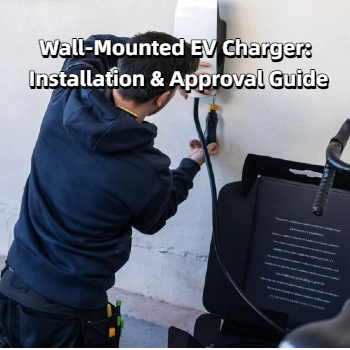
    Wall-Mounted EV Charger: Installation and Approval Guide
    Mar 26, 2026
    🤔As electric vehicles continue to expand globally, more users are planning to install a wall-mounted EV charger at home or in commercial spaces. But one key question always comes up: What needs to be prepared before installation, and do you need approval?  The reality is that installing an EV charger is not just about mounting hardware on a wall. It involves electrical capacity, local regulations, and sometimes coordination with utility companies. Understanding this in advance can save significant time and cost. ⚡Why Do Some Installations Require Approval? Unlike common household appliances, EV chargers introduce a relatively high electrical load, which can directly impact grid stability and building safety.Because of this, many countries require approval to ensure proper grounding, reliable circuit protection, and that the existing electrical infrastructure can safely support the additional demand. In older buildings, this process may even involve electrical upgrades before installation can move forward. 📄What Should You Prepare Before Applying? Across most regions, the application logic is similar even if the paperwork differs. Users typically need to prove installation rights and demonstrate that their electrical system is capable of handling the charger.This often begins with property ownership documents or authorization from landlords or property management, especially in shared residential environments. At the same time, an electrical capacity evaluation is usually required to assess available load and distribution board conditions.In many cases, a simple installation plan is also expected, describing the charger location, cable routing, and safety protection setup. In more regulated markets, additional grid connection or load increase applications may need to be submitted to local utilities. 🌍How Do Requirements Vary Across Countries? Regional differences can significantly affect how complex the process becomes.In many Asian markets such as Singapore or Thailand, utility companies are closely involved, and approvals are often required even for residential installations, particularly in apartments where property management plays an important role.In Europe, regulations are more standardized but also stricter, with increasing emphasis on smart charging capabilities and energy management.In the United States, installation usually requires local permits and must comply with electrical codes, although financial incentives and rebates are commonly available to support adoption. 🔧What Does the Installation Process Look Like? Installation typically begins with evaluating whether sufficient electrical capacity is available, followed by preparing wiring and ensuring proper grounding.The charger is then mounted securely on the wall, usually near the parking space for daily convenience. Safety protection systems are installed to ensure reliable operation, and finally, the system is tested to confirm stable charging performance and proper functionality. ⚠️What Challenges Do Users Often Encounter? In real-world scenarios, limited electrical capacity is one of the most common barriers, especially in older buildings.Approval procedures can also take time, particularly when multiple stakeholders are involved. On top of that, installation costs may increase if upgrades or complex cabling are required. 🚀How Can FES Power Make Installation Easier? Choosing the right product can significantly simplify both installation and approval, and this is where FES Power solutions stand out.Our wall-mounted EV chargers, designed in the 7kW to 21kW range, offer a strong balance between performance and adaptability. This power flexibility allows users to match different grid capacities more easily, reducing the likelihood of costly upgrades while improving approval success rates. At the same time, the compact structure makes them ideal for space-constrained environments such as residential garages or underground parking areas.Beyond adaptability, FES Power wall-mounted chargers are engineered with integrated safety protections, ensuring stable and compliant operation across different markets. Their design also focuses on user-friendly installation, helping installers reduce complexity and time on site.For users who are facing installation limitations or waiting for approvals, FES Power also provides 3.5kW to 7kW portable EV chargers that emphasize convenience and flexibility. These chargers are easy to carry and simple to use, allowing plug-and-play charging in many scenarios without complicated setup. They are particularly valuable as a temporary solution or backup, ensuring that charging is never interrupted even when infrastructure is not fully ready.In practice, this combination of fixed and portable solutions allows users to transition smoothly into EV charging without being constrained by infrastructure or regulatory delays. Is It the Right Time to Install? 📈With EV adoption accelerating worldwide, demand for charging infrastructure is rising quickly. Delaying installation may result in longer approval timelines and higher costs in the future.💡At the same time, regulations are becoming more structured, and incentives may not remain available indefinitely, making early adoption a more strategic choice.Final Thoughts Installing a wall-mounted EV charger is not just about hardware—it requires planning, compliance, and the right product strategy. By understanding local requirements and choosing flexible solutions like those from FES Power, users can significantly reduce complexity while ensuring long-term reliability. Combining a 7–21kW wall-mounted charger for daily efficiency with a 3.5–7kW portable charger for flexibility creates a practical and future-ready charging setup.
    Read More
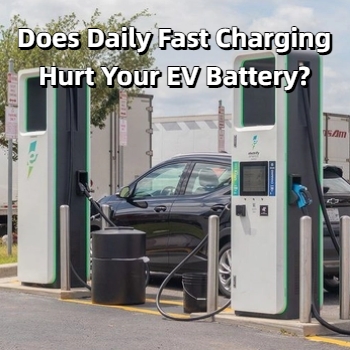
  • Does Daily Fast Charging Hurt Your EV Battery?
    Does Daily Fast Charging Hurt Your EV Battery?
    Mar 30, 2026
      Hey EV drivers & fleet managers! 👋 One of the most Googled EV questions in 2026 is: Does daily fast charging damage my battery? We’re breaking down the science, real-world data, and how FES Power’s C‑Station 960 keeps your battery healthy while charging fast. Let’s dive in! 🤔 Is Fast Charging Actually Bad for Batteries? Short answer: It can—but only if done poorly. 🔥 Fast charging (DCFC, >50kW) pushes high current, creating heat and stress on lithium‑ion cells. Over time, this can speed up degradation if the charger/vehicle lacks smart safeguards. But here’s the key: Modern batteries + smart charging = minimal risk. Today’s EVs have advanced BMS (Battery Management Systems) and thermal control. Frequent fast charging is no longer a “battery killer”—it’s a manageable tool. 📊 What Do Real‑World Studies Say? (Data Doesn’t Lie!) Let’s cut through myths with 2025–2026 industry data. Geotab analyzed 22,700 EVs across 21 brands and found that low DCFC use (less than 12% of charging sessions) led to 1.5% annual degradation, while high DCFC use (more than 12% of sessions but less than 40% at 100+kW) resulted in 2.2% yearly degradation. Heavy high-power fast charging (more than 40% at 100+kW) caused 3.0% annual degradation, meaning even frequent fast charging only adds roughly 0.7–1.5% yearly degradation compared to slow charging. Recurrent Auto’s 3-year study on Tesla Model 3 vehicles showed that daily fast charging (common for ride-share drivers) maintained 88% battery health after 3 years, while mostly slow-charging private vehicles retained 91% health—a negligible 3% gap over three years. A Nissan Leaf study found that exclusive DC fast charging led to 16% higher degradation than AC fast charging, but with smart thermal management, this gap shrinks to near-zero in newer EV models. The data conclusion is clear: daily fast charging is safe for modern EVs—the impact is small, measurable, and manageable with good habits. 🔬 Why Does Fast Charging Affect Batteries? (The Science) Let’s keep it simple. Heat buildup is a key factor: high current generates more heat, and over time, heat breaks down the SEI layer, increases internal resistance, and speeds up battery aging. Lithium plating is another concern—fast charging can deposit metallic lithium on the anode, reducing battery capacity over cycles. There’s also mechanical stress: rapid ion movement swells and shrinks electrodes, causing minor structural fatigue. The good news is all these effects are slowed drastically by active liquid cooling and heating systems, smart BMS that limits current when cells are too hot or cold, and charging only to 80% (not 100%) for daily use.🛡️ How FES Power C‑Station 960 Protects Your Battery (While Charging Fast!) At FES Power, we built the C‑Station 960 DC Fast Charger to deliver speed and battery care. It features Smart Adaptive Power (SAP) Technology that auto-adjusts charging speed based on your EV’s battery temperature, state of charge (SoC), and health, avoiding over-stressing cells by slowing gently above 80% to reduce heat and maximizing speed without sacrificing longevity. The C‑Station 960 also has Ultra-Precise Thermal Sync, which communicates in real time with your EV’s BMS to pre-condition batteries to the optimal 25–35°C before fast charging, cutting degradation risk by up to 40% compared to generic fast chargers (per internal lab data). An optional 80% Smart Cutoff setting lets you auto-stop at 80% for daily charging, eliminating the most stressful part of fast charging (the 80–100% SoC range) and making it perfect for fleet and daily drivers who want speed plus long battery life. When you need maximum power, the C‑Station 960 delivers 960kW peak power, getting most EVs from 0–80% in 12–18 minutes—ideal for road trips, fleet hubs, and busy locations—but it only uses full power when the battery is ready, never forcing high current. The C‑Station 960 is fast charging done right, giving you speed and peace of mind about battery health. 💡 How Can I Charge Fast & Keep My Battery Healthy? Even with a great charger, small habits make a big difference. Charge to 80% daily and only go to 100% for long trips, as the final 20% of charging is the most stressful for batteries. Avoid fast charging in extreme temperatures (below 0°C or above 40°C) when possible, as extreme heat or cold amplifies battery stress. Don’t leave your car plugged in at 100% for hours, since high SoC storage accelerates aging. Mix up your charging routine by using the C‑Station 960 for fast top-ups and AC Level 2 charging for overnight sessions, which is gentler on the battery. Finally, use scheduled charging to charge during off-peak hours when batteries are cooler, further reducing stress. ✅ Final Verdict: Is Daily Fast Charging Safe? (With the Right Gear!) Data says it all: daily fast charging adds roughly 1–3% annual degradation compared to slow charging, which means most drivers will have 90%+ battery health after 5+ years. With FES Power’s C‑Station 960, you minimize that gap even further. You don’t have to choose between speed and battery life—The C‑Station 960 delivers both, so you can charge fast, drive far, and keep your EV’s battery healthy for years. Ready to experience smart, battery-friendly fast charging? Learn more about the FES Power C‑Station 960—the future of EV charging is here! 
    Read More

leave a message

leave a message
If you are interested in our products and want to know more details,please leave a message here,we will reply you as soon as we can.
submit
Contact Us: bella@fespower.cn

home

products

WhatsApp

Contact Us