Apr 01, 2026
❓Why does charger power matter more than you think? Charger power directly impacts charging speed, station turnover, and overall ROI. 📊 Industry data shows a 120kW charger can add around 100–120 km of range in 10 minutes, while 240kW systems can nearly double that under ideal conditions. 🔍 But higher power doesn’t automatically mean better returns—grid capacity, vehicle limits, and usage patterns all influence real-world performance.
❓What real difference does 120kW vs 180kW vs 240kW make?🏙️ A 120kW charger is well-suited for urban environments where dwell time is longer, such as retail or office parking. ⚖️ A 180kW charger offers a balanced approach, improving efficiency without significantly increasing infrastructure costs. 🚗 A 240kW charger is ideal for highways or high-traffic hubs where minimizing waiting time is critical.📈 Increasing power from 120kW to 240kW can boost throughput by 30–60%, but only when supported by sufficient demand and grid supply.
❓Is faster charging always better for profitability?💡 Not necessarily—utilization rate often matters more than peak charging speed. 📉 A 240kW charger with low usage may generate less revenue than a fully utilized 120kW unit. 💰 Grid upgrades required for higher power can increase CAPEX by 20–40%, affecting payback periods.
🔄 This is why more operators are shifting toward flexible and scalable charging strategies rather than simply pursuing higher power.
❓How does vehicle compatibility affect your choice?🚙 Most EVs today charge within the 80kW–150kW range, meaning they cannot fully utilize 240kW capacity. ⚠️ Only newer premium models consistently support ultra-fast charging above 200kW. 📊 Deploying high-power chargers in markets without sufficient compatible vehicles can lead to underutilization.🎯 Aligning charger power with your local EV mix is essential for maximizing efficiency.
❓What role does power distribution play in modern charging?🔌 Traditional chargers deliver fixed power, often leading to inefficiencies when demand fluctuates.🧠 Smart systems now use dynamic power allocation, distributing energy based on real-time needs.📉 This approach reduces grid pressure while improving overall station utilization.
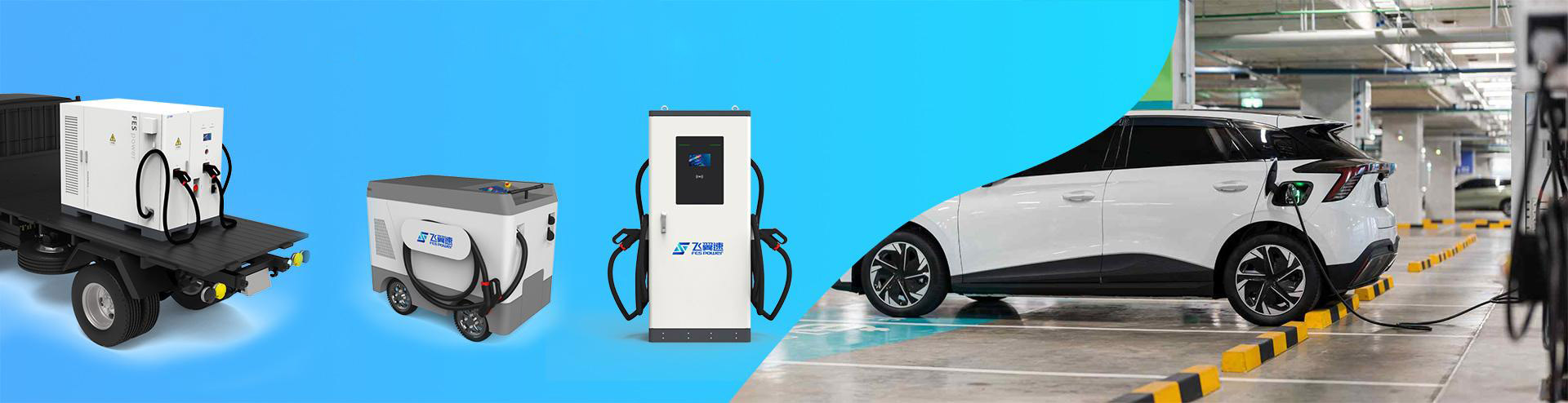
🏢 At FES Power, our split-type DC charging systems (120kW–960kW) are built around this concept—allowing flexible power sharing across multiple terminals to match real usage scenarios.
❓Which charger should you actually choose?✅ Choose 120kW for cost-efficient deployments with stable, moderate demand. ⚖️ Choose 180kW if you want a balance between performance and investment. 🚀 Choose 240kW for high-demand locations where speed and turnover are critical.🔄 Or consider a more flexible approach—deploy systems that can scale as demand grows rather than locking into a fixed configuration.
❓What’s the smarter long-term strategy?📊 The industry is shifting from “higher power” to “higher efficiency.” 🔧 Scalability and flexibility are becoming key factors in long-term profitability. 🌱 Investing in adaptable infrastructure today helps avoid costly upgrades in the future.
🏗️ With modular solutions like FES Power’s platform, operators can start with 120kW–180kW and scale up to 240kW+ as demand increases—without rebuilding the entire system
🚀 Final Thought🎯 Choosing between 120kW, 180kW, and 240kW is not just about speed—it’s about strategy. 📈 The optimal solution is the one that aligns with your site conditions, user behavior, and future growth potential.
Read More






 IPv6 network supported