Customized Electric Vehicle Charger Enterprise
Home

Portable EV Charger

Portable EV Charger

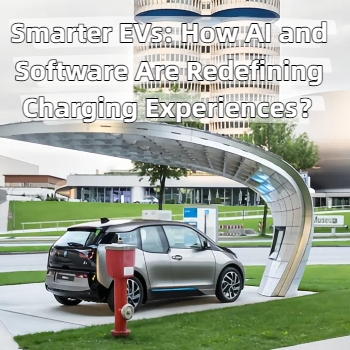
  • Smarter EVs: How AI and Software Are Redefining Charging Experiences?
    Smarter EVs: How AI and Software Are Redefining Charging Experiences?
    Sep 26, 2025
    ⁉️Why Is Software Becoming the Core of EV Innovation? Electric vehicles (EVs) are no longer just about batteries and motors. Increasingly, the real value lies in software and AI-driven intelligence. From predictive route planning to dynamic energy optimization, software is turning EVs into adaptive, connected, and smarter machines. This evolution is not only reshaping how drivers interact with their cars, but also how they charge them. 🖥️AI-Powered Energy Management Artificial intelligence enables vehicles to learn driver behavior, analyze road conditions, and predict charging needs. For example, advanced systems can suggest the most efficient charging station based on traffic, weather, and battery health. Beyond the car itself, AI helps balance grid demand, ensuring sustainable use of renewable energy. At FES Power, our charging solutions are designed with this future in mind. Our portable EV chargers and wall-mounted AC stations support smart protocols that can integrate with intelligent energy management platforms, making charging more efficient and reliable. 🧾V2G, V2H, and the Role of Smart Chargers The rise of Vehicle-to-Grid (V2G) and Vehicle-to-Home (V2H) technologies is a game-changer. Cars are becoming energy hubs, capable of supplying power back to homes or the grid during peak demand. This requires not only advanced batteries but also intelligent charging infrastructure. FES Power’s DC fast chargers and mobile charging solutions are engineered to support future-ready communication standards, enabling seamless integration with V2G applications. With the right software, our products can help stabilize local grids while giving EV owners new ways to save costs. 🛡️AI-Driven Charging Experiences at Events and On the Go Charging isn’t limited to fixed stations anymore. Imagine attending a large outdoor event where thousands of EVs need power. With AI-based scheduling and mobile charging, demand can be distributed intelligently, avoiding congestion. This is where our mobile power stations shine. Combined with AI-driven allocation software, they ensure flexible, scalable charging in dynamic environments—from festivals to emergency relief zones. 🛜Looking Ahead As EVs become smarter, software and AI will define the next decade of innovation. Charging will evolve from a simple plug-in task to an intelligent ecosystem of predictive, connected, and user-friendly services. At FES Power, we are building solutions that bridge this future: ⭐️Portable chargers for individual flexibility ⭐️Wall-mounted units for smart home integration ⭐️DC fast chargers for high-power urban hubs ⭐️Mobile power for events and emergencies Together, these solutions create a foundation where AI and energy intelligence can thrive—making charging not just faster, but also smarter.please click https://www.fescharging.com/ to learn more.
    Read More
  • The Reliability Crisis in EV Charging
    The Reliability Crisis in EV Charging
    Oct 15, 2025
    As electric vehicles (EVs) surge in popularity, drivers expect charging to be as simple and seamless as refueling a gas car. Yet, recent studies reveal a worrying fact — nearly 30% of EV charging attempts end in failure. From unresponsive chargers to broken connectors and unstable networks, reliability has become the biggest pain point for the EV ecosystem. 🤔What’s Causing the Charging Failure Rate to Stay So High? Despite rapid infrastructure expansion, system stability hasn’t kept pace. Common failure reasons include: 🔷Software communication errors between chargers and vehicles 🔷Hardware degradation due to poor maintenance or harsh weather 🔷Payment and network connection issues disrupting transactions 🔷Overloaded power circuits during peak usage These failures not only frustrate users but also slow down the transition to electric mobility. When charging becomes unpredictable, consumer confidence suffers — and that’s a problem for everyone in the EV chain. 🧾How Can Portable Charging Devices Offer a Reliable Backup? In response to the growing concern over unreliable public chargers, portable charging solutions are emerging as a flexible and dependable alternative. FES Power’s Portable EV Charger Series (EP01 / EP02) provides drivers with a safe, mobile, and convenient charging option — ensuring that “charging anxiety” never stands in the way of your journey. ⁉️What Makes the FES Power Portable EV Charger Different? ⭐️Reliable Safety Protection: Type A 30mA + 6mA DC leakage protection, with multiple hardware and software safeguards against overcurrent, overheating, short circuits, and surges. ⭐️Flexible and Convenient Design: Portable or wall-mounted installation, IP65 waterproof and IK08 impact-resistant, suitable for home, office, or outdoor use. ⭐️Smart Charging Features: Adjustable charging current and scheduled charging based on off-peak electricity prices — making every charge both smarter and cheaper. ⭐️High Compatibility: Supports Type 2 (EU) connectors, compatible with most EVs. ⭐️Power Options: EP01/EP02-S16: 3.5kW / 16A EP01/EP02-S32: 7kW / 32A Standard 5-meter cable (customizable). Compact yet powerful, the EP02 model even includes a 3.5-inch OLED display for real-time charging data and status monitoring. 🔬Are Portable Chargers the Future of Reliable EV Charging? While large-scale public infrastructure remains vital, the future of EV charging will likely blend fixed and mobile solutions. Portable chargers like FES Power’s EP series offer users peace of mind, flexibility, and independence — ensuring energy is always within reach, even when public chargers fail. As the industry strives to fix network reliability, portable chargers represent a bridge toward true charging freedom — anytime, anywhere. 👉 Learn more about FES Power’s Portable EV Charger solutions: 🌐 www.fescharging.com
    Read More
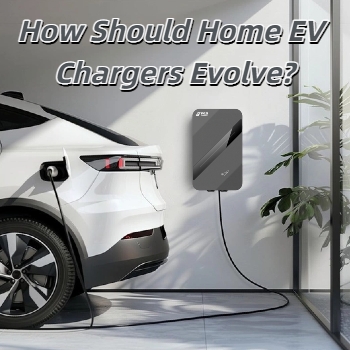
  • How Should Home EV Chargers Evolve?
    How Should Home EV Chargers Evolve?
    Dec 12, 2025
    🧠💫As EV adoption grows across global markets, home charging has become the core experience for most drivers. More than 80 percent of EV owners rely on residential charging as their primary method, making the performance, intelligence, and safety of home chargers increasingly important. Today’s devices are no longer simple AC boxes mounted on a wall—they are evolving into key components of the smart-home energy ecosystem. 🤔What Are the Common Home Charger Types Today? Most home charging solutions fall into two primary categories, each serving different usage scenarios: 💫1. Portable AC Chargers (2.3–7.4 kW) These lightweight units are ideal for users who need mobility—renters, frequent travelers, or households without dedicated parking facilities. Typically operating on single-phase 220–240V power, portable chargers include adjustable current settings, built-in temperature sensors, and essential protective circuits. Their convenience and plug-and-charge simplicity make them a popular choice worldwide. 💫2. Wall-Mounted AC Chargers (7 kW / 11 kW / 22 kW) These represent the mainstream of home charging. Wall-mounted chargers offer faster charging, more communication options, and advanced safety functions such as RCD protection, real-time monitoring, and app connectivity. In three-phase markets, 11 kW and 22 kW models are becoming increasingly common, enabling full overnight charging even for larger-battery EVs. ⁉️What Do EV Owners Really Want From Home Charging? Recent consumer studies reveal several consistent expectations: 🔷Reliability and uptime rank as the most important purchase factor. 🔷Real-time monitoring and app control are becoming essential, not optional. 🔷Safety confidence—including heat management and leakage protection—is now a top concern among new EV owners. 🔷Energy efficiency increasingly influences purchasing, with users comparing standby consumption and conversion efficiency between brands. More importantly, awareness of electrical infrastructure limitations has increased. Many EV drivers now consider panel capacity, load distribution, and breaker protection before choosing a charger, signaling a shift toward more informed and technically engaged consumers. Which Technologies Are Defining the Next Stage of Home Charging? The future of home charging revolves around smarter integration and more efficient use of household energy. Key optimization directions include: 💫1. Dynamic Load Balancing (DLB) By monitoring household energy consumption through CT sensors, chargers can automatically adjust output current to prevent overload. This reduces installation costs by avoiding panel upgrades and improves overall system safety. 💫2. Smart Scheduling Based on Tariffs Time-of-use (TOU) optimization allows the charger to schedule charging during off-peak hours. Advanced firmware can analyze driving habits, automatically preparing the vehicle based on expected daily mileage. 💫3. Solar and Energy-Storage Integration As more homeowners deploy rooftop solar and residential batteries, chargers are evolving to support solar matching, zero-export control, and energy-management system (EMS) communication. This maximizes renewable usage and reduces energy costs. 💫4. Bidirectional Charging (V2H / V2G) Readiness Although still emerging, AC bidirectional capability is on the horizon. Future-ready chargers must be compatible with ISO 15118-20 communication and power-conversion architectures that support reverse energy flow. 💫5. Remote Diagnostics and OTA Upgrades More advanced temperature monitoring, error-analytics, and OTA firmware support are allowing chargers to improve performance throughout their life cycle while reducing maintenance costs. ❓How Do FES Power’s Home Chargers Support These Trends? FES Power’s home-charging lineup is built around flexibility, safety, and intelligent energy use. EP01 / EP02 Portable Chargers These portable units offer adjustable current, IP65 protection, reinforced thermal and electrical safety, and optional app-enabled monitoring. Designed for mobility, they provide reliable charging at home, in apartments, and on the road. EC01 Wall-Mounted Charger The EC01 supports 7 kW (and optional 11/22 kW) AC charging with enhanced RCD protection, Wi-Fi/Ethernet/Bluetooth connectivity, dynamic load balancing, and OTA firmware updates. Designed for long-term residential use, it aligns with future smart-home and distributed-energy requirements. ❔Where Is Home EV Charging Headed Next? Looking ahead, home charging will evolve along three major vectors: AI-assisted charging routines—automatically customized to driving behavior. Deeper integration with solar, home batteries, and grid services. More portable, adaptable charger designs for multi-scenario use. As home energy systems become more interconnected, the EV charger will move from a single-function tool to an intelligent energy hub—powering a safer, smarter, and more efficient EV lifestyle.
    Read More
  • The Magic of Mobile Charging
    The Magic of Mobile Charging
    Dec 15, 2025
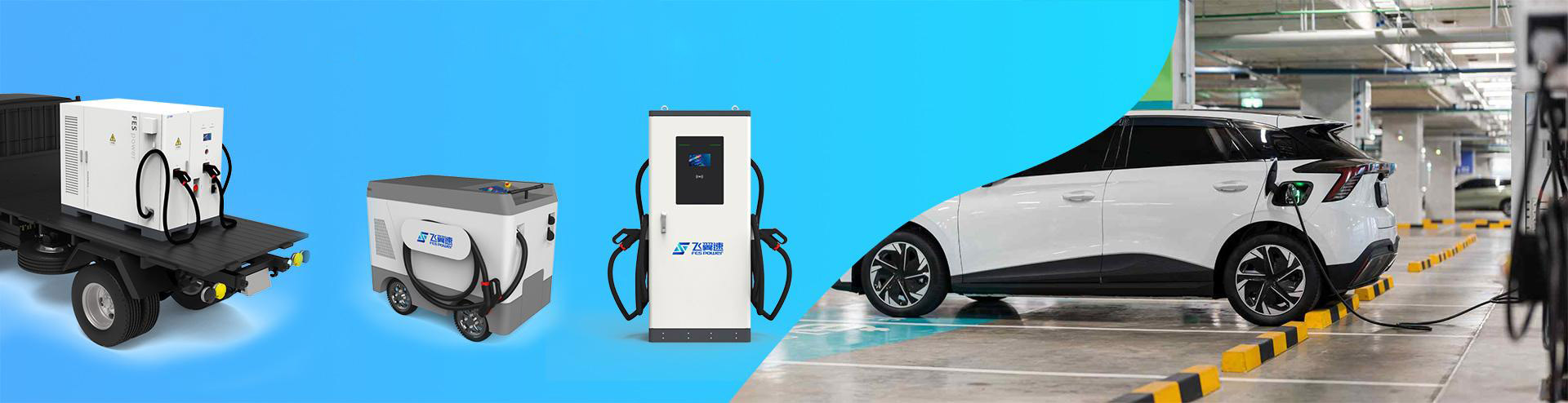
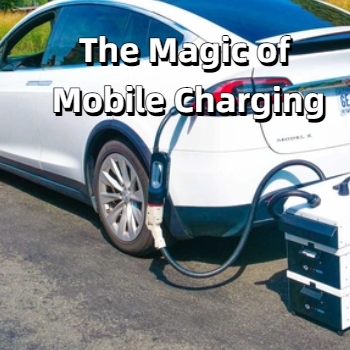
    How EV Charging Is No Longer Limited by Location As electric vehicles continue to gain global adoption, charging infrastructure has become a critical topic. However, in real-world scenarios, not every location is suitable—or ready—for fixed charging station deployment. 🚗🔋New industrial parks with limited grid capacity, temporary events with high vehicle density, fleet operations requiring fast turnaround, or EVs running low on power on the road —these challenges are exactly where mobile charging solutions reveal their true magic. 🔍What Is a Mobile EV Charger?  In simple terms, a mobile EV charger is a self-contained system that integrates energy storage and charging functionality into a movable unit. It stores electricity in advance and delivers power directly to electric vehicles when and where it is needed—without relying on fixed high-capacity grid connections. You can think of it as: “A compact charging station that comes to the vehicle.” Core Components of a Mobile Charging System (Explained Simply) 🧩 A professional mobile EV charging solution typically consists of the following key elements: 🔋Energy Storage System  This is the heart of mobile charging. High-safety lithium battery systems are commonly used to store energy. 🔸Multiple battery capacity options 🔸Customizable based on application needs 🔸Integrated Battery Management System (BMS) for safety and stability ⚙️Charging Modules  Charging modules determine: 🔸Output power 🔸Vehicle compatibility 🔸Charging efficiency and reliability Mobile chargers can support AC charging or DC fast charging, depending on system design and customer requirements. 🧠Energy Management & Control System  This system coordinates battery performance and power output, enabling: 🔸Intelligent power distribution 🔸Multi-level safety protection 🔸Real-time monitoring and fault alerts 🛠️Mobility & Structural Design  Depending on usage scenarios, mobile chargers may feature: 🔸Wheeled designs for easy movement 🔸Vehicle-mounted or trailer-based configurations 🔸Outdoor-ready protection and durability 📍Where Does Mobile Charging Work Best?  Mobile charging is not meant to replace fixed charging stations—but it excels in scenarios where flexibility and speed matter most. 🚨 Emergency Charging & Roadside Assistance When EVs run out of power or charging stations are unavailable, mobile chargers can be dispatched directly to the vehicle, reducing towing costs and downtime. 🚕 Fleet & Commercial Operations Ride-hailing, taxi, and logistics fleets can use mobile charging for centralized, off-peak charging—boosting vehicle utilization and operational efficiency. 🏨 Parking Lots, Hotels & Commercial Spaces For locations without grid upgrades or permanent installations, mobile charging offers a low-investment pilot solution to meet immediate demand. 🏗️ New Developments & Infrastructure Transition Periods Mobile charging bridges the gap while permanent charging stations are under construction or grid expansion is pending. 🎪 Events, Exhibitions & Test Drive Activities Fast deployment, no temporary wiring, and easy removal make mobile charging ideal for short-term, high-density EV usage scenarios. 🚀FES Power’s Mobile Charging Solutions  At FES Power, we understand that mobile charging must adapt to diverse real-world scenarios. That’s why we have developed a flexible product portfolio designed for different power levels and applications. 🔹 Meta Series Mobile Chargers The Meta Series is built for maximum flexibility and multi-scenario deployment: Ideal for commercial sites, fleet operations, and emergency charging Compact design and easy deployment Multiple power configurations available Customizable battery capacity to match specific project needs Perfect for customers who need a fast, adaptable charging solution. 🔹 E-120 Mobile DC Charging System The E-120 is designed for higher-power, high-efficiency mobile DC charging: Supports DC fast charging applications  Suitable for fleets, logistics vehicles, and heavy-duty use cases Focused on stable performance and continuous power output Customization: The True Advantage of Mobile Charging 🧩✨ Unlike traditional fixed charging stations, mobile charging is highly scenario-driven. At FES Power, customization is a core part of our design philosophy: ✅ Battery capacity can be customized ✅ Output power can be customized ✅ AC or DC charging options available ✅ Structural and mobility designs adaptable As we believe: There is no one-size-fits-all mobile charger—only solutions that best match real-world needs. Final Thoughts 💡 The magic of mobile charging lies not in replacing fixed charging stations, but in transforming the charging experience—from “waiting for power” to “power coming to you.” 🌍As charging demand becomes more diverse and infrastructure development progresses at different speeds, mobile charging is becoming an essential part of the EV ecosystem. And this is exactly why mobile charging represents one of the most exciting directions in the future of EV infrastructure.
    Read More
  • Which EV Charger Is Right for Home Use?
    Which EV Charger Is Right for Home Use?
    Dec 19, 2025
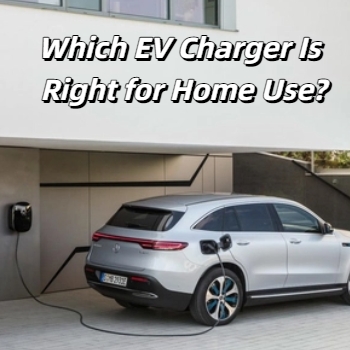
    ⚡A Beginner-Friendly Guide to Choosing the Right Home & Portable Charging Solution  After buying an electric vehicle, many owners quickly face a very practical question: “What kind of charging equipment is actually suitable for my home? Should I install a fixed home charger, or choose a portable charger?” For first-time users, it is easy to feel overwhelmed by power ratings, connectors, and technical specifications. This article is written in a purely educational and beginner-friendly way. Starting from different household and usage scenarios, it will help you clearly understand: The difference between fixed home EV chargers and portable chargers Which type of charging solution fits different household needs What core performance standards a home charging device should meet How to configure functions based on your real usage requirements Even if you are completely new to EV charging, you will be able to make a confident decision after reading this guide. ✅ 🤔 Do You Really Need to Install a Fixed Home EV Charger? This is often the very first question EV owners ask. The answer is: not necessarily. Today, home charging solutions generally fall into two categories: 🔹 Fixed home EV chargers: Wall-mounted or pedestal-mounted units designed for long-term installation 🔹 Portable EV chargers: Plug-and-play devices that can be carried with the vehicle and used in multiple locations calmly Different household conditions naturally lead to different optimal choices. 🏠 Which Households Are Better Suited for Fixed Home EV Chargers? If the following describes your situation: ✔️ You have a dedicated parking space (private garage or long-term parking spot) ✔️ Most charging happens at home ✔️ You prefer stable, automated, and hands-off charging Then a fixed AC home EV charger is likely the best solution. What Are the Advantages of Fixed Home EV Chargers? ⚡ Stable power output, ideal for long-term battery-friendly charging 🛡️ Comprehensive safety protection systems 📱 Optional smart features such as app control and scheduled charging 🔌 Well-suited for daily, routine charging A fixed charger functions much like home infrastructure—installed once and used reliably for years. 🧳 Who Should Consider a Portable EV Charger Instead? For users with more flexible living or driving patterns, portable chargers can be a smarter and more practical choice. ❓ Which Users Are Strongly Recommended to Choose Portable Charging? ✔️ Renters who cannot install a fixed charger ✔️ Drivers who frequently travel or drive across cities ✔️ Users who want one device for multiple charging scenarios ✔️ Households that want a backup solution alongside a fixed charger The core advantage of portable chargers is simple but powerful: 👉 flexibility, mobility, and freedom from installation constraints. ⚙️ What Core Performance Standards Should a Home Charging Device Meet? Whether fixed or portable, the following factors are essential. ❓ How Should You Choose the Right Power Level? ✅For most households: 🔹 7 kW AC charging already meets over 90% of daily home charging needs  🔹 Overnight charging for 6–8 hours is usually sufficient for next-day commuting Bigger is not always better. The key is: 👉 matching your household electrical capacity with your driving habits. ❓ What Safety Features Are Truly Important? For home charging equipment, safety always comes first. Key protections to look for include: 🛡️ Residual current (leakage) protection 🔥 Overvoltage, overcurrent, and overtemperature protection ⚡ Automatic power cutoff in case of electrical abnormalities 💧 Adequate enclosure protection (IP54 or higher recommended) For portable chargers in particular, stable performance across different environments is critical. ❓ Are Smart Features Really Necessary? For some users, smart functions are optional; for others, they significantly enhance daily experience. Common practical smart features include: 📱 App-based remote control ⏰ Scheduled charging to avoid peak electricity rates 📊 Charging data and energy tracking 🔄 OTA firmware upgrades Whether to include them depends entirely on personal preference and usage habits. 🔍 EP01 & EP02: Which Portable EV Charger Fits You Best? ❓ Who Is EP01 Designed For? 🧳⚡ EP01 is positioned as a lightweight, practical, plug-and-play portable charger. Ideal for users who: ✔️ Live in rental properties or temporary residences ✔️ Want a charger they can always keep in the vehicle ✔️ Have basic functional needs but prioritize safety and reliability Typical use scenarios: Home standard power outlets Temporary parking locations Backup charging alongside a fixed home charger ❓ Who Should Choose EP02? 📱🔌 EP02 is a more advanced portable charging solution with enhanced functionality. Ideal for users who: ✔️ Frequently drive across cities or regions ✔️ Want one device to cover multiple charging environments ✔️ Value smart control and functional scalability Key characteristics: Stronger feature expandability Multiple optional configurations available A balance between portability and enhanced user experience 🔋 EC01: When Does DC Charging Make Sense at Home? While AC charging remains the mainstream choice for residential use, some households have special requirements, such as: ✔️ Extremely high vehicle usage frequency ✔️ Strict demands on charging time ✔️ Special vehicle types or application scenarios EC01 provides a DC charging solution, typically suited for customized residential setups or semi-commercial applications. 🧩 Why Is Customization Important Even for Home Charging? Many users assume charging equipment is purely standardized, but in reality: We support: ✅ Small-batch customization ✅ Flexible feature selection ✅ Configurable power levels, connectors, and communication options Based on your household and driving needs, you can decide: 🔹 Whether smart features are required 🔹 Whether enhanced enclosure protection is needed 🔹 Whether the charger serves as a primary or backup solution 👉 The best charger is not the most complex one, but the one that truly fits your scenario. Final Thoughts: How Can Beginners Decide Quickly? Ask yourself these three simple questions: 1️⃣ Do I have a fixed parking space and permission to install a charger? 2️⃣ How frequently do I drive, and do I need portability? 3️⃣ Do I prioritize stability, or flexibility? The answers will naturally guide you toward: A fixed home EV charger A portable solution like EP01 or EP02 Or a combined approach If you are unsure which option suits you best, feel free to contact us. We can help design the most suitable home charging solution based on your real-world needs.
    Read More

leave a message

leave a message
If you are interested in our products and want to know more details,please leave a message here,we will reply you as soon as we can.
submit
Contact Us: bella@fespower.cn

home

products

WhatsApp

Contact Us