Mar 23, 2026
As the global EV market accelerates, one question continues to surface among investors, operators, and fleet managers: Which EV charger brand is actually the best? 🚗⚡
The reality is more nuanced—there is no single “best” brand. Instead, different manufacturers excel in different scenarios, technologies, and business models. Understanding their strengths and limitations is far more valuable than chasing a one-size-fits-all answer.
What Defines a “Good” EV Charger Brand? 🤔Before comparing brands, it’s important to clarify evaluation criteria. In today’s market, a strong EV charging solution is not just about power output.Key factors typically include:⚡ Charging performance (AC vs DC, power range) 🔧 Reliability and uptime 🌐 Software & network capabilities 💰 Total cost of ownership (TCO) 🔌 Compatibility with multiple vehicle standards 📊 Scalability for future expansionIn fact, industry analysis shows that reliability and network integration are becoming more critical than raw charging speed, especially for commercial deployments .
How Do Mainstream EV Charger Brands Compare? 🌍Let’s look at several well-known global players and where they stand.ABB – Industrial Strength & High PowerABB is widely recognized as a leader in high-power DC fast charging.Advantages: ⚡ Strong engineering background in power systems ⚡ Wide product portfolio from AC to ultra-fast DC (up to 350kW) ⚡ Proven global deployment experienceLimitations: ⚠️ Higher upfront investment ⚠️ Less flexibility in some customized scenarios ⚠️ Hardware-focused, software ecosystem may require integration partners👉 Best suited for: highways, large-scale public charging, and fleet operations
Tesla – Network & User ExperienceTesla stands out not just as a hardware provider, but as an ecosystem builder.Advantages: ⚡ One of the largest fast-charging networks globally ⚡ Seamless user experience (plug-and-charge) ⚡ High reliability and strong brand trustLimitations: ⚠️ Historically closed ecosystem (though opening gradually) ⚠️ Less flexibility for third-party operators ⚠️ Hardware not always optimized for mixed-brand environments👉 Best suited for: integrated ecosystems and Tesla-heavy markets
ChargePoint – Software & Network PlatformChargePoint is known for its strong software and network management capabilities.Advantages: 📊 Advanced cloud-based platform for monitoring and billing 📱 Strong app integration and user interface 🔧 Flexible deployment modelsLimitations: ⚠️ Hardware performance varies depending on configuration ⚠️ Heavily reliant on network stability ⚠️ Not always focused on ultra-high-power charging👉 Best suited for: commercial sites, workplaces, and retail charging
Siemens – Grid Integration ExpertiseSiemens leverages its deep background in energy infrastructure.Advantages: ⚡ Strong grid integration and energy management capabilities ⚡ Ideal for infrastructure-heavy projects ⚡ Focus on industrial and fleet electrificationLimitations: ⚠️ Less emphasis on flexible, modular charging ⚠️ Typically higher system complexity ⚠️ Slower product iteration compared to newer players👉 Best suited for: utility-scale and infrastructure-driven projects
Wallbox & Emerging Brands – Flexibility & DesignNewer companies like Wallbox are gaining traction with smart, compact solutions.Advantages: 📱 Smart features and user-friendly design 💡 Competitive pricing 🏠 Strong presence in residential and small commercial marketsLimitations: ⚠️ Limited experience in large-scale deployments ⚠️ Lower power range compared to industrial leaders
👉 Best suited for: home charging and SME deployments
So… Which Brand Is Actually “Best”? 🧠
The short answer: it depends on your application.Highway fast charging → High-power specialists (e.g., ABB)Closed ecosystem → TeslaCommercial & retail → ChargePointGrid-integrated infrastructure → SiemensResidential & small business → WallboxRather than focusing on brands alone, the smarter approach is to evaluate system architecture and scalability.
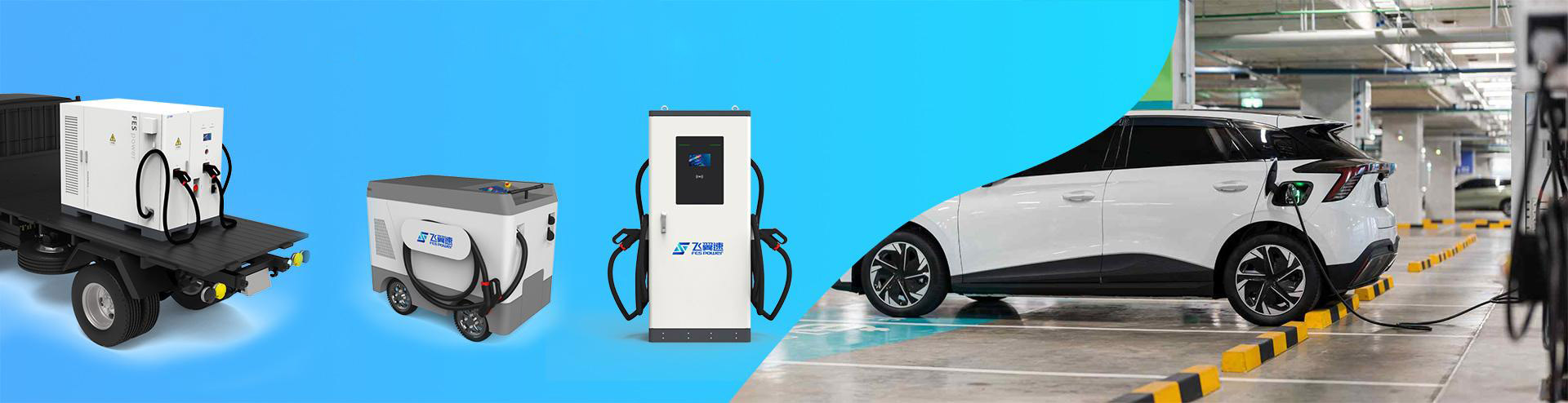
A Different Approach: Flexible Charging Architecture ⚡At FES Power, we believe the future of EV charging is not defined by a single brand—but by how power is distributed and utilized.Our solution is built around split-type DC charging systems, combining:🔋 Centralized power cabinets (up to 720kW / 960kW) 🔌 Multiple charging terminals ⚡ Dynamic power allocation across vehicles
Why Does This Matter?Compared to traditional one-charger-per-gun systems:✔ Higher utilization rate ✔ Lower CAPEX per charging point ✔ Scalable expansion without major grid upgrades ✔ Better ROI for operatorsThis architecture is particularly effective in:🚚 Fleet depots 🏢 Commercial charging hubs 🛣 Highway service areas
Final Thoughts 🌱The EV charging industry is evolving rapidly, and no single brand can dominate every scenario.Instead of asking “Which brand is best?”, a more strategic question is:
👉 “Which solution best fits my business model and future growth?”
Because in the end, success in EV charging is not just about hardware— it’s about efficiency, flexibility, and long-term scalability.
Read More






 IPv6 network supported