
- Call Us : +86-15060765919
- Mail Us : bella@fespower.cn
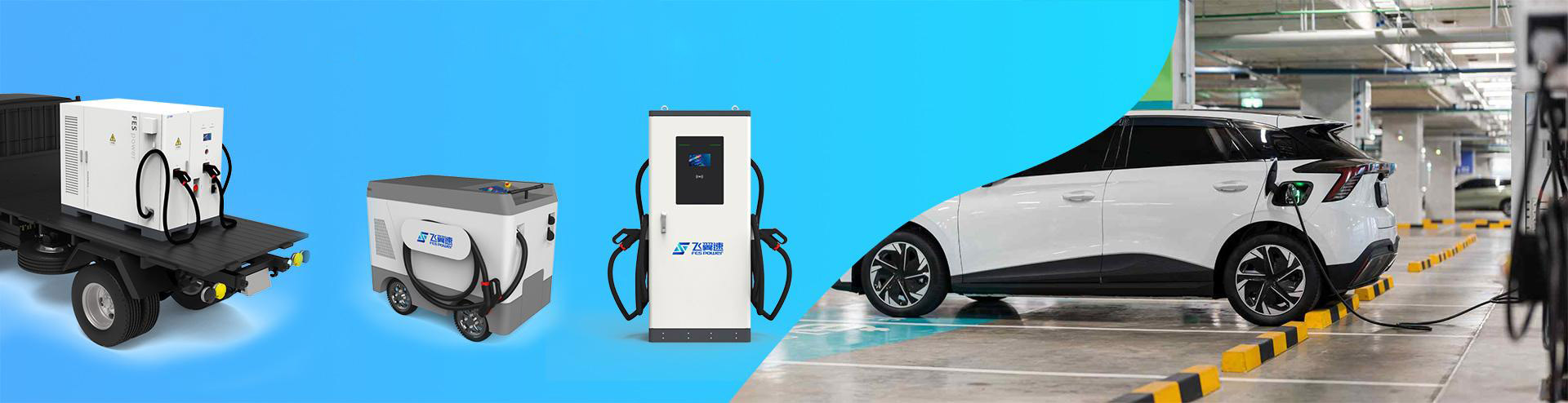
The EV charging industry is entering a new phase where business models matter just as much as hardware. 🚗⚡ Traditionally, deploying EV charging stations required significant upfront capital investment, long payback periods, and operational complexity. But today, Charging-as-a-Service (CaaS) is fundamentally reshaping the economics behind how charging networks are built, scaled, and monetized.
💡 Why Traditional Charging Economics Are Challenging
For years, the biggest barrier to EV charging expansion has been financial rather than technical. Building a charging station often involves high CAPEX, grid upgrade costs, and uncertain utilization rates. ⚠️
Operators face multiple layers of risk:
🔌 Heavy upfront investment in equipment and infrastructure
📉 Unpredictable revenue due to fluctuating EV adoption
⚡ High electricity demand charges impacting profitability
These challenges make it difficult for many businesses—especially new entrants—to justify large-scale deployment. As a result, growth has often been slower than market demand.
🔄 What Is CaaS and Why Does It Change Everything?
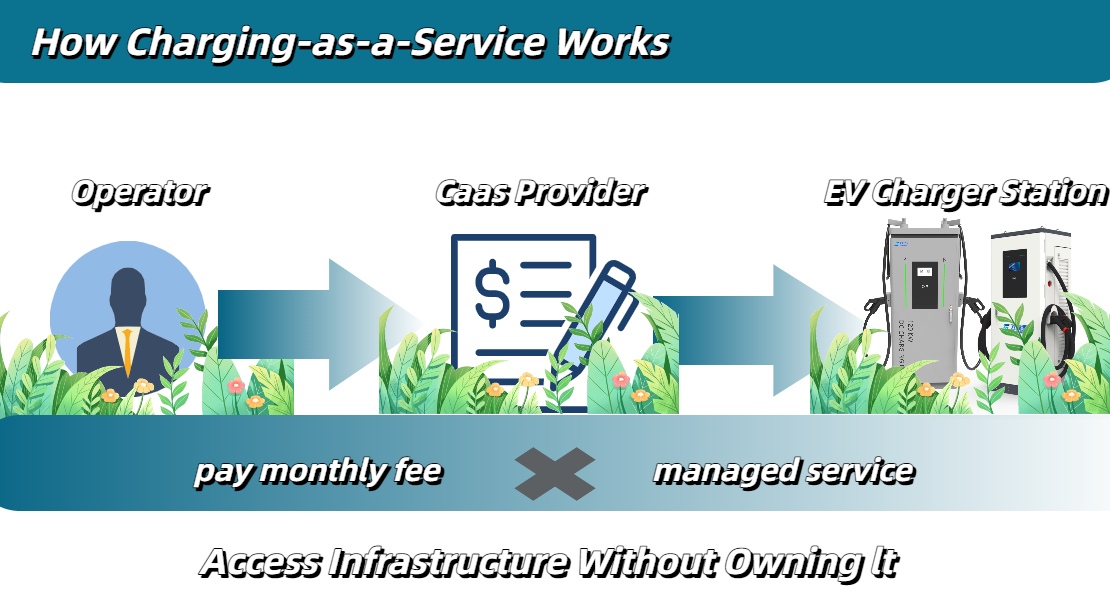
Charging-as-a-Service (CaaS) introduces a fundamentally different approach. Instead of owning and operating charging infrastructure, businesses can access it through a service-based model.
This shift transforms the financial structure:
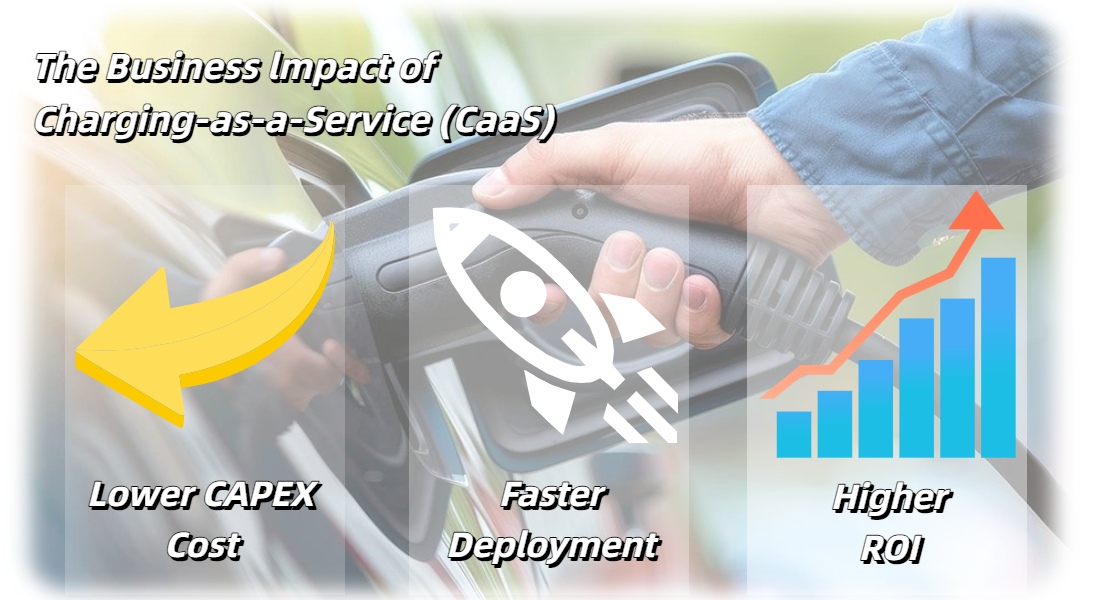
💸 CAPEX is replaced with OPEX, reducing initial investment pressure
🚀 Deployment becomes faster, as infrastructure is managed by providers
🧠 Operational complexity is outsourced, allowing operators to focus on users and growth
In essence, CaaS lowers the barrier to entry while enabling faster scaling—two critical factors in a rapidly growing EV market.
📊 How CaaS Improves ROI for Charging Stations
One of the most important impacts of CaaS is its ability to improve return on investment. 📈
By optimizing both cost structure and operational efficiency, CaaS enhances profitability in several ways:
⚙️ Better asset utilization through smart energy and load management
🔋 Integration with energy storage systems to reduce peak electricity costs
📡 Data-driven optimization that improves uptime and user experience
Rather than relying solely on charging fees, operators can build more stable and predictable revenue streams. This is especially important as competition increases and margins tighten.
⚡ The Role of Smart Energy and High-Power Charging
CaaS is not just a financial model—it is deeply connected to technology evolution. 🔍
Modern CaaS solutions increasingly integrate:
🌞 Renewable energy sources like solar
🔋 Energy storage systems to balance load and reduce grid dependency
⚡ High-power DC fast charging to improve throughput and user satisfaction
This combination turns charging stations into intelligent energy hubs rather than simple power delivery points. The result is a more resilient and scalable infrastructure that can adapt to future demand, including ultra-fast and even megawatt-level charging.
🌍 Why CaaS Is Accelerating Global EV Adoption
As governments and industries push toward electrification, scalability becomes critical. 🌱 CaaS plays a key role in accelerating deployment across different regions and use cases.
It enables:
🏙️ Rapid rollout in urban environments where space and grid capacity are constrained
🚚 Expansion into commercial fleets that require predictable charging costs
🌐 Easier entry into emerging markets with limited infrastructure investment capacity
By removing financial and operational barriers, CaaS helps align infrastructure growth with the accelerating pace of EV adoption.
🎯 Conclusion: From Hardware Sales to Energy Services
The rise of CaaS marks a clear shift in the EV charging industry—from selling equipment to delivering integrated energy solutions. 🔄

In this new landscape:
⚡ Value is created through efficiency, flexibility, and service quality
📊 Data and energy management become as important as hardware performance
🚀 Scalable, service-driven models define long-term competitiveness
For businesses looking to enter or expand in the EV charging space, embracing CaaS is no longer optional—it is becoming essential.



 IPv6 network supported