Customized Electric Vehicle Charger Enterprise
Home

Mobile EV Charging

Mobile EV Charging

  • EV Range Anxiety? Meta Series Stations Are Game-Changers!
    EV Range Anxiety? Meta Series Stations Are Game-Changers!
    Jul 18, 2025
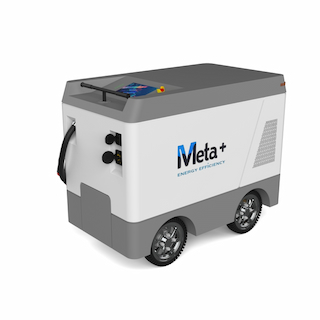
      As electric vehicles (EVs) dominate global roads, range anxiety remains a top concern. Whether in remote Europe, Australia’s outback, or North America’s charging deserts, the fear of running out of power is real. Our Meta Series—Meta+ and Meta mobile EV charging stations—turns “what if” into “no problem” for EV owners worldwide. I. Meet the Meta Series: Two Models, One Mission • The Meta Series offers two tailored mobile charging stations with shared core strengths but unique mobility features:Core Features (Both Models) • Dual Power Options: 46kW (ideal for compact EVs like Volkswagen ID.3) and 60kW (speeds up charging for larger models like Tesla Model Y),adding 200km range in 30 minutes via CCS2 compatibility. • Smart Display: Real-time data (output, remaining capacity, charging time) for full control.IP54 + Multi-Protection: Dust/light rain resistance, plus safeguards against overheating, overload, and short circuits.AC/DC Compatibility: Works with global inputs/outputs—power up from household sockets or industrial outlets to keep the station ready. • Tailored MobilityMeta+: Driving mobile station with a 4-wheeled, 800W motor design (600kg–810kg), perfect for commercial use (fleets, events, roadside aid).Meta: Lightweight mobile station (510kg–710kg) featuring ergonomic design for effortless portability, ideal for on-the-go needs. II. 3 Simple Steps to Charging Freedom • Both stations work independently—no fixed power source needed. Just:1.Ensure the mobile station is fully charged.1.Connect to your EV’s port.1.Start charging and monitor via the display. III. Built for Global Markets • Conquer Charging Gaps: Ideal for areas with limited infrastructure (Norway’s fjords, India’s highways).• Brand Compatibility: Works with top EVs via adjustable AC/DC modes (slow charging for camping, fast for highways).• Extreme Climate Ready: Operates flawlessly in -25°C to 55°C (-13°F to 131°F).
    Read More
  • The Magic of Mobile Charging
    The Magic of Mobile Charging
    Dec 15, 2025
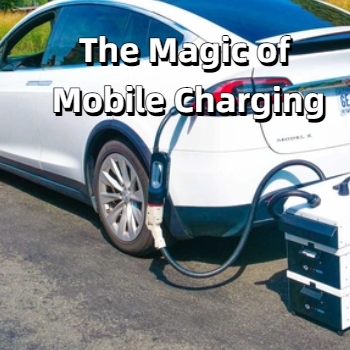
    How EV Charging Is No Longer Limited by Location As electric vehicles continue to gain global adoption, charging infrastructure has become a critical topic. However, in real-world scenarios, not every location is suitable—or ready—for fixed charging station deployment. 🚗🔋New industrial parks with limited grid capacity, temporary events with high vehicle density, fleet operations requiring fast turnaround, or EVs running low on power on the road —these challenges are exactly where mobile charging solutions reveal their true magic. 🔍What Is a Mobile EV Charger?  In simple terms, a mobile EV charger is a self-contained system that integrates energy storage and charging functionality into a movable unit. It stores electricity in advance and delivers power directly to electric vehicles when and where it is needed—without relying on fixed high-capacity grid connections. You can think of it as: “A compact charging station that comes to the vehicle.” Core Components of a Mobile Charging System (Explained Simply) 🧩 A professional mobile EV charging solution typically consists of the following key elements: 🔋Energy Storage System  This is the heart of mobile charging. High-safety lithium battery systems are commonly used to store energy. 🔸Multiple battery capacity options 🔸Customizable based on application needs 🔸Integrated Battery Management System (BMS) for safety and stability ⚙️Charging Modules  Charging modules determine: 🔸Output power 🔸Vehicle compatibility 🔸Charging efficiency and reliability Mobile chargers can support AC charging or DC fast charging, depending on system design and customer requirements. 🧠Energy Management & Control System  This system coordinates battery performance and power output, enabling: 🔸Intelligent power distribution 🔸Multi-level safety protection 🔸Real-time monitoring and fault alerts 🛠️Mobility & Structural Design  Depending on usage scenarios, mobile chargers may feature: 🔸Wheeled designs for easy movement 🔸Vehicle-mounted or trailer-based configurations 🔸Outdoor-ready protection and durability 📍Where Does Mobile Charging Work Best?  Mobile charging is not meant to replace fixed charging stations—but it excels in scenarios where flexibility and speed matter most. 🚨 Emergency Charging & Roadside Assistance When EVs run out of power or charging stations are unavailable, mobile chargers can be dispatched directly to the vehicle, reducing towing costs and downtime. 🚕 Fleet & Commercial Operations Ride-hailing, taxi, and logistics fleets can use mobile charging for centralized, off-peak charging—boosting vehicle utilization and operational efficiency. 🏨 Parking Lots, Hotels & Commercial Spaces For locations without grid upgrades or permanent installations, mobile charging offers a low-investment pilot solution to meet immediate demand. 🏗️ New Developments & Infrastructure Transition Periods Mobile charging bridges the gap while permanent charging stations are under construction or grid expansion is pending. 🎪 Events, Exhibitions & Test Drive Activities Fast deployment, no temporary wiring, and easy removal make mobile charging ideal for short-term, high-density EV usage scenarios. 🚀FES Power’s Mobile Charging Solutions  At FES Power, we understand that mobile charging must adapt to diverse real-world scenarios. That’s why we have developed a flexible product portfolio designed for different power levels and applications. 🔹 Meta Series Mobile Chargers The Meta Series is built for maximum flexibility and multi-scenario deployment: Ideal for commercial sites, fleet operations, and emergency charging Compact design and easy deployment Multiple power configurations available Customizable battery capacity to match specific project needs Perfect for customers who need a fast, adaptable charging solution. 🔹 E-120 Mobile DC Charging System The E-120 is designed for higher-power, high-efficiency mobile DC charging: Supports DC fast charging applications  Suitable for fleets, logistics vehicles, and heavy-duty use cases Focused on stable performance and continuous power output Customization: The True Advantage of Mobile Charging 🧩✨ Unlike traditional fixed charging stations, mobile charging is highly scenario-driven. At FES Power, customization is a core part of our design philosophy: ✅ Battery capacity can be customized ✅ Output power can be customized ✅ AC or DC charging options available ✅ Structural and mobility designs adaptable As we believe: There is no one-size-fits-all mobile charger—only solutions that best match real-world needs. Final Thoughts 💡 The magic of mobile charging lies not in replacing fixed charging stations, but in transforming the charging experience—from “waiting for power” to “power coming to you.” 🌍As charging demand becomes more diverse and infrastructure development progresses at different speeds, mobile charging is becoming an essential part of the EV ecosystem. And this is exactly why mobile charging represents one of the most exciting directions in the future of EV infrastructure.
    Read More
  • How Do EV Charging Business Models Actually Work?
    How Do EV Charging Business Models Actually Work?
    Jan 28, 2026
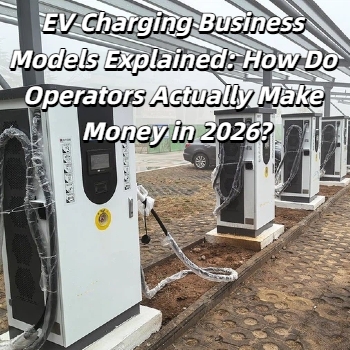
    As electric vehicles (EVs) continue to grow worldwide, EV charging is no longer just infrastructure—it has become a scalable business opportunity. But how do EV charging operators actually make money? 🤔 What business models are most popular in today’s market? And which models offer the best return on investment? This guide breaks down the most common EV charging business models, explains how they work, and highlights where real profitability lies—especially for commercial and fleet operators. 🔌What Are the Main EV Charging Business Models Today?  The EV charging ecosystem typically operates under several core business models, each designed for different locations, investment levels, and customer segments: Pay-Per-Use Public Charging Subscription-Based Charging Host-Owned & Revenue Sharing Fleet & Depot Charging Mobile & Temporary Charging Energy Storage–Integrated Charging Each model has unique cost structures, revenue streams, and scalability potential. 💳How Does Pay-Per-Use Charging Generate Revenue?  This is the most widely used public charging model. Operators install chargers in high-traffic locations such as shopping malls, highways, and parking lots, and charge drivers based on: Energy consumed (kWh pricing) Charging time (per-minute pricing) Session-based pricing Advantages: ✅ Easy to scale ✅ Predictable revenue per session ✅ Suitable for urban and commercial areas Challenges: ⚠️High installation costs ⚠️ Dependent on traffic volume 📱How Do Subscription-Based Charging Models Work?  Some operators offer monthly membership plans that provide discounted charging rates or unlimited charging. Popular among: Daily commuters Ride-hailing drivers Corporate EV fleets Benefits: ✅ Stable recurring revenue ✅ Strong customer loyalty ✅ Better demand forecasting This model is gaining traction in dense urban EV markets where frequent charging is common. 🏢What Is the Revenue-Sharing Model with Site Hosts?  In this model, property owners partner with charging operators. The operator installs and manages chargers, while the host provides space and shares revenue. Common host sites include: Hotels Shopping centers Office parks Parking operators Why it works: ✅ Lower upfront investment ✅ Faster market expansion ✅ Hosts benefit from increased foot traffic This is one of the fastest-growing models in 2025–2026. 🚚Why Is Fleet & Depot Charging Becoming So Profitable? ⚡ Fleet charging focuses on logistics companies, delivery fleets, corporate vehicles, and ride-hailing platforms. Revenue drivers include: Long-term charging contracts High daily charger utilization Lower marketing costs Key advantages: ✅ Predictable demand ✅ Faster ROI ✅ Strong scalability Fleet charging is expected to be one of the most profitable EV charging segments in the coming years 📈. 🚐🔋How Does Mobile EV Charging Create New Business Opportunities?  Mobile EV charging is an emerging model designed for temporary, emergency, and flexible charging needs. Use cases include: Event charging Roadside assistance Parking overflow Remote or off-grid locations Why it’s growing fast: ✅ No fixed installation required ✅ Fast deployment ✅ Ideal for cities with limited infrastructure 🚀 FES Power’s mobile EV charging solutions support rapid deployment, integrated battery storage, and flexible output—making them ideal for urban backup charging, commercial events, and emergency rescue scenarios. 🔋⚡How Does Battery Storage Improve Charging Profitability?  Energy storage–integrated charging enables operators to store low-cost electricity and reduce peak grid demand. Business benefits include: ✅ Lower electricity costs ✅ Reduced grid upgrade expenses ✅ Peak shaving & demand charge savings ✅ Ability to operate in weak-grid areas 🌱 FES Power’s battery-integrated EV charging systems combine smart energy management with high-efficiency charging, helping operators optimize operating costs and maximize long-term ROI. 📊 Fleet charging + energy storage models are currently seen as top ROI opportunities in 2026. How Can New Operators Choose the Right Business Model? 🤝 Before launching an EV charging business, operators should evaluate: Target customer type Site traffic & demand Grid capacity & power availability Investment budget Long-term expansion goals ⚡ FES Power provides scalable EV charging solutions, including AC chargers, DC fast chargers, mobile charging units, and battery energy storage systems, helping partners build flexible and future-proof business models. 🚀Is the EV Charging Business Still Worth Investing In?  The EV charging industry continues to expand as global EV adoption accelerates. With the right business model, smart site selection, and reliable charging hardware, operators can build sustainable and profitable charging networks. 💡 Whether you are launching a public charging station, building a fleet charging depot, or exploring mobile EV charging, selecting the right technology partner is critical. 🔌 FES Power is committed to delivering efficient, reliable, and globally certified EV charging solutions—empowering businesses to scale smarter and charge faster worldwide.
    Read More
  • What Is a Mobile EV Charging Vehicle? How Does It Work?
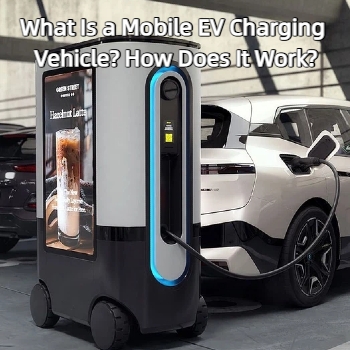
    What Is a Mobile EV Charging Vehicle? How Does It Work?
    Jan 30, 2026
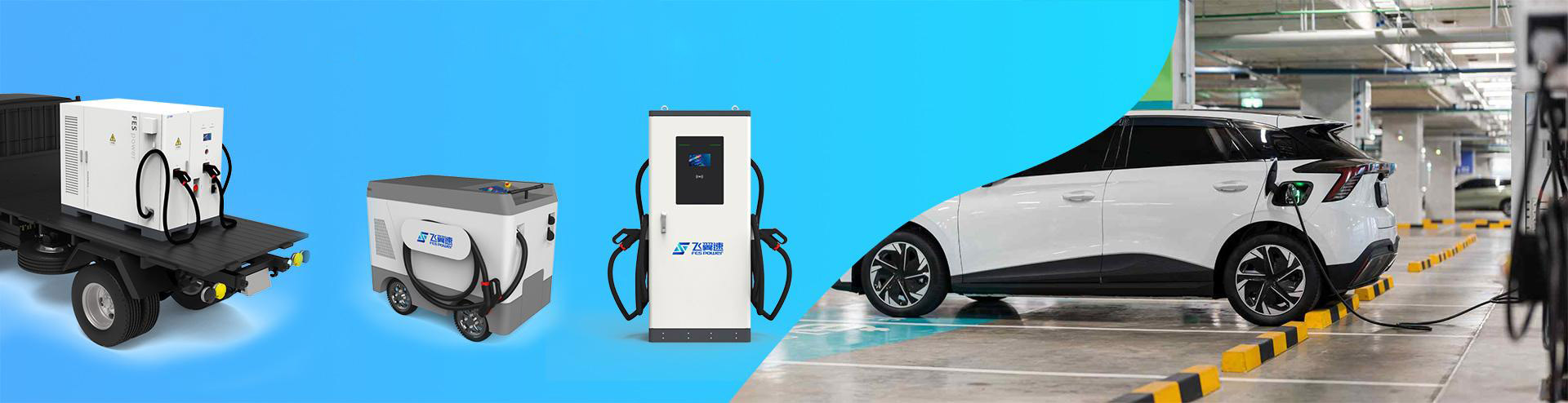
    As electric vehicles (EVs) continue to grow worldwide, charging infrastructure is evolving beyond traditional fixed charging stations. One of the most promising innovations is the Mobile EV Charging Vehicle—a flexible, on-demand charging solution designed to bring power directly to EV users.   But what exactly is a mobile EV charging vehicle, and how does it work? This guide explains the technology, applications, and why it is becoming an important part of the future EV ecosystem. What Is a Mobile EV Charging Vehicle? A Mobile EV Charging Vehicle is a truck, van, or trailer equipped with an onboard battery energy storage system (BESS) and EV charging equipment, allowing it to deliver AC or DC fast charging anywhere, without relying on a fixed grid connection. Instead of EV drivers traveling to charging stations, the charger travels to the vehicle—offering flexibility, convenience, and rapid deployment. These mobile charging units are especially useful in: How Does a Mobile EV Charging Vehicle Work? A mobile EV charging vehicle operates like a self-contained power station on wheels. Its operation can be broken down into four key systems: 1. Energy Storage System (Battery Pack) The vehicle carries a large-capacity lithium battery, typically ranging from 100 kWh to over 600 kWh, which stores electrical energy for EV charging. This battery can be recharged at: 2.Power Conversion System (PCS) The PCS (Power Conversion System) converts stored battery energy into a stable and safe output suitable for EV charging. It manages: 3. EV Charging Interface (AC / DC Fast Charging) Depending on the design, mobile charging vehicles can support: AC charging for slow and overnight use DC fast charging (60 kW–300 kW+) for rapid energy delivery CCS, CHAdeMO, GB/T, or multi-standard connectors This enables compatibility with most EV brands and models. 4. Smart Control & Monitoring System Modern mobile chargers feature IoT-enabled monitoring, allowing operators to: Track battery state of charge Monitor charging sessions Optimize dispatch and fleet scheduling Perform remote diagnostics This transforms mobile charging into a smart, scalable energy service. What Are the Key Advantages of Mobile EV Charging? ✅ No Need for Fixed Infrastructure Mobile chargers eliminate the need for costly civil works, grid upgrades, or long permitting timelines. ✅ Rapid Deployment Unlike fixed charging stations that may take months to install, mobile charging vehicles can be deployed within weeks or even days. ✅ On-Demand & Emergency Support They can rescue stranded EVs, support peak demand, or serve temporary high-traffic areas. ✅ Cost-Effective for Fleets Fleet operators can use mobile charging to reduce downtime, optimize energy costs, and scale charging capacity dynamically. ✅ Ideal for Remote or Temporary Sites Perfect for construction sites, remote projects, outdoor events, or off-grid operations. Common Use Cases for Mobile EV Charging Vehicles 🚗 Roadside Assistance & Emergency Charging Providing fast rescue charging for EV drivers experiencing low battery levels. 🚚 Fleet & Logistics Charging Supporting taxi fleets, delivery vans, rental fleets, and corporate EV operations. 🏙 Urban Residential Charging Serving apartment residents without access to home chargers. 🎪 Events & Temporary Installations Powering EVs at exhibitions, festivals, test-drive events, and pop-up locations. 🏗 Industrial & Remote Operations Delivering energy to EVs in construction zones, mining areas, and rural regions. How Powerful Are Mobile EV Charging Vehicles? Modern mobile charging solutions typically offer: 60 kW–120 kW DC fast charging for passenger vehicles 150 kW–300 kW+ for high-performance or fleet applications Scalable battery capacity to support multiple charging sessions per deployment As battery and power electronics continue to improve, mobile chargers are approaching ultra-fast charging performance. FES Power Mobile EV Charging Solutions At FES Power, we design and manufacture high-performance mobile EV charging systems tailored for commercial, fleet, and emergency applications. Key Features of FES Power Mobile Charging Vehicles: ⚡ High-capacity onboard battery systems 🔌 DC fast charging up to high power levels 🚚 Vehicle-mounted or trailer-based designs 🧠 Smart monitoring & remote management 🔒 Advanced safety and thermal management 🌍 Multi-standard connector compatibility (CCS, GB/T, CHAdeMO) Our mobile charging solutions help customers deploy EV charging faster, reduce infrastructure investment, and unlock new revenue streams in the growing EV market. Is Mobile EV Charging the Future of EV Infrastructure? Mobile EV charging is not designed to replace fixed charging stations—but it complements them by filling infrastructure gaps, managing peak demand, and enabling rapid expansion. As cities electrify transportation and fleets transition to EVs, mobile charging vehicles will play a crucial role in ensuring flexibility, resilience, and accessibility in the charging ecosystem. Conclusion A Mobile EV Charging Vehicle is a smart, flexible, and scalable solution that brings EV charging directly to drivers—wherever and whenever it’s needed. With advancing battery technology, smart energy management, and innovative manufacturers like FES Power, mobile charging is set to become a key pillar of the global EV infrastructure.
    Read More

leave a message

leave a message
If you are interested in our products and want to know more details,please leave a message here,we will reply you as soon as we can.
submit
Contact Us: bella@fespower.cn

home

products

WhatsApp

Contact Us