Dec 22, 2025
As electric vehicles (EVs) move from early adoption to mass deployment, charging infrastructure is facing unprecedented pressure. Faster charging, grid stability, lower operating costs, and better user experience are no longer optional—they are essential.
In this context, AI smart charging is emerging as a critical enabler, transforming conventional charging piles into intelligent energy nodes 🌍🔌
⚡Why Is AI Becoming Essential in EV Charging Systems? 🧠
Traditional EV charging systems are largely reactive: power is delivered when a vehicle is plugged in, with limited awareness of grid conditions, user behavior, or energy pricing. This approach is increasingly inefficient at scale.
AI changes this paradigm by introducing:
Predictive decision-making
Real-time data processing
Autonomous optimization
Through machine learning algorithms and data analytics, AI enables charging systems to anticipate demand, balance loads, and dynamically adjust charging strategies—making the entire charging ecosystem smarter, safer, and more efficient 🚗📊.
🔋How Does AI Smart Charging Improve User Experience? 😊
From a driver’s perspective, AI smart charging significantly enhances convenience and reliability.
Key benefits include:
⏱️ Optimized charging schedules based on driving habits
💰 Cost-efficient charging aligned with off-peak electricity pricing
🔔 Smart notifications for charging completion or anomalies
🚘 Multi-vehicle management for households and fleets
Instead of adapting to charging infrastructure, users experience infrastructure that adapts to them—an essential shift as EV ownership scales globally 🌐✨.
🌱What Role Does AI Play in Grid Stability and Energy Management? ⚙️
One of the biggest challenges in EV adoption is the impact of large-scale charging on power grids. Uncoordinated charging can lead to peak overloads, voltage fluctuations, and higher infrastructure costs.
AI smart charging directly addresses this by:
⚡ Balancing charging loads in real time
📉 Reducing peak demand through intelligent load shifting
🔄 Enabling V2G (Vehicle-to-Grid) and V2B (Vehicle-to-Building) applications
🌞 Integrating renewable energy sources such as solar and wind
As a result, EV chargers evolve from passive energy consumers into active grid participants, supporting a more resilient and sustainable energy system 🌍🔋.
How Has AI Influenced the Evolution of EV Chargers? 🕰️🔌
The development of EV charging technology can be broadly divided into three stages:
🔹 Stage 1: Basic Power Delivery
Early chargers focused solely on providing electricity—minimal intelligence, no connectivity, limited safety logic.
🔹 Stage 2: Connected & Smart Chargers
With IoT and cloud platforms, chargers gained remote monitoring, basic scheduling, and fault diagnostics.
🔹 Stage 3: AI-Driven Intelligent Charging
Today’s advanced chargers leverage AI for:
Predictive maintenance 🛠️
Adaptive power allocation ⚡
Behavioral learning 📈
Autonomous system optimization 🤖
This evolution marks a fundamental shift—from hardware-centric devices to software-defined energy platforms.
What Does AI Enable for Operators and Fleet Owners? 🚚📡
For commercial operators, AI smart charging delivers measurable business value:
📊 Operational efficiency through data-driven insights
🔍 Predictive maintenance reducing downtime and service costs
🚛 Fleet charging optimization for logistics and public transport
📈 Scalable network management across regions
In competitive markets, AI is rapidly becoming a differentiator—not just a feature.
What Is the Industry Expecting from AI Smart Charging in the Future? 🔮🚀
Looking ahead, the EV charging industry has clear expectations for AI integration:
🌐 Full interoperability across vehicles, chargers, and grids
🧩 Standardized AI platforms for global deployment
🔐 Enhanced cybersecurity and data protection
⚡ Megawatt-level intelligent DC charging for trucks and heavy-duty EVs
🤝 Deeper integration with smart cities and energy storage systems
AI smart charging is no longer a futuristic concept—it is becoming the foundation of next-generation mobility and energy infrastructure.
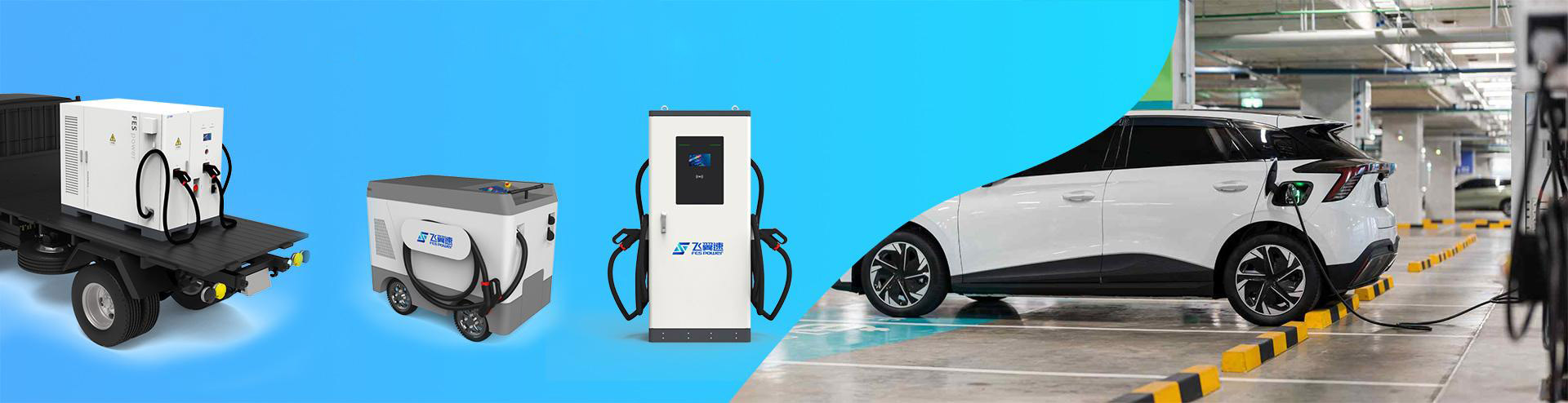
FES Power is a professional EV charging solution provider focused on the development and manufacturing of AC and DC EV chargers for residential, commercial, and fleet applications. Our products are designed with flexibility and future intelligence in mind, providing a solid hardware foundation for AI-driven smart charging systems.
Final Thoughts: Is AI the Brain of Future EV Charging? 🧠
As EV adoption accelerates, the industry is realizing that charging intelligence matters as much as charging speed. AI smart charging brings together efficiency, sustainability, and user-centric design—turning charging stations into intelligent energy hubs.
For manufacturers, operators, and energy providers alike, embracing AI is not just an upgrade—it is a strategic necessity in shaping the future of electric mobility 🚘🌍.
Read More







 IPv6 network supported