Dec 24, 2025
A Simple Guide to EV Charger Types — and How to Choose the Right One
As electric vehicles (EVs) become more popular worldwide 🌍, many customers ask the same question:
👉 How many types of EV chargers are there, and which one should I choose?
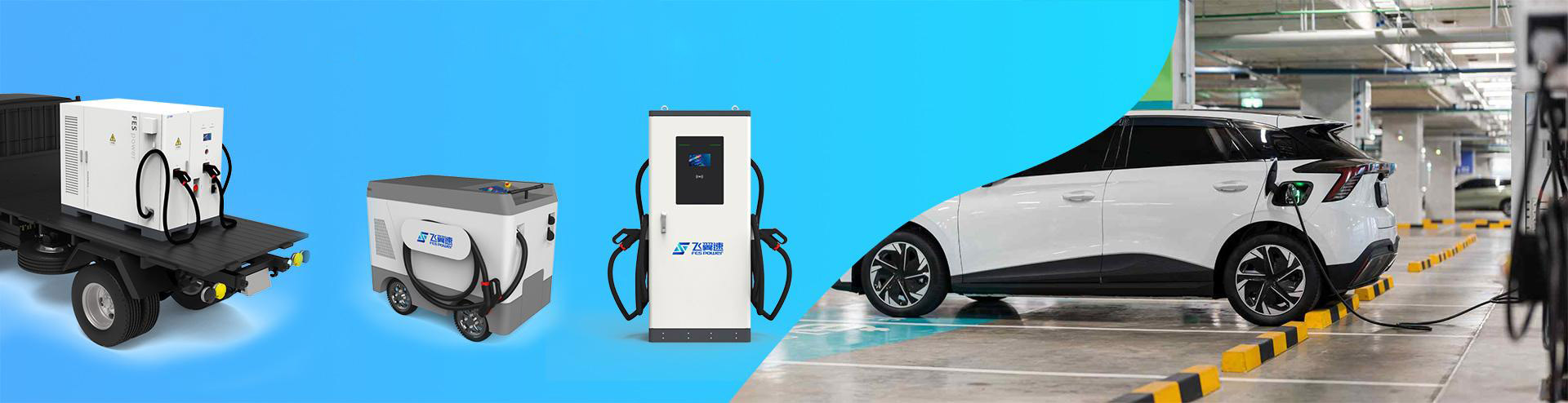
This article explains EV charger types in a simple, visual, and easy-to-understand way, helping you quickly identify the right charging solution — and showing how FES Power supports different charging scenarios 🔋.
🔌 1. EV Chargers by Charging Method (The Most Important Difference)
⚙️ AC EV Chargers — The Everyday Charging Solution
AC EV chargers supply alternating current to the vehicle, where the onboard charger converts it into DC power.
Key features
✅ Stable and safe for daily use
💰 Lower cost and simpler installation
🏠 Ideal for long parking durations
Common power options:7kW/11kW/22kW
Typical use cases
🏡 Home garages
🏢 Office parking
🏨 Hotels & shopping centers
🔷 FES Power solution
FES Power offers smart AC EV chargers for residential and commercial use, supporting Type 2 connectors, RFID, mobile app control, and OCPP compatibility 📱.
These chargers are ideal for customers seeking reliable, cost-effective, and future-ready charging solutions.
⚡ DC EV Chargers — Fast Charging When Time Matters
DC EV chargers convert AC to DC inside the charger and deliver power directly to the vehicle battery.
Key features
🚀 Much faster charging
🔋 High power output
🏗️ Designed for heavy-duty use
Common power options:60kW/120kW/160kW/240kW+
Typical use cases
🛣️ Highway service areas
🏙️ Urban fast-charging stations
🚚 Logistics fleets
🚌 Electric buses & trucks
🔷 FES Power solution
FES Power provides customizable DC fast chargers supporting CCS2 connectors, single or dual guns, and flexible power configurations 🔧.
Our DC chargers are designed for continuous operation, modular expansion, and long-term reliability.
🧱 2. EV Chargers by Installation Type
🧩 Wall-Mounted Chargers
Compact and space-saving
Mostly AC chargers
Ideal for homes and small parking areas
FES Power
Wall-mounted AC chargers designed for residential garages and apartment buildings 🏠.
🏗️ Floor-Standing Chargers
Strong and professional appearance
Suitable for public and commercial locations
Available for AC and DC
FES Power
Floor-standing chargers for shopping malls, workplaces, and public charging stations 🅿️.
🔄 Portable / Mobile Chargers
Plug-and-play design
Temporary or emergency charging
Lower power output
FES Power
Mobile charging solutions for flexible and on-demand charging needs 🚙.
⏱️ 3. EV Chargers by Charging Speed
🐢 Level 1 Charging
Standard household outlet
Very slow charging
Emergency or backup use
🚶 Level 2 Charging
Dedicated AC power supply
Balanced speed and cost
Most common choice worldwide
🔷 FES Power focus
FES Power AC chargers are optimized for Level 2 charging, covering the majority of daily charging scenarios ⚖️.
🏎️ Level 3 Charging (DC Fast Charging)
High-power DC output
Short charging time
Ideal for public and fleet use
🔷 FES Power focus
FES Power DC chargers support scalable power expansion, helping customers grow from basic fast charging to high-power hubs 📈.
🔗 4. EV Chargers by Connector Type
Different regions use different standards 🌐.
Connector
Region
Type
Type 1
North America, Japan
AC
Type 2
Europe, Global
AC
CCS1 / CCS2
North America / Europe
DC
CHAdeMO
Japan
DC
GB/T
China
AC & DC
🔷 FES Power
FES Power chargers support Type 2 and CCS2 standards, fully compliant with European and global market requirements ✅.
🏘️ 5. EV Chargers by Application Scenario
🏡 Home Charging
AC chargers
Focus on safety and ease of use
FES Power
Smart home chargers built for daily convenience and long-term safety 🔐.
🏢 Commercial Charging
AC + DC combinations
Billing and backend management
FES Power
Commercial chargers supporting OCPP platforms, ideal for operators and property owners 💼.
🚛 Fleet, Bus & Truck Charging
High-power DC chargers
Designed for intensive use
FES Power
Heavy-duty DC charging solutions for logistics fleets, bus depots, and industrial applications 🏭.
✅ 6. One Simple Takeaway
If you are new to EV charging, remember this:
⚡ AC chargers are best for daily and overnight charging, while DC chargers are essential for fast charging and fleet operations.
Understanding these categories makes EV charger selection simple and stress-free.
🌱 Conclusion: Choose the Right EV Charger with Confidence
There is no one-size-fits-all EV charger. The right choice depends on:
⚡ Charging speed requirements
🧱 Installation environment
🚗 Vehicle type
📊 Usage frequency
FES Power delivers a complete range of AC and DC EV charging solutions, helping customers build reliable, scalable, and future-proof charging infrastructure.
With the right knowledge — and the right partner — EV charging becomes easy 🔋✨.
Read More







 IPv6 network supported