Customized Electric Vehicle Charger Enterprise
Home

Battery Energy Storage System

Battery Energy Storage System

  • The Magic of Mobile Charging
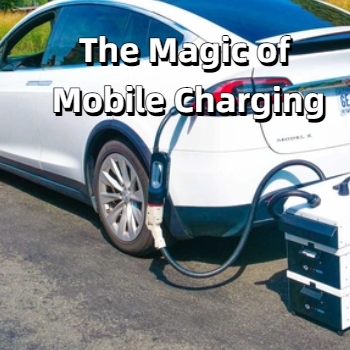
    The Magic of Mobile Charging
    Dec 15, 2025
    How EV Charging Is No Longer Limited by Location As electric vehicles continue to gain global adoption, charging infrastructure has become a critical topic. However, in real-world scenarios, not every location is suitable—or ready—for fixed charging station deployment. 🚗🔋New industrial parks with limited grid capacity, temporary events with high vehicle density, fleet operations requiring fast turnaround, or EVs running low on power on the road —these challenges are exactly where mobile charging solutions reveal their true magic. 🔍What Is a Mobile EV Charger?  In simple terms, a mobile EV charger is a self-contained system that integrates energy storage and charging functionality into a movable unit. It stores electricity in advance and delivers power directly to electric vehicles when and where it is needed—without relying on fixed high-capacity grid connections. You can think of it as: “A compact charging station that comes to the vehicle.” Core Components of a Mobile Charging System (Explained Simply) 🧩 A professional mobile EV charging solution typically consists of the following key elements: 🔋Energy Storage System  This is the heart of mobile charging. High-safety lithium battery systems are commonly used to store energy. 🔸Multiple battery capacity options 🔸Customizable based on application needs 🔸Integrated Battery Management System (BMS) for safety and stability ⚙️Charging Modules  Charging modules determine: 🔸Output power 🔸Vehicle compatibility 🔸Charging efficiency and reliability Mobile chargers can support AC charging or DC fast charging, depending on system design and customer requirements. 🧠Energy Management & Control System  This system coordinates battery performance and power output, enabling: 🔸Intelligent power distribution 🔸Multi-level safety protection 🔸Real-time monitoring and fault alerts 🛠️Mobility & Structural Design  Depending on usage scenarios, mobile chargers may feature: 🔸Wheeled designs for easy movement 🔸Vehicle-mounted or trailer-based configurations 🔸Outdoor-ready protection and durability 📍Where Does Mobile Charging Work Best?  Mobile charging is not meant to replace fixed charging stations—but it excels in scenarios where flexibility and speed matter most. 🚨 Emergency Charging & Roadside Assistance When EVs run out of power or charging stations are unavailable, mobile chargers can be dispatched directly to the vehicle, reducing towing costs and downtime. 🚕 Fleet & Commercial Operations Ride-hailing, taxi, and logistics fleets can use mobile charging for centralized, off-peak charging—boosting vehicle utilization and operational efficiency. 🏨 Parking Lots, Hotels & Commercial Spaces For locations without grid upgrades or permanent installations, mobile charging offers a low-investment pilot solution to meet immediate demand. 🏗️ New Developments & Infrastructure Transition Periods Mobile charging bridges the gap while permanent charging stations are under construction or grid expansion is pending. 🎪 Events, Exhibitions & Test Drive Activities Fast deployment, no temporary wiring, and easy removal make mobile charging ideal for short-term, high-density EV usage scenarios. 🚀FES Power’s Mobile Charging Solutions  At FES Power, we understand that mobile charging must adapt to diverse real-world scenarios. That’s why we have developed a flexible product portfolio designed for different power levels and applications. 🔹 Meta Series Mobile Chargers The Meta Series is built for maximum flexibility and multi-scenario deployment: Ideal for commercial sites, fleet operations, and emergency charging Compact design and easy deployment Multiple power configurations available Customizable battery capacity to match specific project needs Perfect for customers who need a fast, adaptable charging solution. 🔹 E-120 Mobile DC Charging System The E-120 is designed for higher-power, high-efficiency mobile DC charging: Supports DC fast charging applications  Suitable for fleets, logistics vehicles, and heavy-duty use cases Focused on stable performance and continuous power output Customization: The True Advantage of Mobile Charging 🧩✨ Unlike traditional fixed charging stations, mobile charging is highly scenario-driven. At FES Power, customization is a core part of our design philosophy: ✅ Battery capacity can be customized ✅ Output power can be customized ✅ AC or DC charging options available ✅ Structural and mobility designs adaptable As we believe: There is no one-size-fits-all mobile charger—only solutions that best match real-world needs. Final Thoughts 💡 The magic of mobile charging lies not in replacing fixed charging stations, but in transforming the charging experience—from “waiting for power” to “power coming to you.” 🌍As charging demand becomes more diverse and infrastructure development progresses at different speeds, mobile charging is becoming an essential part of the EV ecosystem. And this is exactly why mobile charging represents one of the most exciting directions in the future of EV infrastructure.
    Read More
  • Why Battery Storage Is Essential For Fast EV Charging
    Why Battery Storage Is Essential For Fast EV Charging
    May 13, 2026
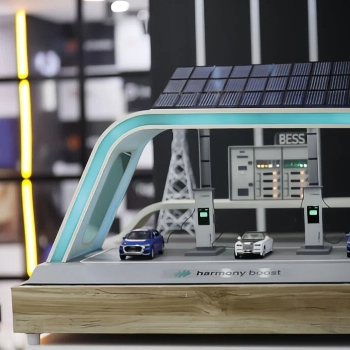
    ⚡ Why Is Fast EV Charging Creating Pressure On The Power Grid? As EV adoption accelerates worldwide, ultra-fast charging stations are expanding rapidly across highways, cities, logistics hubs, and commercial fleets. But behind this growth, one major challenge is becoming impossible to ignore: Power grid capacity. According to the International Energy Agency (IEA), global public charging infrastructure must grow nearly 9 times by 2035 to support rising EV demand. At the same time, charging power is also increasing dramatically — from 60kW and 120kW systems to today’s 480kW, 600kW, and even megawatt-level charging solutions. 🔋 Why Can’t Traditional Grids Handle Ultra-Fast Charging Alone? A single 600kW fast charger can consume as much electricity as dozens of homes simultaneously. For fleet depots or charging hubs with multiple chargers operating together, peak demand can quickly exceed local grid capacity. Research from McKinsey & Company  estimates that grid connection upgrades can account for up to 30%-40% of total charging station deployment costs in high-power charging projects. This is exactly why battery energy storage systems (BESS) are becoming essential. ⚙️ How Does Battery Storage Actually Improve EV Charging? Battery storage acts as an intelligent energy buffer between the grid and charging equipment. Instead of drawing massive power spikes directly from the grid, the system can: 🔋 Store electricity during off-peak hours ⚡ Release energy during high charging demand 📉 Reduce peak grid pressure 💰 Lower electricity costs through peak shaving ☀️ Integrate with solar energy systems 🔄 Improve charging stability and uptime This architecture is rapidly becoming the preferred model for modern charging infrastructure. 📊 What Do Industry Data And Market Trends Show? According to BloombergNEF, global battery energy storage deployment is expected to grow more than 20-fold by 2030. Meanwhile, many charging operators are shifting their focus from simply installing chargers to optimizing energy management. Recent surveys across Europe and Asia indicate that charging station operators are increasingly prioritizing: ✅ Grid stability ✅ Energy efficiency ✅ Peak demand reduction ✅ Renewable energy integration ✅ Long-term operating costs This signals a major industry transformation: EV charging is evolving from simple power delivery into intelligent energy management. 🚀 Why Is Integrated Energy Storage Becoming The Future? In regions such as Europe, the Middle East, Southeast Asia, and remote industrial zones, grid limitations are often one of the biggest barriers to deploying high-power chargers. By combining: ☀️ Solar energy 🔋 Battery storage ⚡ DC fast charging Operators can build more flexible, scalable, and energy-efficient charging ecosystems. This is especially important for: 🚚 Commercial fleet charging 🏭 Industrial parks 🛣️ Highway charging corridors ⛽ Remote charging locations ⚓ Ports and logistics hubs 🔥 How Is FES Power Responding To This Industry Shift? As the EV charging industry evolves toward higher power and smarter energy management, FES Power is actively developing integrated charging and storage solutions designed for next-generation infrastructure. One of the company’s flagship solutions is the Cannon300 integrated charging system. ⚡ Cannon300 Key Advantages 🔋 Integrated energy storage + DC fast charging ⚡ High-power charging capability 🌡️ Advanced thermal management design ☀️ Ready for solar integration 📈 Intelligent energy optimization 🚛 Flexible deployment for commercial applications By integrating energy storage directly into charging infrastructure, Cannon300 helps operators reduce grid dependency, improve charging reliability, and optimize operational efficiency. 🌍 What Will The Next Generation Of Charging Stations Look Like? The future charging station will no longer function as just a charger. Instead, it will become: ⚡ An energy management center 🔋 A distributed storage node ☀️ A renewable energy integration platform 🤖 An AI-driven smart infrastructure system As charging demand continues to rise, battery storage will no longer be optional. It will become one of the core foundations of fast EV charging infrastructure. 🚀 Final Thoughts The EV charging industry is entering a new era. The competition is no longer only about charging speed. Instead, the real focus is shifting toward: 🔋 Energy efficiency ⚡ Grid flexibility 🌍 Sustainable infrastructure 🤖 Intelligent energy management And battery storage is becoming the key technology enabling this transformation.
    Read More
  • What Changes When EV Charging Meets Battery Energy Storage Systems?
    What Changes When EV Charging Meets Battery Energy Storage Systems?
    May 20, 2026
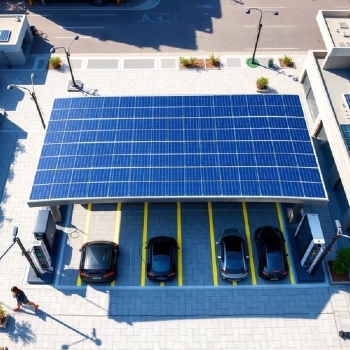
    As EV adoption accelerates worldwide, charging infrastructure is evolving rapidly. Fast charging power continues to increase, while operators are expected to deliver higher efficiency, shorter charging times, and more flexible deployment. However, behind this growth lies a critical challenge: energy supply. When EV charging meets Battery Energy Storage Systems (BESS), charging stations begin to change from simple charging points into integrated energy hubs. Why Energy Storage Matters For EV ChargingTraditional charging stations rely heavily on the power grid. As charging demand rises and charging power moves toward ultra-fast DC charging, many sites face limitations such as insufficient grid capacity, high electricity costs, and expensive infrastructure upgrades.Common challenges include:⚡ High peak electricity charges ⚡ Grid capacity constraints ⚡ Expensive transformer upgrades ⚡ Difficult deployment in remote or commercial locations ⚡ Growing demand for high-power charging These challenges become even more significant as the industry moves toward 600kW liquid-cooled charging and future megawatt charging applications. How BESS Changes EV ChargingBy integrating energy storage with charging infrastructure, stations gain the ability to store electricity during low-demand periods and release it when charging demand increases.This creates several advantages:🔋 Peak Shaving And Load Balancing Energy storage reduces peak demand pressure by supplying additional power during charging peaks, helping lower operating costs and improve grid stability.⚡ Support High-Power Charging Deployment Instead of depending entirely on grid expansion, charging stations can combine existing grid supply with stored energy to support fast charging applications.☀ Integration With Renewable Energy Battery storage also enables the combination of Solar + Storage + Charging, allowing solar energy to be stored and later used for EV charging.As a result, charging stations are evolving into complete energy ecosystems that integrate power generation, storage, charging, and management. FES Power Cannon300 Energy Storage SolutionTo support next-generation charging projects, FES Power introduced the Cannon300 energy storage solution, designed for integrated energy and charging applications. The Cannon300 provides stable energy support for commercial charging stations, fleet charging depots, and Solar + Storage + EV Charging projects. Key features include:🚀 Supports integrated charging and energy storage applications 🚀 Suitable for commercial charging scenarios and ultra-fast charging support 🚀 Compatible with Solar + Storage + Charging solutions 🚀 Flexible deployment for different project environments 🚀 Intelligent energy management to improve operational efficiency With Cannon300, operators can optimize energy usage, reduce grid dependency, and improve charging station performance. The Future Of EV Charging Is Energy ManagementThe future of EV charging is no longer only about increasing charging speed. The focus is shifting toward how energy is generated, stored, and managed.Future stations will not simply deliver electricity — they will manage energy intelligently.And as EV infrastructure continues to expand, integrated solutions combining EV charging + energy storage + smart energy management will become an essential part of the next generation of charging networks.
    Read More

leave a message

leave a message
If you are interested in our products and want to know more details,please leave a message here,we will reply you as soon as we can.
submit
Contact Us: bella@fespower.cn

home

products

WhatsApp

Contact Us