Customized Electric Vehicle Charger Enterprise
Home

Home EV Charger

Home EV Charger

  • How Should Home EV Chargers Evolve?
    How Should Home EV Chargers Evolve?
    Dec 12, 2025
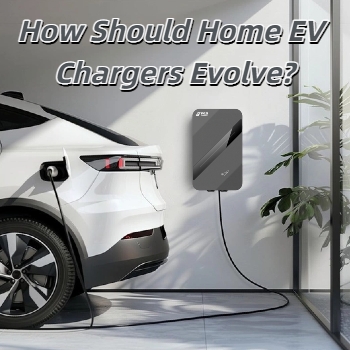
    🧠💫As EV adoption grows across global markets, home charging has become the core experience for most drivers. More than 80 percent of EV owners rely on residential charging as their primary method, making the performance, intelligence, and safety of home chargers increasingly important. Today’s devices are no longer simple AC boxes mounted on a wall—they are evolving into key components of the smart-home energy ecosystem. 🤔What Are the Common Home Charger Types Today? Most home charging solutions fall into two primary categories, each serving different usage scenarios: 💫1. Portable AC Chargers (2.3–7.4 kW) These lightweight units are ideal for users who need mobility—renters, frequent travelers, or households without dedicated parking facilities. Typically operating on single-phase 220–240V power, portable chargers include adjustable current settings, built-in temperature sensors, and essential protective circuits. Their convenience and plug-and-charge simplicity make them a popular choice worldwide. 💫2. Wall-Mounted AC Chargers (7 kW / 11 kW / 22 kW) These represent the mainstream of home charging. Wall-mounted chargers offer faster charging, more communication options, and advanced safety functions such as RCD protection, real-time monitoring, and app connectivity. In three-phase markets, 11 kW and 22 kW models are becoming increasingly common, enabling full overnight charging even for larger-battery EVs. ⁉️What Do EV Owners Really Want From Home Charging? Recent consumer studies reveal several consistent expectations: 🔷Reliability and uptime rank as the most important purchase factor. 🔷Real-time monitoring and app control are becoming essential, not optional. 🔷Safety confidence—including heat management and leakage protection—is now a top concern among new EV owners. 🔷Energy efficiency increasingly influences purchasing, with users comparing standby consumption and conversion efficiency between brands. More importantly, awareness of electrical infrastructure limitations has increased. Many EV drivers now consider panel capacity, load distribution, and breaker protection before choosing a charger, signaling a shift toward more informed and technically engaged consumers. Which Technologies Are Defining the Next Stage of Home Charging? The future of home charging revolves around smarter integration and more efficient use of household energy. Key optimization directions include: 💫1. Dynamic Load Balancing (DLB) By monitoring household energy consumption through CT sensors, chargers can automatically adjust output current to prevent overload. This reduces installation costs by avoiding panel upgrades and improves overall system safety. 💫2. Smart Scheduling Based on Tariffs Time-of-use (TOU) optimization allows the charger to schedule charging during off-peak hours. Advanced firmware can analyze driving habits, automatically preparing the vehicle based on expected daily mileage. 💫3. Solar and Energy-Storage Integration As more homeowners deploy rooftop solar and residential batteries, chargers are evolving to support solar matching, zero-export control, and energy-management system (EMS) communication. This maximizes renewable usage and reduces energy costs. 💫4. Bidirectional Charging (V2H / V2G) Readiness Although still emerging, AC bidirectional capability is on the horizon. Future-ready chargers must be compatible with ISO 15118-20 communication and power-conversion architectures that support reverse energy flow. 💫5. Remote Diagnostics and OTA Upgrades More advanced temperature monitoring, error-analytics, and OTA firmware support are allowing chargers to improve performance throughout their life cycle while reducing maintenance costs. ❓How Do FES Power’s Home Chargers Support These Trends? FES Power’s home-charging lineup is built around flexibility, safety, and intelligent energy use. EP01 / EP02 Portable Chargers These portable units offer adjustable current, IP65 protection, reinforced thermal and electrical safety, and optional app-enabled monitoring. Designed for mobility, they provide reliable charging at home, in apartments, and on the road. EC01 Wall-Mounted Charger The EC01 supports 7 kW (and optional 11/22 kW) AC charging with enhanced RCD protection, Wi-Fi/Ethernet/Bluetooth connectivity, dynamic load balancing, and OTA firmware updates. Designed for long-term residential use, it aligns with future smart-home and distributed-energy requirements. ❔Where Is Home EV Charging Headed Next? Looking ahead, home charging will evolve along three major vectors: AI-assisted charging routines—automatically customized to driving behavior. Deeper integration with solar, home batteries, and grid services. More portable, adaptable charger designs for multi-scenario use. As home energy systems become more interconnected, the EV charger will move from a single-function tool to an intelligent energy hub—powering a safer, smarter, and more efficient EV lifestyle.
    Read More
  • Which EV Charger Is Right for Home Use?
    Which EV Charger Is Right for Home Use?
    Dec 19, 2025
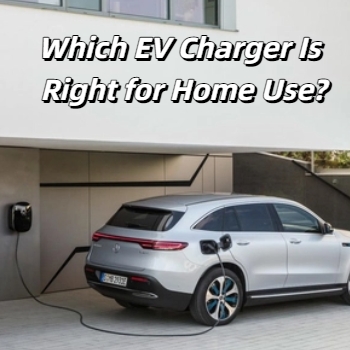
    ⚡A Beginner-Friendly Guide to Choosing the Right Home & Portable Charging Solution  After buying an electric vehicle, many owners quickly face a very practical question: “What kind of charging equipment is actually suitable for my home? Should I install a fixed home charger, or choose a portable charger?” For first-time users, it is easy to feel overwhelmed by power ratings, connectors, and technical specifications. This article is written in a purely educational and beginner-friendly way. Starting from different household and usage scenarios, it will help you clearly understand: The difference between fixed home EV chargers and portable chargers Which type of charging solution fits different household needs What core performance standards a home charging device should meet How to configure functions based on your real usage requirements Even if you are completely new to EV charging, you will be able to make a confident decision after reading this guide. ✅ 🤔 Do You Really Need to Install a Fixed Home EV Charger? This is often the very first question EV owners ask. The answer is: not necessarily. Today, home charging solutions generally fall into two categories: 🔹 Fixed home EV chargers: Wall-mounted or pedestal-mounted units designed for long-term installation 🔹 Portable EV chargers: Plug-and-play devices that can be carried with the vehicle and used in multiple locations calmly Different household conditions naturally lead to different optimal choices. 🏠 Which Households Are Better Suited for Fixed Home EV Chargers? If the following describes your situation: ✔️ You have a dedicated parking space (private garage or long-term parking spot) ✔️ Most charging happens at home ✔️ You prefer stable, automated, and hands-off charging Then a fixed AC home EV charger is likely the best solution. What Are the Advantages of Fixed Home EV Chargers? ⚡ Stable power output, ideal for long-term battery-friendly charging 🛡️ Comprehensive safety protection systems 📱 Optional smart features such as app control and scheduled charging 🔌 Well-suited for daily, routine charging A fixed charger functions much like home infrastructure—installed once and used reliably for years. 🧳 Who Should Consider a Portable EV Charger Instead? For users with more flexible living or driving patterns, portable chargers can be a smarter and more practical choice. ❓ Which Users Are Strongly Recommended to Choose Portable Charging? ✔️ Renters who cannot install a fixed charger ✔️ Drivers who frequently travel or drive across cities ✔️ Users who want one device for multiple charging scenarios ✔️ Households that want a backup solution alongside a fixed charger The core advantage of portable chargers is simple but powerful: 👉 flexibility, mobility, and freedom from installation constraints. ⚙️ What Core Performance Standards Should a Home Charging Device Meet? Whether fixed or portable, the following factors are essential. ❓ How Should You Choose the Right Power Level? ✅For most households: 🔹 7 kW AC charging already meets over 90% of daily home charging needs  🔹 Overnight charging for 6–8 hours is usually sufficient for next-day commuting Bigger is not always better. The key is: 👉 matching your household electrical capacity with your driving habits. ❓ What Safety Features Are Truly Important? For home charging equipment, safety always comes first. Key protections to look for include: 🛡️ Residual current (leakage) protection 🔥 Overvoltage, overcurrent, and overtemperature protection ⚡ Automatic power cutoff in case of electrical abnormalities 💧 Adequate enclosure protection (IP54 or higher recommended) For portable chargers in particular, stable performance across different environments is critical. ❓ Are Smart Features Really Necessary? For some users, smart functions are optional; for others, they significantly enhance daily experience. Common practical smart features include: 📱 App-based remote control ⏰ Scheduled charging to avoid peak electricity rates 📊 Charging data and energy tracking 🔄 OTA firmware upgrades Whether to include them depends entirely on personal preference and usage habits. 🔍 EP01 & EP02: Which Portable EV Charger Fits You Best? ❓ Who Is EP01 Designed For? 🧳⚡ EP01 is positioned as a lightweight, practical, plug-and-play portable charger. Ideal for users who: ✔️ Live in rental properties or temporary residences ✔️ Want a charger they can always keep in the vehicle ✔️ Have basic functional needs but prioritize safety and reliability Typical use scenarios: Home standard power outlets Temporary parking locations Backup charging alongside a fixed home charger ❓ Who Should Choose EP02? 📱🔌 EP02 is a more advanced portable charging solution with enhanced functionality. Ideal for users who: ✔️ Frequently drive across cities or regions ✔️ Want one device to cover multiple charging environments ✔️ Value smart control and functional scalability Key characteristics: Stronger feature expandability Multiple optional configurations available A balance between portability and enhanced user experience 🔋 EC01: When Does DC Charging Make Sense at Home? While AC charging remains the mainstream choice for residential use, some households have special requirements, such as: ✔️ Extremely high vehicle usage frequency ✔️ Strict demands on charging time ✔️ Special vehicle types or application scenarios EC01 provides a DC charging solution, typically suited for customized residential setups or semi-commercial applications. 🧩 Why Is Customization Important Even for Home Charging? Many users assume charging equipment is purely standardized, but in reality: We support: ✅ Small-batch customization ✅ Flexible feature selection ✅ Configurable power levels, connectors, and communication options Based on your household and driving needs, you can decide: 🔹 Whether smart features are required 🔹 Whether enhanced enclosure protection is needed 🔹 Whether the charger serves as a primary or backup solution 👉 The best charger is not the most complex one, but the one that truly fits your scenario. Final Thoughts: How Can Beginners Decide Quickly? Ask yourself these three simple questions: 1️⃣ Do I have a fixed parking space and permission to install a charger? 2️⃣ How frequently do I drive, and do I need portability? 3️⃣ Do I prioritize stability, or flexibility? The answers will naturally guide you toward: A fixed home EV charger A portable solution like EP01 or EP02 Or a combined approach If you are unsure which option suits you best, feel free to contact us. We can help design the most suitable home charging solution based on your real-world needs.
    Read More
  • How Many Types of EV Chargers Are There?
    How Many Types of EV Chargers Are There?
    Dec 24, 2025
    A Simple Guide to EV Charger Types — and How to Choose the Right One As electric vehicles (EVs) become more popular worldwide 🌍, many customers ask the same question: 👉 How many types of EV chargers are there, and which one should I choose? This article explains EV charger types in a simple, visual, and easy-to-understand way, helping you quickly identify the right charging solution — and showing how FES Power supports different charging scenarios 🔋. 🔌 1. EV Chargers by Charging Method (The Most Important Difference) ⚙️ AC EV Chargers — The Everyday Charging Solution AC EV chargers supply alternating current to the vehicle, where the onboard charger converts it into DC power. Key features ✅ Stable and safe for daily use 💰 Lower cost and simpler installation 🏠 Ideal for long parking durations Common power options:7kW/11kW/22kW Typical use cases 🏡 Home garages 🏢 Office parking 🏨 Hotels & shopping centers 🔷 FES Power solution FES Power offers smart AC EV chargers for residential and commercial use, supporting Type 2 connectors, RFID, mobile app control, and OCPP compatibility 📱. These chargers are ideal for customers seeking reliable, cost-effective, and future-ready charging solutions. ⚡ DC EV Chargers — Fast Charging When Time Matters DC EV chargers convert AC to DC inside the charger and deliver power directly to the vehicle battery. Key features 🚀 Much faster charging 🔋 High power output 🏗️ Designed for heavy-duty use Common power options:60kW/120kW/160kW/240kW+ Typical use cases 🛣️ Highway service areas 🏙️ Urban fast-charging stations 🚚 Logistics fleets 🚌 Electric buses & trucks 🔷 FES Power solution FES Power provides customizable DC fast chargers supporting CCS2 connectors, single or dual guns, and flexible power configurations 🔧. Our DC chargers are designed for continuous operation, modular expansion, and long-term reliability. 🧱 2. EV Chargers by Installation Type 🧩 Wall-Mounted Chargers Compact and space-saving Mostly AC chargers Ideal for homes and small parking areas FES Power Wall-mounted AC chargers designed for residential garages and apartment buildings 🏠. 🏗️ Floor-Standing Chargers Strong and professional appearance Suitable for public and commercial locations Available for AC and DC FES Power Floor-standing chargers for shopping malls, workplaces, and public charging stations 🅿️. 🔄 Portable / Mobile Chargers Plug-and-play design Temporary or emergency charging Lower power output FES Power Mobile charging solutions for flexible and on-demand charging needs 🚙. ⏱️ 3. EV Chargers by Charging Speed 🐢 Level 1 Charging Standard household outlet Very slow charging Emergency or backup use 🚶 Level 2 Charging Dedicated AC power supply Balanced speed and cost Most common choice worldwide 🔷 FES Power focus FES Power AC chargers are optimized for Level 2 charging, covering the majority of daily charging scenarios ⚖️. 🏎️ Level 3 Charging (DC Fast Charging) High-power DC output Short charging time Ideal for public and fleet use 🔷 FES Power focus FES Power DC chargers support scalable power expansion, helping customers grow from basic fast charging to high-power hubs 📈. 🔗 4. EV Chargers by Connector Type Different regions use different standards 🌐. Connector Region Type Type 1 North America, Japan AC Type 2 Europe, Global AC CCS1 / CCS2 North America / Europe DC CHAdeMO Japan DC GB/T China AC & DC 🔷 FES Power FES Power chargers support Type 2 and CCS2 standards, fully compliant with European and global market requirements ✅. 🏘️ 5. EV Chargers by Application Scenario 🏡 Home Charging AC chargers Focus on safety and ease of use FES Power Smart home chargers built for daily convenience and long-term safety 🔐. 🏢 Commercial Charging AC + DC combinations Billing and backend management FES Power Commercial chargers supporting OCPP platforms, ideal for operators and property owners 💼. 🚛 Fleet, Bus & Truck Charging High-power DC chargers Designed for intensive use FES Power Heavy-duty DC charging solutions for logistics fleets, bus depots, and industrial applications 🏭. ✅ 6. One Simple Takeaway If you are new to EV charging, remember this: ⚡ AC chargers are best for daily and overnight charging, while DC chargers are essential for fast charging and fleet operations. Understanding these categories makes EV charger selection simple and stress-free. 🌱 Conclusion: Choose the Right EV Charger with Confidence There is no one-size-fits-all EV charger. The right choice depends on: ⚡ Charging speed requirements 🧱 Installation environment 🚗 Vehicle type 📊 Usage frequency FES Power delivers a complete range of AC and DC EV charging solutions, helping customers build reliable, scalable, and future-proof charging infrastructure. With the right knowledge — and the right partner — EV charging becomes easy 🔋✨.
    Read More

leave a message

leave a message
If you are interested in our products and want to know more details,please leave a message here,we will reply you as soon as we can.
submit
Contact Us: bella@fespower.cn

home

products

WhatsApp

Contact Us