Feb 05, 2026
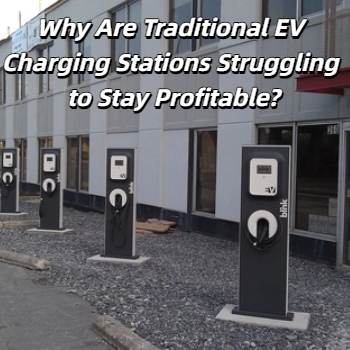
As EV adoption accelerates worldwide 🚗⚡, charging stations are being deployed faster than ever. However, many operators are discovering a hard truth: traditional EV charging stations are struggling to remain profitable.Behind the growing demand lies a combination of high costs, low utilization, and inflexible infrastructure. So what’s really holding profitability back—and how can operators fix it?
Are High Upfront Costs Draining Profit Before Operations Even Begin? 💰⚠️Traditional EV charging stations typically require a heavy upfront investment. Fixed-power DC chargers demand dedicated power modules, complex civil works, and expensive grid upgrades 🔌🏗️.By the time a station goes live, operators are already facing long payback periods and tight margins. In many cases, profitability feels out of reach before the first vehicle even plugs in.Is Low Utilization the Silent Revenue Killer? 📉🚘While EV numbers are increasing, charger usage is often uneven throughout the day. Peak hours bring congestion ⏱️, while off-peak hours leave chargers idle 😴.A fixed 120 kW or 180 kW charger often runs far below its full capacity, meaning expensive assets are underutilized most of the time. Low utilization directly translates into weak revenue performance and poor ROI.Are Fixed-Power Chargers Too Rigid for a Changing EV Market? 🔒⚡Traditional chargers allocate a fixed amount of power to a single vehicle, regardless of real-time demand. This rigidity causes power waste when vehicles don’t need full output and limits the ability to serve multiple vehicles efficiently 🔄.As EV battery sizes grow and fast-charging expectations rise 🚀, fixed-power systems quickly become outdated, forcing operators to reinvest sooner than planned.Do High Maintenance and Downtime Reduce Profitability Further? 🛠️❌All-in-one chargers concentrate power modules, control systems, and interfaces into a single unit. When something fails, the entire charger may go offline 🚫⚡.This increases maintenance costs, prolongs downtime, and directly impacts revenue—especially at high-traffic locations where availability is critical.Is Limited Grid Capacity Blocking Expansion? 🌍🔋Many charging sites face strict grid limitations. Expanding a traditional charging station often requires transformer upgrades, lengthy utility approvals, and high connection fees ⏳💵.As a result, scaling becomes slow, expensive, or simply impossible—especially in urban areas and emerging markets.
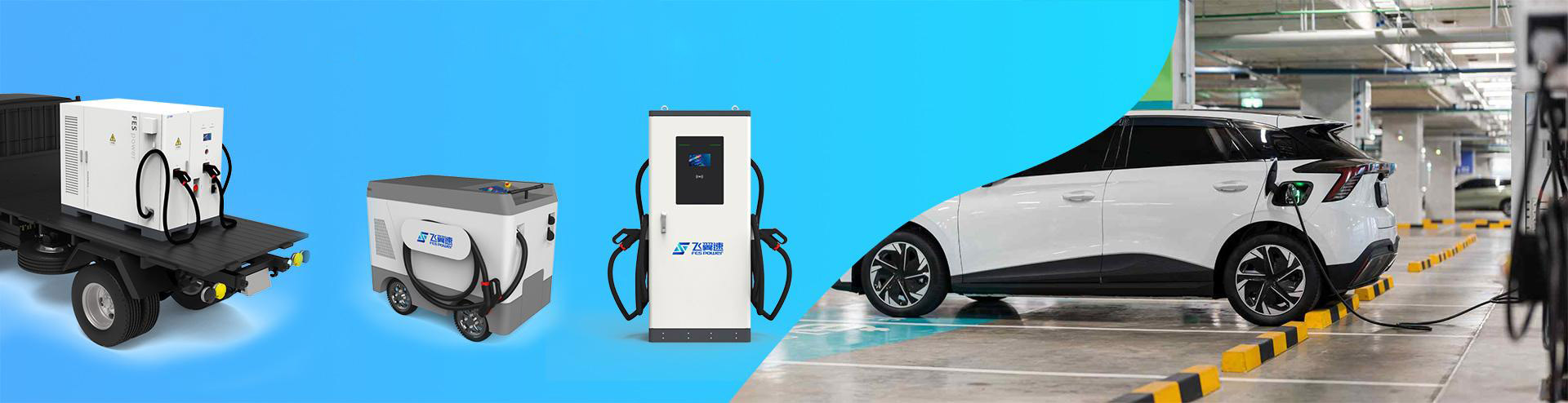
Is There a Smarter, More Profitable Charging Model? 🤔⚡To overcome these challenges, forward-thinking operators are shifting toward split-type flexible EV charging systems—a fundamentally different architecture designed for efficiency and scalability.How FES Power’s Split-Type Flexible Charging System Changes the Game 🚀FES Power’s solution separates the power supply from the charging terminals, creating a centralized and intelligent charging architecture ⚙️⚡. A high-capacity power cabinet—up to 720 kW—dynamically distributes power to multiple front-end terminals in real time.Instead of wasting capacity, power is allocated exactly where it’s needed, when it’s needed 🔄📊. This dramatically improves utilization rates and allows operators to serve more vehicles with the same grid connection.Why Does This Mean Faster ROI and Lower Risk? 📈💡With flexible power sharing, operators no longer need to oversize infrastructure for peak demand alone. The system adapts automatically to real charging behavior, improving revenue per site and shortening payback periods 💰⚡.The modular design also makes future expansion simple—new terminals can be added without installing entirely new power units.How Does This Reduce Operating and Maintenance Costs? 🛠️✅Centralized power cabinets simplify maintenance by reducing scattered failure points. Modular power units allow fast replacement and minimize downtime ⏱️.More uptime means happier drivers 😊 and more consistent charging revenue.
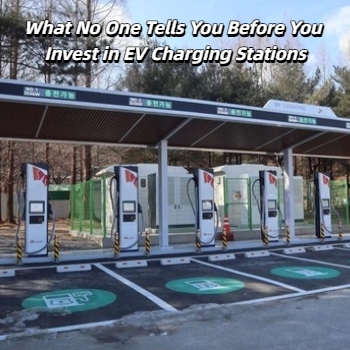
Is This the Future of Profitable EV Charging? 🔮⚡For public fast-charging operators, fleet depots, highway service areas, and commercial charging sites, flexibility is no longer optional. Profitability depends on smarter power management, scalable design, and grid-friendly deployment 🌱⚡.Final Thought: Profitability Comes from Flexibility 💡Traditional EV charging stations are struggling not because demand is weak—but because their infrastructure is inefficient and inflexible.To succeed in 2026 and beyond, charging operators must rethink how power is delivered, shared, and scaled. Split-type flexible charging systems represent the next generation of profitable EV infrastructure.At FES Power, we help operators transform charging stations from cost centers into scalable, revenue-generating assets .
Read More






 IPv6 network supported