May 27, 2026
But as charging networks expand, operators are discovering a new challenge:More power does not automatically mean better charging operations.In many commercial charging projects today, the bottleneck is no longer charger output — it is energy management, utilization, operating efficiency, and software intelligence.
The future of EV charging is shifting from Power Output to Smart Charging.The Infrastructure Challenge: Demand Is Growing Faster Than CapacityRecent network data shows that EV charging demand is rising faster than charging infrastructure expansion.ChargePoint reported that charging sessions across its network increased 34% year-over-year, while charging ports only increased 16% during the same period. This means utilization pressure is rising and operators must extract more value from existing infrastructure rather than simply adding more chargers.
This creates a critical operational question:
How can operators increase charger utilization without continuously upgrading grid capacity?
The answer is smart charging.
Power Alone Cannot Solve Peak Load Problems
Imagine a charging station with:
🔹 Four 240kW DC chargers
🔹 Total installed power demand: 960kW
🔹 Grid connection available: only 500kW
Without intelligent scheduling, simultaneous charging may trigger:
❌ Grid overload risks
❌ Peak demand charges
❌ Energy waste
❌ Reduced station profitability
Research from the California Energy Commission showed that smart charging strategies reduced public charging peak demand from 24.2kW to 10kW, lowering aggregated peak demand by 26.7% compared with uncontrolled charging. Fast-charging scenarios also achieved peak reductions close to 50% under managed operation.
This demonstrates a key industry reality:
Smart energy allocation often delivers greater value than simply increasing charger power.
Smart Charging Improves Energy Efficiency And Grid Flexibility
Large-scale EV charging can significantly increase grid pressure if unmanaged.
Studies on real-world optimized charging programs found that smart charging successfully shifted 15–20% of charging load away from peak periods, while moving 20–30% toward lower-cost periods such as early morning and midday renewable generation windows.
Meanwhile, AI-managed charging programs have shown even stronger results.
A large field study published by NBER reported that AI-controlled EV charging reduced household peak electricity demand by 42%, shifting energy consumption toward lower-cost and lower-carbon periods.
This means smart charging can help operators achieve:
✅ Dynamic load balancing
✅ Peak shaving and valley filling
✅ Renewable integration
✅ Reduced electricity costs
✅ Higher station ROI
Software Is Becoming The Core Of Charging Operations
The industry is entering a stage where operators are no longer buying only chargers.
Customers increasingly ask:
Does it support OCPP?
Can chargers be monitored remotely?
Is dynamic load management available?
Can charging data be analyzed?
Can energy storage systems be integrated?
Smart charging depends on software layers such as:
📊 Charger monitoring platforms
📡 OCPP communication protocols
⚡ Dynamic power allocation
🔋 BESS integration management
📈 Energy analytics dashboards
🌐 Remote operation systems
OCPP-based ecosystems are already enabling operators to analyze uptime, utilization, transactions, and reliability through charger log data, turning charging stations into data-driven energy assets rather than standalone hardware.
Smart Charging + Energy Storage = The Next Charging Model
As EV charging power increases, many sites face grid constraints.
Instead of upgrading transformers immediately, operators are beginning to adopt:
EV Charger + Battery Energy Storage Systems (BESS)
This architecture enables:
⚡ Peak shaving
⚡ Demand charge reduction
⚡ Grid buffering
⚡ Temporary power support
⚡ Off-grid charging deployment
For example:
300kW grid connection + BESS + smart dispatching
can support charging demand beyond direct grid limits.
This is becoming especially valuable for:
🚛 Logistics fleets
🏗 Construction sites
🚢 Ports
🚘 Temporary charging projects
⚙ Remote industrial applications
How FES Power Supports Smart Charging Operations
At FES Power, we believe the future of charging is not only high power output — it is intelligent operation capability.
Our charging solutions support integration with software ecosystems for smart management and operational optimization, including:
✔ OCPP compatibility for platform integration
✔ Remote monitoring and charger management
✔ Smart charging scheduling
✔ Energy utilization optimization
✔ BESS integration capability
✔ Data-based operation management
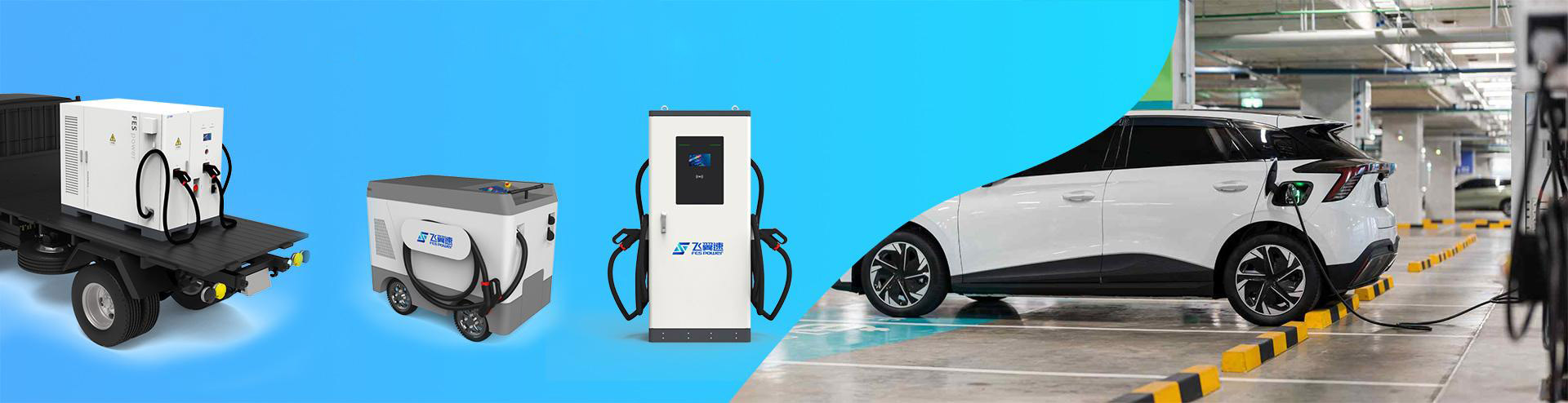
Combined with our charging products and mobile energy storage solutions such as Meta series and energy storage integrated systems, operators can build:
EV Charging + Energy Storage + Smart Operation Platforms
This enables a transition from isolated charging equipment to intelligent energy infrastructure.
Conclusion
The next generation of charging stations will not be defined only by kilowatts.
A 600kW charger without energy management may underperform.
A smart charging ecosystem with optimized dispatching, storage integration, and intelligent software can often deliver higher utilization and stronger returns.
The industry question is changing:
Not “How much power can the charger provide?”
But:
“How intelligently can energy be managed?”
Read More






 IPv6 network supported