Customized Electric Vehicle Charger Enterprise
Home

Solar Storage Charging

Solar Storage Charging

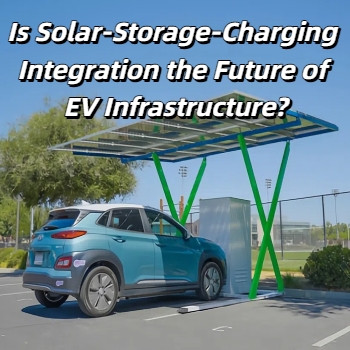
  • Is Solar-Storage-Charging Integration the Future of EV Infrastructure?
    Is Solar-Storage-Charging Integration the Future of EV Infrastructure?
    Sep 29, 2025
    With the rapid growth of electric vehicle ownership, the construction of charging infrastructure has entered a new phase of expansion. Traditional stand-alone chargers are gradually evolving toward solar-storage-charging integration, addressing peak demand pressures while supporting the transition to clean energy. ❓Why Is Solar-Storage-Charging the Future of the Industry? Under the backdrop of EV adoption and carbon neutrality goals, the charging industry faces a key challenge: how to enable clean energy use while reducing grid dependency. A solar-storage-charging system integrates photovoltaic generation, battery storage, charging, and distribution into one solution. This enables self-consumption, surplus power feed-in, and peak-valley energy shifting, greatly improving energy utilization efficiency and offering both economic and sustainable benefits. 🎉Product Highlights: Modular & High-Efficiency Design The new FES Power ESSC-HY5-EV7-BAT5 all-in-one solution combines PV inverters, storage management, and EV charging. Key advantages include: ⭐️Modular Scalability: Supports up to 6 battery modules, expandable to 30.72kWh, meeting residential, commercial, and public charging needs. ⭐️High Conversion Efficiency: Inverter efficiency up to 98% and MPPT efficiency of 99.9%, maximizing solar energy utilization. ⭐️Quick Installation: Compact design enables independent assembly within 20 minutes, reducing deployment time and cost. ⭐️Smart Control: Supports APP, RFID card, plug-and-charge, and scheduled charging, with 24/7 real-time monitoring for enhanced user experience. ⭐️Safe & Reliable: Equipped with LiFePO₄ batteries, IP65 protection, and natural cooling design to ensure durability and safety. 📈Market Trends & Application Scenarios Solar-storage-charging systems are well-suited for residential homes, commercial complexes, industrial parks, highway service stations, and public parking areas. By reducing reliance on the grid and alleviating peak load challenges, they play a crucial role in merging distributed energy with transportation electrification. Industry forecasts suggest that in the next five years, integrated solar-storage-charging stations will become the mainstream in EV infrastructure development. They represent not only a step toward carbon neutrality but also a key to enhancing EV charging experience. 🧾Conclusion The launch of the FES Power Solar-Storage-Charging Integrated System reflects the company’s commitment to innovation in green energy solutions. More than just a charging device, it is a vital link in the ecosystem connecting renewable generation, energy storage, and sustainable mobility. As demand grows, solar-storage-charging integration is set to become a driving force for clean energy and smart transportation.Please click the website to learn more 👋 https://www.fescharging.com/
    Read More
  • What Changes When EV Charging Meets Battery Energy Storage Systems?
    What Changes When EV Charging Meets Battery Energy Storage Systems?
    May 20, 2026
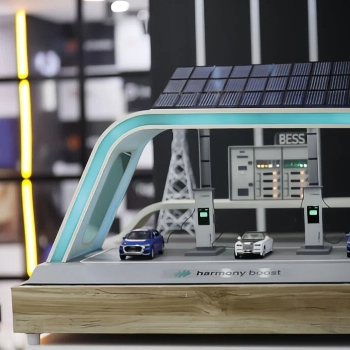
    As EV adoption accelerates worldwide, charging infrastructure is evolving rapidly. Fast charging power continues to increase, while operators are expected to deliver higher efficiency, shorter charging times, and more flexible deployment. However, behind this growth lies a critical challenge: energy supply. When EV charging meets Battery Energy Storage Systems (BESS), charging stations begin to change from simple charging points into integrated energy hubs. Why Energy Storage Matters For EV ChargingTraditional charging stations rely heavily on the power grid. As charging demand rises and charging power moves toward ultra-fast DC charging, many sites face limitations such as insufficient grid capacity, high electricity costs, and expensive infrastructure upgrades.Common challenges include:⚡ High peak electricity charges ⚡ Grid capacity constraints ⚡ Expensive transformer upgrades ⚡ Difficult deployment in remote or commercial locations ⚡ Growing demand for high-power charging These challenges become even more significant as the industry moves toward 600kW liquid-cooled charging and future megawatt charging applications. How BESS Changes EV ChargingBy integrating energy storage with charging infrastructure, stations gain the ability to store electricity during low-demand periods and release it when charging demand increases.This creates several advantages:🔋 Peak Shaving And Load Balancing Energy storage reduces peak demand pressure by supplying additional power during charging peaks, helping lower operating costs and improve grid stability.⚡ Support High-Power Charging Deployment Instead of depending entirely on grid expansion, charging stations can combine existing grid supply with stored energy to support fast charging applications.☀ Integration With Renewable Energy Battery storage also enables the combination of Solar + Storage + Charging, allowing solar energy to be stored and later used for EV charging.As a result, charging stations are evolving into complete energy ecosystems that integrate power generation, storage, charging, and management. FES Power Cannon300 Energy Storage SolutionTo support next-generation charging projects, FES Power introduced the Cannon300 energy storage solution, designed for integrated energy and charging applications. The Cannon300 provides stable energy support for commercial charging stations, fleet charging depots, and Solar + Storage + EV Charging projects. Key features include:🚀 Supports integrated charging and energy storage applications 🚀 Suitable for commercial charging scenarios and ultra-fast charging support 🚀 Compatible with Solar + Storage + Charging solutions 🚀 Flexible deployment for different project environments 🚀 Intelligent energy management to improve operational efficiency With Cannon300, operators can optimize energy usage, reduce grid dependency, and improve charging station performance. The Future Of EV Charging Is Energy ManagementThe future of EV charging is no longer only about increasing charging speed. The focus is shifting toward how energy is generated, stored, and managed.Future stations will not simply deliver electricity — they will manage energy intelligently.And as EV infrastructure continues to expand, integrated solutions combining EV charging + energy storage + smart energy management will become an essential part of the next generation of charging networks.
    Read More

leave a message

leave a message
If you are interested in our products and want to know more details,please leave a message here,we will reply you as soon as we can.
submit
Contact Us: bella@fespower.cn

home

products

WhatsApp

Contact Us