Customized Electric Vehicle Charger Enterprise
Home

Smart Charging

Smart Charging

  • What Is V2G and How Will It Transform the Future of EV Charging?
    What Is V2G and How Will It Transform the Future of EV Charging?
    Sep 10, 2025
    The transition to electric vehicles (EVs) is not only reshaping transportation but also redefining how we interact with energy. One of the most exciting innovations at this intersection is V2G – Vehicle-to-Grid technology. 🔄 What Exactly Is V2G? Traditionally, EV charging has been one-way: power flows from the grid into the vehicle’s battery. V2G, or Vehicle-to-Grid, changes this dynamic by allowing energy to flow both ways. This means that EVs can act as mobile energy storage units. They not only charge from the grid but also discharge electricity back into the grid when needed—supporting energy stability, lowering costs, and unlocking new revenue streams for EV owners. ⚡ How Does V2G Work? Off-Peak Charging: EVs charge when electricity demand is low and prices are cheaper. Peak Discharge: When the grid is under pressure, EVs release stored power back to the grid. Compensation: EV owners or fleet operators receive credits or payments for supporting the grid. In short, EVs become part of a virtual power plant, helping balance energy supply and demand.🌍 Why Is V2G Important? For Consumers: Lower charging costs and backup power during outages. For Fleets: Optimized energy use and new revenue streams by participating in demand response programs. For Utilities: Improved grid stability and better integration of renewable energy like wind and solar. For Society: Higher energy efficiency and accelerated transition toward clean energy. 🔧 What Do We Need for V2G to Work? V2G-Enabled EVs – Vehicles capable of bi-directional charging. V2G-Compatible Chargers – Equipped with inverters to allow two-way energy flow. Supportive Policies – Energy markets must allow EVs to feed power back into the grid and compensate users. 🚀 How FES Power Charging Solutions Fit into the Future of V2G At FES Charging, we are actively preparing for this next step in EV infrastructure with a portfolio of solutions designed to support smarter, more flexible energy systems: 150–480kW Solar + Storage Ultra-Fast Chargers: Combining renewable energy and storage, these chargers can seamlessly integrate with V2G technology, enabling large fleets to become energy contributors as well as consumers. 7–22kW Wall-Mounted AC Chargers: Ideal for homes, offices, and kerbside charging, providing the foundation for smart scheduling and future V2G adoption. 120–160kW DC Fast Chargers: Perfect for logistics hubs and fleet depots where quick charging is critical, with potential upgrades to support bi-directional energy flow. By linking EV charging with renewable generation and smart grid systems, we aim to turn every charging point into part of a connected energy ecosystem. 🔮 Looking Ahead The future of charging is not just about powering vehicles—it’s about redefining the role of mobility in the energy grid. V2G will empower drivers, fleets, and communities to actively participate in energy markets, reduce costs, and accelerate the global shift toward sustainability. As governments and industries push forward with pilot projects, the question is not if V2G will arrive, but how fast. 👉 Learn more about how FES Charging is shaping the future of energy and mobility at www.fescharging.com.
    Read More
  • Is Solar-Storage-Charging Integration the Future of EV Infrastructure?
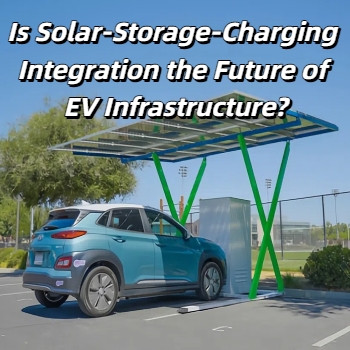
    Is Solar-Storage-Charging Integration the Future of EV Infrastructure?
    Sep 29, 2025
    With the rapid growth of electric vehicle ownership, the construction of charging infrastructure has entered a new phase of expansion. Traditional stand-alone chargers are gradually evolving toward solar-storage-charging integration, addressing peak demand pressures while supporting the transition to clean energy. ❓Why Is Solar-Storage-Charging the Future of the Industry? Under the backdrop of EV adoption and carbon neutrality goals, the charging industry faces a key challenge: how to enable clean energy use while reducing grid dependency. A solar-storage-charging system integrates photovoltaic generation, battery storage, charging, and distribution into one solution. This enables self-consumption, surplus power feed-in, and peak-valley energy shifting, greatly improving energy utilization efficiency and offering both economic and sustainable benefits. 🎉Product Highlights: Modular & High-Efficiency Design The new FES Power ESSC-HY5-EV7-BAT5 all-in-one solution combines PV inverters, storage management, and EV charging. Key advantages include: ⭐️Modular Scalability: Supports up to 6 battery modules, expandable to 30.72kWh, meeting residential, commercial, and public charging needs. ⭐️High Conversion Efficiency: Inverter efficiency up to 98% and MPPT efficiency of 99.9%, maximizing solar energy utilization. ⭐️Quick Installation: Compact design enables independent assembly within 20 minutes, reducing deployment time and cost. ⭐️Smart Control: Supports APP, RFID card, plug-and-charge, and scheduled charging, with 24/7 real-time monitoring for enhanced user experience. ⭐️Safe & Reliable: Equipped with LiFePO₄ batteries, IP65 protection, and natural cooling design to ensure durability and safety. 📈Market Trends & Application Scenarios Solar-storage-charging systems are well-suited for residential homes, commercial complexes, industrial parks, highway service stations, and public parking areas. By reducing reliance on the grid and alleviating peak load challenges, they play a crucial role in merging distributed energy with transportation electrification. Industry forecasts suggest that in the next five years, integrated solar-storage-charging stations will become the mainstream in EV infrastructure development. They represent not only a step toward carbon neutrality but also a key to enhancing EV charging experience. 🧾Conclusion The launch of the FES Power Solar-Storage-Charging Integrated System reflects the company’s commitment to innovation in green energy solutions. More than just a charging device, it is a vital link in the ecosystem connecting renewable generation, energy storage, and sustainable mobility. As demand grows, solar-storage-charging integration is set to become a driving force for clean energy and smart transportation.Please click the website to learn more 👋 https://www.fescharging.com/
    Read More
  • How Should Home EV Chargers Evolve?
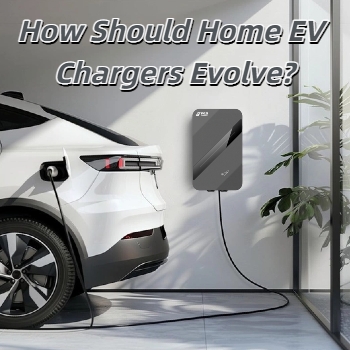
    How Should Home EV Chargers Evolve?
    Dec 12, 2025
    🧠💫As EV adoption grows across global markets, home charging has become the core experience for most drivers. More than 80 percent of EV owners rely on residential charging as their primary method, making the performance, intelligence, and safety of home chargers increasingly important. Today’s devices are no longer simple AC boxes mounted on a wall—they are evolving into key components of the smart-home energy ecosystem. 🤔What Are the Common Home Charger Types Today? Most home charging solutions fall into two primary categories, each serving different usage scenarios: 💫1. Portable AC Chargers (2.3–7.4 kW) These lightweight units are ideal for users who need mobility—renters, frequent travelers, or households without dedicated parking facilities. Typically operating on single-phase 220–240V power, portable chargers include adjustable current settings, built-in temperature sensors, and essential protective circuits. Their convenience and plug-and-charge simplicity make them a popular choice worldwide. 💫2. Wall-Mounted AC Chargers (7 kW / 11 kW / 22 kW) These represent the mainstream of home charging. Wall-mounted chargers offer faster charging, more communication options, and advanced safety functions such as RCD protection, real-time monitoring, and app connectivity. In three-phase markets, 11 kW and 22 kW models are becoming increasingly common, enabling full overnight charging even for larger-battery EVs. ⁉️What Do EV Owners Really Want From Home Charging? Recent consumer studies reveal several consistent expectations: 🔷Reliability and uptime rank as the most important purchase factor. 🔷Real-time monitoring and app control are becoming essential, not optional. 🔷Safety confidence—including heat management and leakage protection—is now a top concern among new EV owners. 🔷Energy efficiency increasingly influences purchasing, with users comparing standby consumption and conversion efficiency between brands. More importantly, awareness of electrical infrastructure limitations has increased. Many EV drivers now consider panel capacity, load distribution, and breaker protection before choosing a charger, signaling a shift toward more informed and technically engaged consumers. Which Technologies Are Defining the Next Stage of Home Charging? The future of home charging revolves around smarter integration and more efficient use of household energy. Key optimization directions include: 💫1. Dynamic Load Balancing (DLB) By monitoring household energy consumption through CT sensors, chargers can automatically adjust output current to prevent overload. This reduces installation costs by avoiding panel upgrades and improves overall system safety. 💫2. Smart Scheduling Based on Tariffs Time-of-use (TOU) optimization allows the charger to schedule charging during off-peak hours. Advanced firmware can analyze driving habits, automatically preparing the vehicle based on expected daily mileage. 💫3. Solar and Energy-Storage Integration As more homeowners deploy rooftop solar and residential batteries, chargers are evolving to support solar matching, zero-export control, and energy-management system (EMS) communication. This maximizes renewable usage and reduces energy costs. 💫4. Bidirectional Charging (V2H / V2G) Readiness Although still emerging, AC bidirectional capability is on the horizon. Future-ready chargers must be compatible with ISO 15118-20 communication and power-conversion architectures that support reverse energy flow. 💫5. Remote Diagnostics and OTA Upgrades More advanced temperature monitoring, error-analytics, and OTA firmware support are allowing chargers to improve performance throughout their life cycle while reducing maintenance costs. ❓How Do FES Power’s Home Chargers Support These Trends? FES Power’s home-charging lineup is built around flexibility, safety, and intelligent energy use. EP01 / EP02 Portable Chargers These portable units offer adjustable current, IP65 protection, reinforced thermal and electrical safety, and optional app-enabled monitoring. Designed for mobility, they provide reliable charging at home, in apartments, and on the road. EC01 Wall-Mounted Charger The EC01 supports 7 kW (and optional 11/22 kW) AC charging with enhanced RCD protection, Wi-Fi/Ethernet/Bluetooth connectivity, dynamic load balancing, and OTA firmware updates. Designed for long-term residential use, it aligns with future smart-home and distributed-energy requirements. ❔Where Is Home EV Charging Headed Next? Looking ahead, home charging will evolve along three major vectors: AI-assisted charging routines—automatically customized to driving behavior. Deeper integration with solar, home batteries, and grid services. More portable, adaptable charger designs for multi-scenario use. As home energy systems become more interconnected, the EV charger will move from a single-function tool to an intelligent energy hub—powering a safer, smarter, and more efficient EV lifestyle.
    Read More

leave a message

leave a message
If you are interested in our products and want to know more details,please leave a message here,we will reply you as soon as we can.
submit
Contact Us: bella@fespower.cn

home

products

WhatsApp

Contact Us