Apr 13, 2026
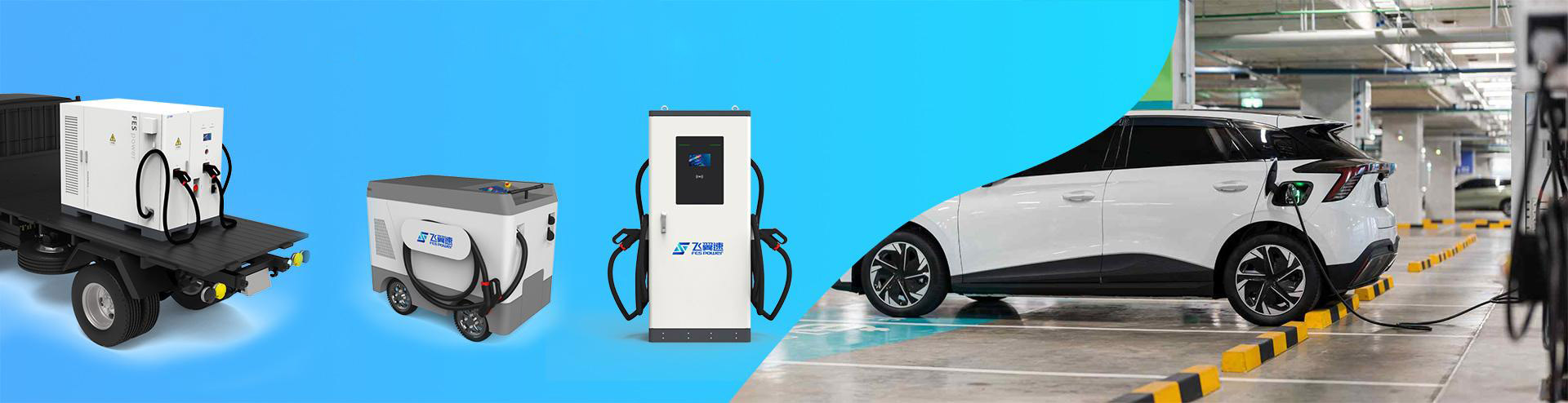
How Fast Is EV Charging Evolving Today? ⚡The electric vehicle (EV) industry is undergoing a rapid transformation, and EV fast charging technology is at the center of this evolution. What was once considered “fast charging” at 50kW or 150kW has quickly scaled to 350kW ultra-fast charging, and now the industry is moving toward 500kW, 960kW, and even 1500kW megawatt charging systems.
As EV adoption accelerates globally, driven by government policies and consumer demand, the need for high-power EV charging infrastructure has become critical. Today’s focus is no longer just about charging—it’s about charging speed, grid efficiency, and scalable energy systems.
What Defines 350kW Fast Charging Today? 🔌The 350kW EV charger has become the current benchmark for ultra-fast DC charging.Key characteristics:⚡ Adds up to 300 km of range in 15–20 minutes 🚗 Widely deployed across highways and public charging networks 🔌 Compatible with CCS fast charging standards 🚙 Suitable for most passenger EVs
However, as battery capacities increase and EV fleets expand, 350kW charging is starting to show limitations in: ⚠️ Charging time efficiency ⚠️ Station throughput ⚠️ Grid load management
Why Is the Industry Moving Beyond 350kW? 🚀The transition from 350kW to 1500kW EV charging is driven by three major factors:1. Rising Demand for Ultra-Fast Charging⚡ Consumers expect charging to be as fast as refueling ⚡ Emergence of 500kW+ high power chargers ⚡ Growth of Megawatt Charging Systems (MCS) for electric trucks
2. Commercial Fleet Electrification🚚 Electric buses and logistics trucks require: ⚡ Short turnaround charging ⚡ High utilization charging stations
3. Charging Station Profitability💰 More vehicles charged per day 📈 Higher ROI for operators 📍 Better land use efficiency
What Is 1500kW Megawatt Charging? ⚡1500kW EV chargers represent the next frontier in ultra-fast charging infrastructure.Benefits:⚡ Charging time reduced to 5–10 minutes 🔋 Designed for 800V–1000V+ platforms 🚛 Supports heavy-duty EVs and long-range vehicles
Challenges:⚠️ Grid capacity limitations ⚠️ High installation costs ⚠️ Complex power distribution
The Key Technology Behind High-Power EV Charging 🔧The evolution of EV charging technology relies on several innovations:⚙️ Power Electronics⚡ Adoption of SiC (Silicon Carbide) semiconductors ⚡ Higher efficiency and reduced heat loss
🔋 Battery Advancements⚡ High C-rate batteries enabling ultra-fast charging ⚡ Advanced thermal management systems
🧠 Smart Energy Management⚡ AI-based load balancing ⚡ Dynamic power allocation
🧩 Modular Charging Architecture⚡ Flexible power scaling ⚡ Easier maintenance and expansion
Why Split-Type EV Chargers Are the Future? 🧩
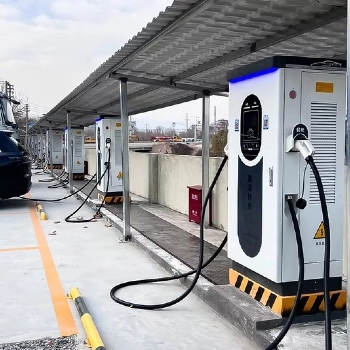
As charging power increases, traditional all-in-one chargers face limitations in scalability and heat dissipation.This is where split-type DC fast chargers become the preferred solution.
Advantages of Split Chargers:⚡ Centralized power cabinet + distributed terminals 🔄 Dynamic power allocation across multiple vehicles 📐 Reduced footprint at charging points 🛠️ Easier maintenance and upgrades 📈 Scalable for future expansion
A Practical Solution: 960kW Split-Type DC Fast Charging System ⚡Between current 350kW systems and future 1500kW megawatt charging, 960kW split-type EVchargers offer the ideal balance of performance, scalability, and cost efficiency.
Why 960kW is a strategic choice:⚡ Supports multi-vehicle simultaneous charging 🔄 Enables flexible power distribution (e.g., 240kW × 4) 📉 Reduces grid pressure with smart load management 🚀 Future-ready for megawatt charging upgrades
Typical application scenarios:🛣️ Highway charging hubs 🚚 Commercial fleet depots 🏙️ Urban fast charging stations ☀️ Integrated solar + storage + charging systemsValue for operators:📈 Higher station throughput ⚡ Improved energy efficiency 💰 Better ROI and faster payback
How Energy Storage Is Changing EV Charging ⚡🔋The integration of energy storage systems (ESS) with EV chargers is becoming a major trend.Key benefits:⚡ Reduces peak grid demand 📉 Enables peak shaving and load balancing 🔋 Improves station stability 🌞 Supports renewable energy integrationThis is especially critical for high-power chargers above 500kW, where grid constraints are a major bottleneck.
What’s Next for EV Charging Technology? 🌍Looking ahead, the EV charging industry will continue evolving toward:⚡ Megawatt Charging Systems (MCS) 🔄 Vehicle-to-Grid (V2G) integration 🧠 AI-powered smart charging networks 🌐 PV + ESS + Charging ecosystems
The transition from 350kW to 1500kW is not just about speed—it represents a shift toward intelligent and energy-integrated infrastructure.
Conclusion: Bridging Today and the Future ⚡While 1500kW charging represents the future, the industry today needs practical and scalable solutions.The 960kW split-type DC fast charging system stands out as a key bridge:⚡ Powerful for current high-demand scenarios 🔄 Flexible for future expansion 💰 Optimized for profitability
For operators and energy providers, choosing the right architecture today is essential to staying competitive in the rapidly evolving EV ecosystem.
Read More






 IPv6 network supported