Jun 22, 2026
As electric vehicles continue to gain popularity worldwide, charging speed has become one of the most important factors influencing user experience. To meet growing demand for ultra-fast charging, EV chargers are delivering increasingly higher power outputs—ranging from 180kW and 240kW to 480kW and beyond.
However, higher power means higher heat generation. Effective thermal management is essential to ensure charging safety, efficiency, and equipment longevity. This is where two major cooling technologies come into play: air cooling and liquid cooling.
In this article, we'll explore how each technology works, their advantages and limitations, and why liquid cooling is becoming the preferred solution for high-power EV charging infrastructure.
Why Cooling Matters in EV Charging
Whenever electricity flows through charging cables, connectors, and power electronics, heat is generated due to electrical resistance.
As charging power increases, heat generation rises dramatically. Excessive temperatures can lead to:
Reduced charging efficiency
Faster component aging
Increased maintenance costs
Safety risks
Charging power derating
To maintain stable operation, EV chargers require effective cooling systems to keep temperatures within safe operating ranges.
How Air-Cooled EV Chargers Work
Air cooling is the most common thermal management method used in AC chargers and lower-power DC fast chargers.
Working Principle
Air-cooled chargers use fans to circulate ambient air through the charger cabinet. The moving air removes heat generated by power modules, cables, and electronic components.
The process is relatively simple:
1. Heat is generated inside the charger.
2. Cooling fans draw in external air.
3. Air passes through heat sinks and internal components.
4. Hot air is expelled from the cabinet.
Advantages of Air Cooling
✅ Lower initial investment
✅ Simple system design
✅ Easier maintenance
✅ Suitable for AC chargers and DC chargers below 180kW
Limitations of Air Cooling
❌ Cooling efficiency is limited
❌ Higher noise levels
❌ Larger cable diameter at high power
❌ Performance can be affected by ambient temperature
❌ Not ideal for ultra-fast charging applications
As charging power exceeds 300kW, traditional air cooling approaches begin to reach their practical limits.
How Liquid-Cooled EV Chargers Work
Liquid cooling uses a dedicated coolant circulation system to remove heat much more efficiently than air.
Working Principle
Instead of relying solely on airflow, liquid-cooled chargers circulate coolant through cooling channels integrated into charging cables, connectors, and power electronics.
The process typically works as follows:
1. Heat generated during charging is absorbed by the coolant.
2. The coolant flows through a closed-loop system.
3. Heat is transferred to a heat exchanger or radiator.
4. The cooled liquid is recirculated.
Because liquids have significantly higher thermal conductivity than air, they can transfer heat much more efficiently.
Advantages of Liquid Cooling
✅ Supports ultra-fast charging above 300kW
✅ Smaller and lighter charging cables
✅ Improved charging stability
✅ Lower operating temperatures
✅ Longer equipment lifespan
✅ Better user experience
For drivers, one of the most noticeable benefits is the lighter charging cable. Without liquid cooling, high-current charging cables can become extremely thick and difficult to handle.
Challenges of Liquid Cooling
❌ Higher initial cost
❌ More complex system architecture
❌ Requires coolant management
❌ Higher technical requirements for maintenance
Despite these challenges, liquid cooling is rapidly becoming the industry standard for high-power charging applications.
Air Cooling vs. Liquid Cooling: Which Is Better?
The answer depends on the charging scenario.
For residential charging, workplaces, and standard commercial locations, air-cooled chargers remain a reliable and cost-effective choice.
However, for:
Highway charging hubs
Fleet depots
Logistics centers
Bus charging stations
Heavy-duty truck charging
High-utilization charging networks
Liquid cooling offers clear advantages in efficiency, reliability, and long-term operational performance.
Industry analysts increasingly view liquid cooling as a necessary technology for the next generation of EV charging infrastructure.
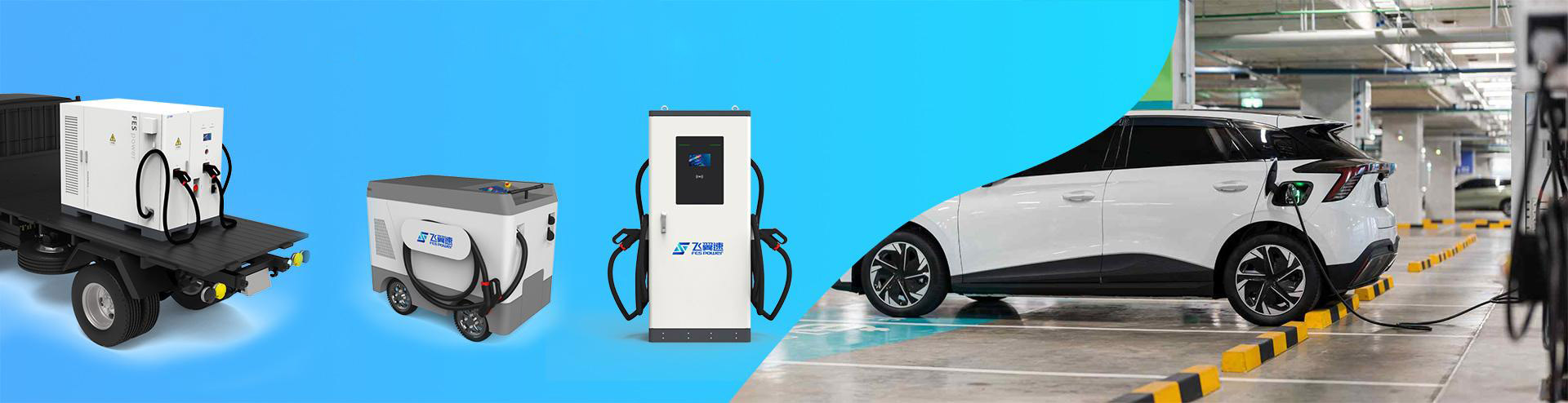
FES Power Solutions for Every Charging Scenario
At FES Power, we understand that different projects require different charging solutions.
For residential and commercial applications, our AC charging portfolio offers dependable and cost-effective charging options ranging from 7kW to 22kW, designed for easy deployment and intelligent energy management.
For public charging stations and commercial fleets, our DC fast charging solutions support scalable power configurations and smart load balancing capabilities, helping operators maximize utilization while minimizing operational costs.
For high-demand charging environments, our C-STATION series liquid-cooled DC charging platform delivers exceptional charging performance, supporting ultra-fast charging requirements while maintaining system reliability and user convenience. Combined with our energy storage solutions and intelligent energy management systems, operators can further reduce peak demand charges and improve overall station profitability.
As EV charging infrastructure continues to evolve, FES Power remains committed to delivering innovative, efficient, and future-ready charging solutions that support the transition toward sustainable mobility.
Conclusion
Air cooling and liquid cooling each play important roles in today's EV charging ecosystem. While air-cooled chargers continue to serve many everyday charging applications effectively, liquid cooling is becoming the preferred technology for high-power and ultra-fast charging networks.
As charging demands increase and EV adoption accelerates, the future of EV charging will not only depend on higher power levels but also on smarter and more efficient thermal management technologies.
The question is no longer whether liquid cooling will become mainstream—but how quickly the industry will adopt it.
Read More






 IPv6 network supported