Jun 10, 2026
Electric vehicle (EV) wireless charging was once seen as the future of transportation. The idea sounded revolutionary: simply park your vehicle—or even drive on specially equipped roads—and charging would happen automatically without plugging in a cable.
A few years ago, wireless charging attracted enormous attention from automakers, technology companies, and governments worldwide. Yet in 2026, DC fast charging stations continue to dominate new deployments, while wireless charging remains limited to pilot projects and niche applications.
So what happened? Why hasn't wireless EV charging become mainstream?The answer lies in a combination of economics, infrastructure realities, and the rapid evolution of alternative technologies.🚗 The Promise of Wireless EV Charging
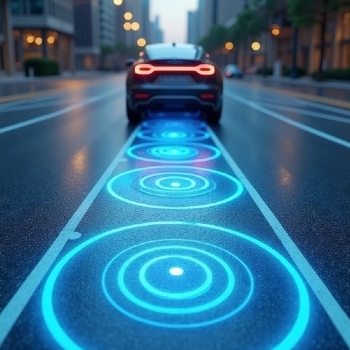
Wireless EV charging uses electromagnetic induction to transfer energy between a charging pad installed on the ground and a receiver mounted underneath the vehicle.
The concept offers several attractive benefits:
🔋 No charging cables
🔋 Improved user convenience
🔋 Reduced connector wear and maintenance
🔋 Potential for autonomous vehicle charging
🔋 Possibility of dynamic charging while driving
Today, wireless charging systems following the SAE J2954 standard can achieve efficiencies between 90% and 94%, making them significantly more practical than early prototypes.
Companies such as Porsche have already demonstrated 11kW wireless charging systems capable of automatically charging vehicles after parking.
However, technical feasibility does not always guarantee commercial success.
💰 The Cost Challenge
The biggest obstacle facing wireless charging is not performance—it's economics.
A traditional DC fast charging station requires charging equipment, power distribution, and parking infrastructure.
Wireless charging requires all of that plus:
⚡ Ground transmission pads
⚡ Vehicle receiver hardware
⚡ Alignment systems
⚡ Additional control electronics
⚡ Specialized installation procedures
For dynamic wireless charging, the challenge becomes even greater because charging coils must be embedded underneath road surfaces.
As a result, deployment costs can be several times higher than conventional charging infrastructure.
For charging operators, the question becomes simple:
Would you rather build two or three additional fast charging stalls, or install a limited number of wireless charging spaces?
In most cases, the answer is clear.
⚡ Fast Charging Improved Faster Than Expected
Perhaps the biggest reason wireless charging lost momentum is that wired charging improved dramatically.
Just a few years ago, charging an EV often required 30–60 minutes.
Today, the industry is moving toward:
⚡ 350kW fast charging
⚡ 480kW ultra-fast charging
⚡ 720kW liquid-cooled charging
⚡ Megawatt Charging Systems (MCS) for heavy-duty vehicles
Modern liquid-cooled chargers can add hundreds of kilometers of range in less than 15 minutes.
As charging times continue to fall, the convenience advantage of wireless charging becomes less significant.
Most drivers are willing to plug in a charging cable if it means getting back on the road faster.
🌡 Why Liquid-Cooled Charging Is Winning
Liquid-cooled charging technology has emerged as one of the most important developments in the EV charging industry.
Traditional air-cooled cables become heavy, difficult to handle, and thermally limited at very high power levels.
Liquid cooling solves these problems by:
🚀 Supporting higher charging currents
🚀 Reducing cable temperature
🚀 Improving charging efficiency
🚀 Enabling 500kW+ charging scenarios
🚀 Supporting future megawatt charging applications
For fleet operators, highway charging hubs, and commercial charging networks, liquid-cooled systems provide a clear and measurable return on investment.
This is one reason why many infrastructure developers are prioritizing ultra-fast charging over wireless charging deployments.
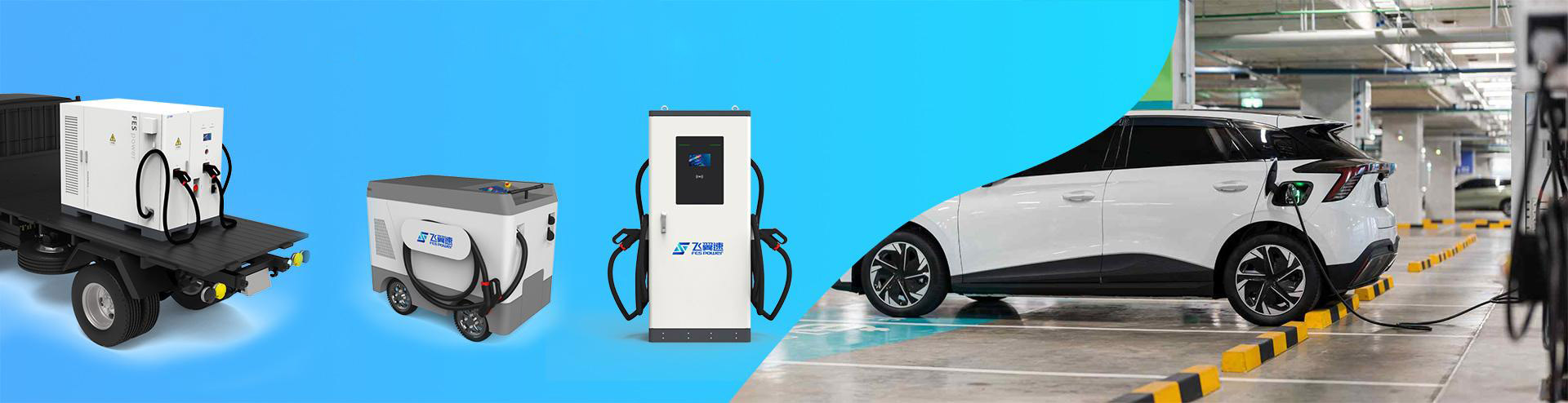
FES Power's C-Station960 liquid-cooled charging platform is designed specifically for these high-power applications, delivering flexible power allocation, intelligent management, and scalable deployment capabilities for growing charging networks.
🔋 Battery Energy Storage Is Solving a Bigger Problem
Another factor changing the industry is Battery Energy Storage Systems (BESS).
Many charging sites face a challenge that has nothing to do with charging cables:
The local grid simply cannot provide enough power.
Instead of investing in expensive grid upgrades, operators are increasingly deploying energy storage systems alongside fast chargers.
A charging station equipped with battery storage can:
🔋 Reduce peak demand charges
🔋 Store low-cost electricity during off-peak hours
🔋 Support high-power charging without major grid expansion
🔋 Improve charging station profitability
🔋 Enhance grid stability
This approach directly addresses one of the largest operational challenges facing charging networks today.
For many site owners, battery storage delivers a faster return on investment than wireless charging infrastructure.
Solutions such as the FES Power Cannon Series energy storage system help operators maximize charging performance while controlling electricity costs and improving overall site economics.
🚚 Where Wireless Charging Still Makes Sense
Despite its challenges, wireless charging is far from dead.
In fact, several applications may benefit greatly from the technology:
🚍 Airport shuttle buses
🚛 Logistics fleets
🚢 Port vehicles
🤖 Autonomous delivery vehicles
🚚 Electric truck corridors
These vehicles often follow fixed routes or operate in controlled environments, making wireless charging easier to deploy and economically justify.
Researchers are also making progress in Dynamic Wireless Power Transfer (DWPT), allowing vehicles to receive power while moving.
Although large-scale deployment remains years away, this technology could eventually transform commercial transportation.
🔮 The Future Is Not One Technology
The EV charging industry is increasingly moving toward a multi-technology ecosystem.
Instead of asking whether wireless charging will replace fast charging, the better question is:
Which technology solves the right problem for each application?
For the foreseeable future:
⚡ Liquid-cooled fast charging will dominate public charging networks.
🔋 Battery energy storage will improve charging economics and grid flexibility.
🚗 Wireless charging will expand in specialized, high-convenience environments.
Rather than competing directly, these technologies are likely to complement one another.
The future of EV infrastructure will not be defined by a single solution—but by the intelligent integration of charging, energy storage, and smart energy management systems.
At FES Power, we believe the most successful charging networks will combine high-power charging technology with advanced battery storage solutions to deliver both performance and profitability in the years ahead.
Read More






 IPv6 network supported