
- Call Us : +86-15060765919
- Mail Us : bella@fespower.cn
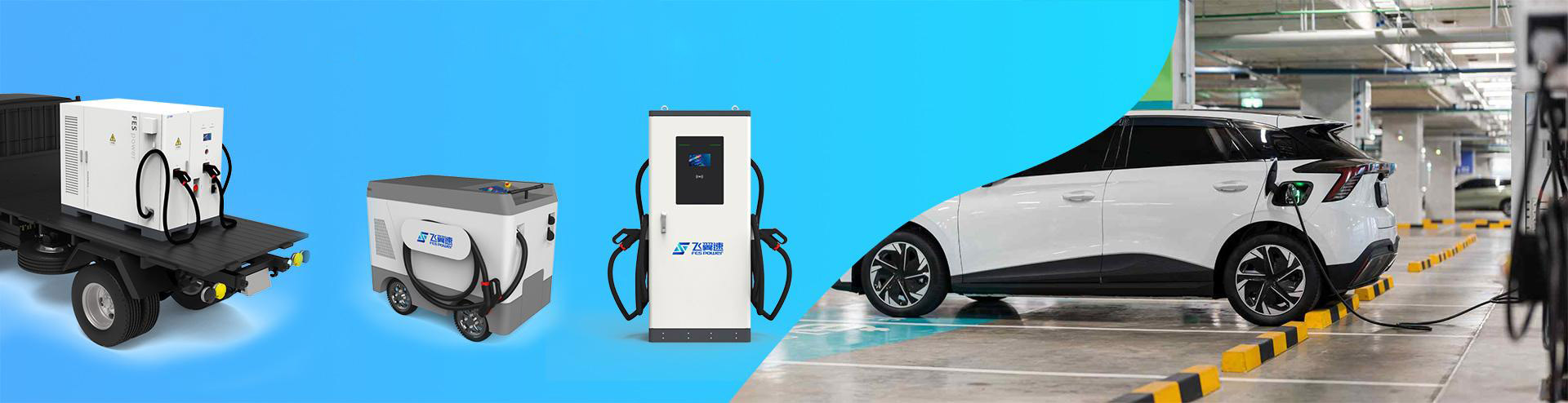
As EV adoption accelerates worldwide, charging stations have quietly become the backbone of clean transportation. Yet while drivers see only a sleek cabinet and a simple plug-and-charge interface, few truly understand what happens behind that metal enclosure.
Today, let’s take a clear, science-based look at the internal structure of a DC fast charger—and use FES Power’s D30 series as a real-world example.
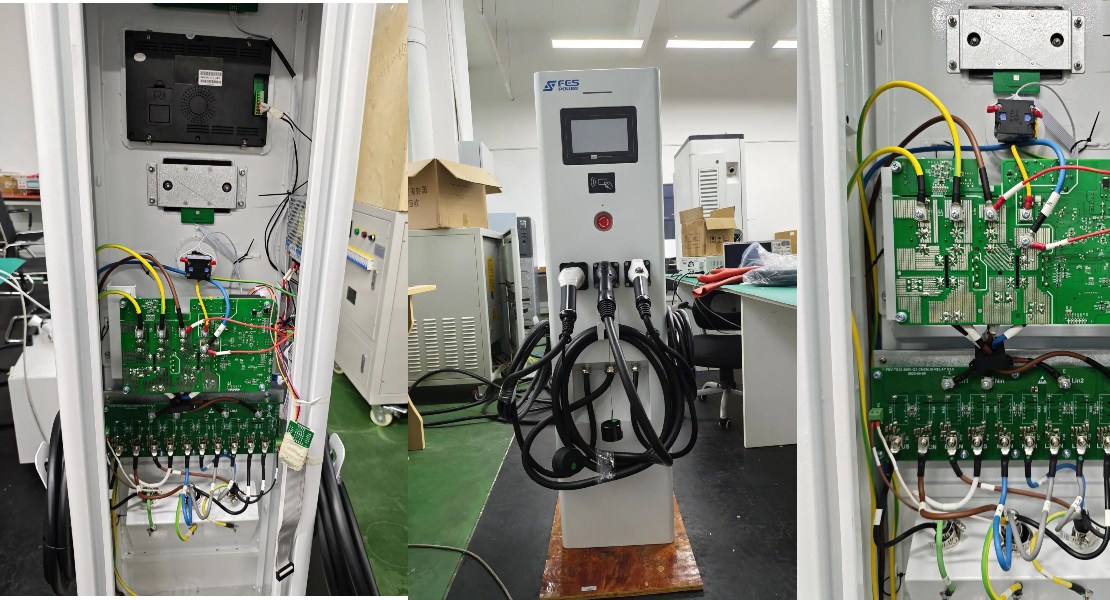
🔌 What Makes Up the Power Input System?
Every charger starts with electricity from the grid. For DC fast chargers, this requires a stable AC input system that manages:
🛡️Three-phase AC supply
🛡️Voltage range (typically 380–415V)
🛡️Frequency and power factor
🛡️Maximum input current
🛡️Grid protection and filtering
For the D30, the AC input includes:
⭐️3-phase, 5-wire system (L1, L2, L3, N, PE)
⭐️Input voltage: 380–415Vac
⭐️Power factor: ≥0.98
⭐️Max input current: 220A (120 kW) / 300A (160 kW)
This ensures stable operation even under fluctuating grid conditions.
⚙️ How Does the Power Module Convert AC to DC?
At the heart of every DC charger lies the power module—the unit responsible for converting AC into the direct current EV batteries require.
The FES Power D30 adopts a modular architecture, allowing flexible configuration:
📁30 kW modules
📁40 kW modules
Combined output: 120 kW or 160 kW
Modular design provides major advantages:
💡Easy maintenance
💡Quick replacement during failure
💡Scalable power output
💡Fewer single-point failures
It’s the “engine” of the charger.
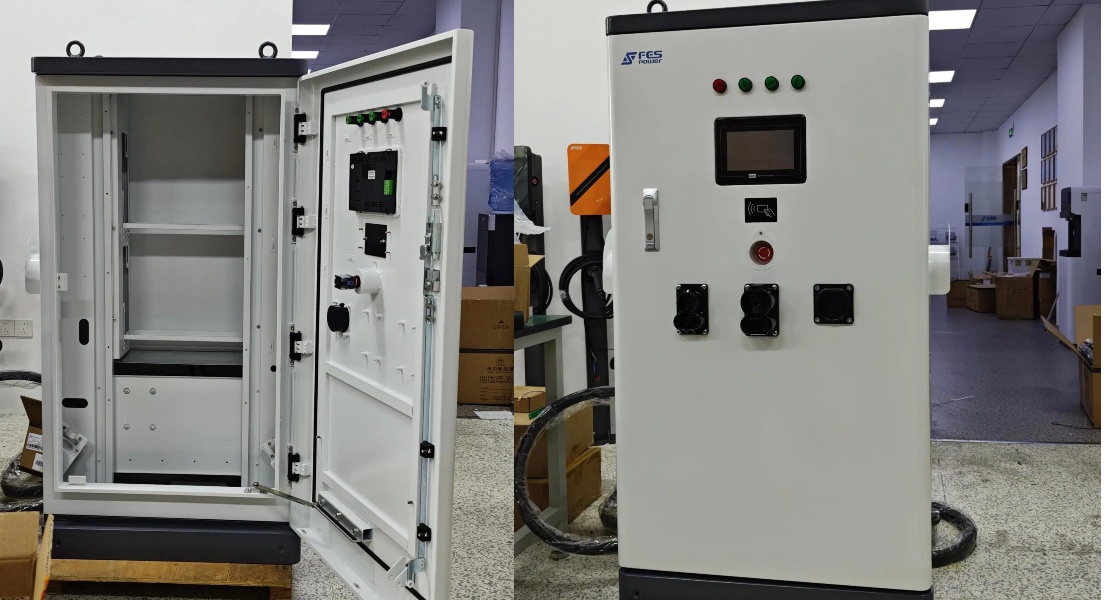
🧠 How Does the Control System Coordinate Everything?
A modern DC charger is a smart device. Its control system handles:
💫Communication with the vehicle
💫Power delivery strategies
💫Real-time monitoring
💫User authentication
💫Safety protection
💫Cloud connectivity & remote updates
The D30 control system supports:
☑️ISO 15118 (incl. Plug & Charge)
☑️7-inch touchscreen UI
☑️OCPP 1.6J / 2.0.1
☑️Ethernet, Wi-Fi & 4G
This makes the charger fully cloud-manageable and operator-friendly.
🔋 What Does the Output Section Include?
This is the part the user actually touches—plug, cable, and interface.
D30 Output Specs:
⭐️CCS2 connector
⭐️4-meter cable
⭐️Output voltage: 200–1000V
⭐️Max current: 250A
Wide voltage compatibility ensures support for modern high-voltage EV platforms—now and in the future.
🏗️ How Do the Structure & Cooling Systems Ensure Reliability?
Outdoor DC chargers must operate in rain, dust, heat, frost, or high humidity.
This requires a robust mechanical design.
D30 Structural Features:
🛡️Integrated structural design for easier installation
🛡️IP54 ingress protection
🛡️IK10 vandal-resistance (except display area)
🛡️Forced-air cooling
🛡️Operating range: -20°C to 50°C
These ensure long-term durability even in challenging environments.
⚡ How Does a DC Charger Actually Work Internally?
Here’s a simplified workflow anyone can understand:
🔷EV plugs in → handshake begins
🔷Battery data exchanged → charging strategy generated
🔷Power modules convert AC → DC
🔷DC output delivered to battery
🔷System monitors temperature, voltage & current
🔷Charging completes → power disconnects safely
The D30 includes multiple safety protections:
OVP, UVP, OCP, OTP, SPD, RCD, IMD, and more.
Safety is embedded into every charging step.
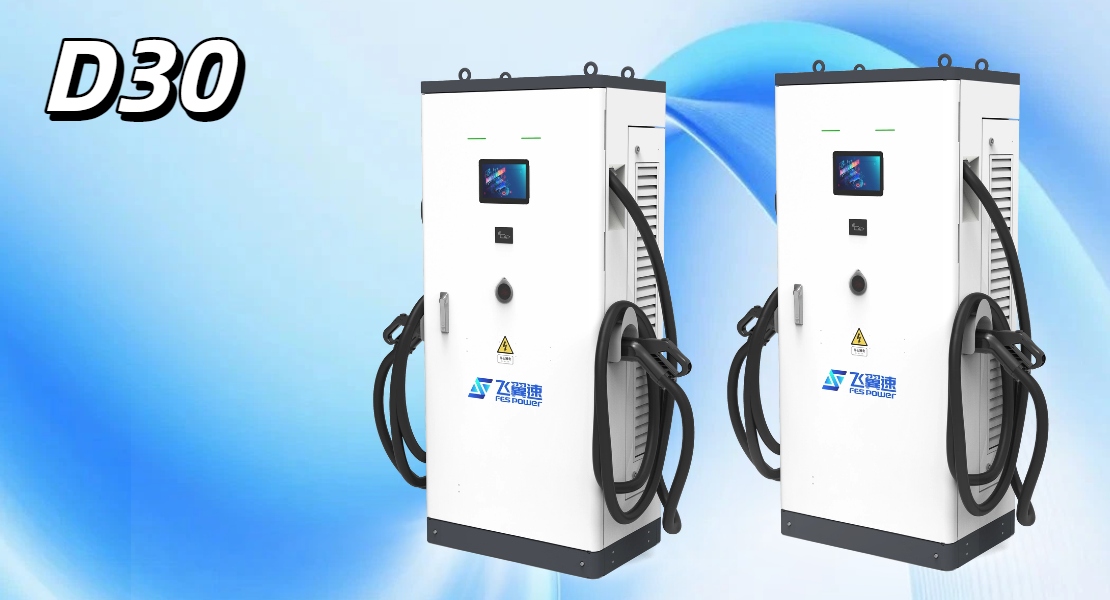
🚗 What Defines a Great DC Fast Charger?
A high-quality charger should include:
👍Modular power architecture
👍High efficiency (>96%)
👍ISO 15118 smart communication
👍Advanced connectivity (OCPP, Wi-Fi, 4G)
👍Wide output voltage & high current
👍Strong physical protection
👍User-friendly interface
The FES Power D30 (120kW / 160kW) embodies all these structural strengths, making it ideal for:
⭐️Public charging stations
⭐️Commercial parking lots
⭐️Fleet depots
⭐️Urban fast-charging hubs
👉 Learn more about FES Power’s charging solutions:



 IPv6 network supported