Mar 02, 2026
🤔As electric vehicles continue to expand globally, EV charging infrastructure is also growing rapidly. Yet many people notice something surprising when they visit charging stations: some chargers remain empty for long periods of time.
According to the International Energy Agency, the world had over 40 million electric vehicles on the road in 2024, and global EV sales grew by about 35% year-over-year. Meanwhile, the number of public charging points worldwide exceeded 4 million units.
If the EV market is expanding so quickly, why do some charging stations still appear underused? The answer lies in several key factors that affect charging demand and infrastructure planning.
🚗 Is EV adoption growing fast enough to fill every charger?
At first glance, empty chargers might suggest that EV adoption is slowing. However, real data shows the opposite.
According to the International Energy Agency Global EV Outlook report, global EV sales surpassed 14 million vehicles in 2023, representing roughly 18% of all car sales worldwide.
Meanwhile, charging demand continues to increase. Data released by the ChargePoint network shows that charging sessions increased more than 30% year-over-year across its platform.
This means that overall charging demand is still growing rapidly. But the distribution of charging infrastructure is not always aligned with real driving patterns.
📍 Could location be the main reason some chargers stay empty?
Location is one of the most important factors determining charging station utilization. 🚗
In the early stages of EV infrastructure development, many chargers were installed to expand coverage rather than maximize usage. Governments and utilities often deployed chargers in parking lots, office buildings, or low-traffic areas simply to ensure geographic availability.
However, if a charger is located
🚫 far from highways 🚫 outside major commuting routes 🚫 in areas with limited EV ownership
then usage can remain relatively low even if EV adoption is growing.
Charging stations placed along busy highways, shopping centers, and transport hubs typically experience much higher utilization.
⏱ Do charging stations naturally sit idle most of the time?
Another reason some chargers appear empty is the nature of charging demand itself. EV charging behavior is very different from traditional fuel stations.
Most charging activity occurs during specific periods such as
🚗 evening commuting hours 🏢 workplace charging hours 🛣 long-distance travel periods
Studies show that public chargers can remain idle more than 70–80% of the time, especially outside peak hours. This means an empty charger does not necessarily indicate poor performance but rather reflects fluctuating charging demand throughout the day.
🏠 Could home charging reduce public charger usage?
One often overlooked factor is that most EV drivers prefer charging at home whenever possible.
According to the International Energy Agency, more than 70% of EV charging globally occurs at residential locations. Overnight charging is convenient, cost-effective, and allows drivers to start each day with a full battery. 🌙🔋
Public chargers therefore serve mainly as
⚡ travel charging ⚡ emergency charging ⚡ fast charging during long trips
Because of this, many public chargers experience intermittent usage rather than constant demand.
🔧 Could reliability and user experience influence utilization?
Another factor affecting charger utilization is reliability. If drivers encounter faulty or difficult-to-use chargers, they may avoid returning to those stations.
Research conducted by the University of California, Berkeley found that roughly 22% of tested public fast chargers experienced operational issues, including payment failures or connection errors.
This highlights the importance of reliable hardware, intuitive user interfaces, and robust maintenance systems to ensure drivers trust public charging infrastructure.
⚡ Could charger technology also affect usage?
Technology plays an increasingly important role in charging station utilization. Many early charging stations used relatively low-power chargers, typically around 50 kW.
However, modern EVs are increasingly capable of ultra-fast charging. High-power chargers above 250 kW or 350 kW can dramatically reduce charging time, making them much more attractive to drivers. 🚗⚡
As a result, older low-power chargers may experience lower utilization compared with modern high-power charging hubs.
🔋 Could smarter charging infrastructure improve station utilization?
As EV adoption continues to grow, many operators are turning to more flexible charging architectures to improve efficiency and utilization.
One emerging solution is the split-type EV charging system, where multiple charging terminals share power from a centralized power cabinet.
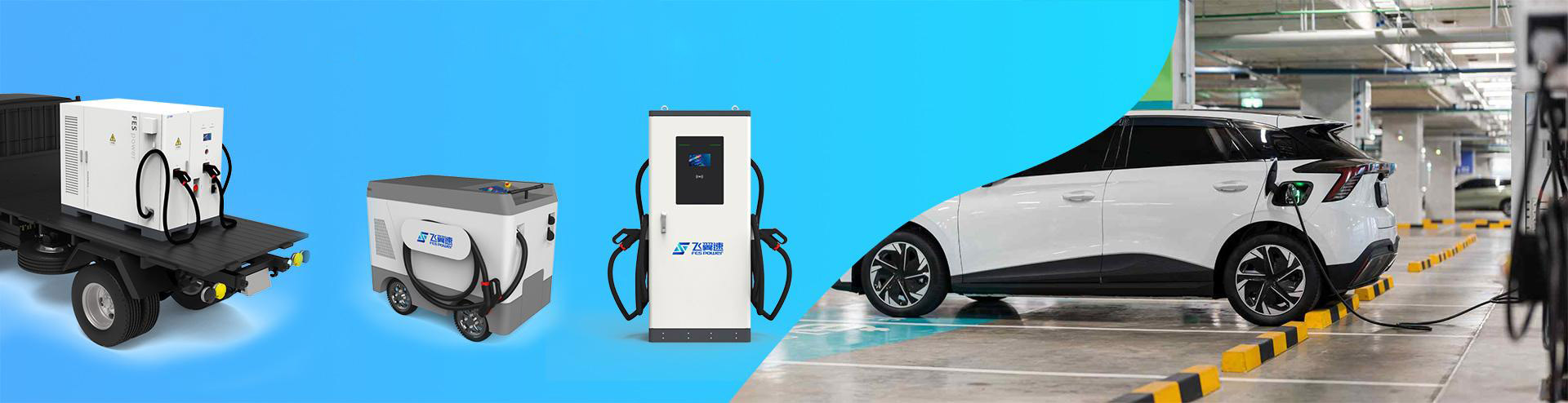
For example, at FES Power, our split-type flexible charging system combines a high-power cabinet with multiple front-end charging terminals. This architecture allows operators to deploy systems with up to 720 kW total power capacity while dynamically distributing power among connected vehicles.
This approach offers several advantages
🚗 multiple vehicles can charge simultaneously ⚡ power can be allocated dynamically based on demand 📈 charging stations can scale as EV traffic grows
By improving power utilization and enabling ultra-fast charging, flexible charging systems help reduce idle infrastructure and increase station profitability.
🌍 Are empty chargers actually a normal stage of industry development?
In many cases, empty chargers are not a sign of failure but rather a natural stage in the development of EV infrastructure.
Charging networks are often built ahead of demand to ensure future EV growth and reduce range anxiety among drivers. As EV adoption accelerates worldwide, many currently underutilized charging stations are expected to see higher usage in the coming years.
For charging operators, success will increasingly depend on
📍 strategic site selection ⚡ high-power charging technology 🔋 flexible and scalable infrastructure
✅ Conclusion
Although some EV charging stations may appear empty at times, global charging demand continues to grow rapidly. Data from organizations such as the International Energy Agency and networks like ChargePoint confirms that EV adoption and charging sessions are increasing year by year.
However, factors such as location, charging behavior, reliability, and charger technology all influence how frequently a station is used.
As the industry evolves, advanced solutions such as high-power split-type charging systems will play an important role in improving charging efficiency, supporting higher EV traffic, and helping operators build more profitable charging networks.
Read More






 IPv6 network supported