Mar 09, 2026
Electric vehicles are evolving quickly, but charging infrastructure has not always kept pace. As EV batteries grow larger and commercial fleets electrify, the industry is starting to talk about megawatt-level charging (1MW and above) as the next big step.
But is 1MW charging really the future of EV infrastructure, or just a niche solution for specific applications? Let’s look at the data and trends shaping the industry.
🚛 Why Is the Industry Moving Toward 1MW Charging?One of the biggest drivers behind megawatt charging is the rapid electrification of heavy-duty transportation.
According to the International Energy Agency, global electric truck sales exceeded 60,000 units in 2023, and the number is expected to grow rapidly as logistics companies push for decarbonization.
Heavy-duty vehicles typically use battery packs ranging from 500 kWh to over 1,000 kWh. If these trucks charge at traditional 150 kW or even 350 kW, charging times can easily exceed 2–3 hours, which is not practical for commercial operations.
This is where megawatt charging becomes critical.
The CharIN developed the Megawatt Charging System (MCS) standard, designed to support up to 3.75 MW of charging power, primarily for electric trucks and buses.
At 1 MW charging power, a 600 kWh truck battery could theoretically charge from 20% to 80% in around 20 minutes, making electric freight far more practical.
📈 How Fast Is EV Charging Demand Growing?The demand for high-power charging infrastructure is growing alongside EV adoption.According to the International Energy Agency Global EV Outlook, the world had more than 2.7 million public charging points in 2023, representing over 40% growth year-on-year.
More importantly, DC fast chargers are the fastest-growing segment. In many regions, operators are shifting toward higher-power infrastructure.
⚡ 240 kW – 350 kW ultra-fast chargers are becoming the new standard in many markets. 🚚 Charging hubs are emerging to support logistics fleets and commercial vehicles. 🔋 Future-ready charging infrastructure is being designed to support even higher power levels.Some companies are already pushing the limits of charging technology. For example, BYD recently demonstrated ultra-high-power charging concepts exceeding 1 MW, showing how quickly the industry is moving toward megawatt-level solutions.
🔋 Which Applications Actually Need 1MW Charging?Despite the excitement, not every charging station needs megawatt power.
In reality, 1MW charging is most suitable for specific scenarios.
🚛 Electric logistics trucks require extremely fast turnaround times to keep delivery schedules efficient. 🚌 Electric buses and depot charging need higher power to recharge large batteries within limited operating windows. ⚓ Ports and industrial fleets benefit from megawatt charging because heavy equipment and vehicles often operate continuously. 🛣️ Highway freight corridors will require ultra-fast charging hubs to support long-distance electric trucking.
For passenger vehicles, 350 kW charging is still sufficient for most use cases, which means infrastructure must remain flexible and scalable.
⚡ Why Flexible Charging Architecture MattersBuilding a megawatt charging station is not only about installing a powerful charger. Operators must also consider grid capacity, equipment cost, utilization rate, and future expansion.
That’s why many modern charging stations use split-type charging architecture, where a centralized power cabinet distributes power to multiple charging terminals.
This architecture provides several important advantages.🔌 Dynamic power distribution, allowing multiple vehicles to share available power efficiently. ⚡ Higher utilization of charging equipment, reducing idle capacity. 📈 Easier expansion in the future, allowing stations to scale power as demand grows.
With this approach, charging stations can support both current charging needs and future megawatt-level upgrades.
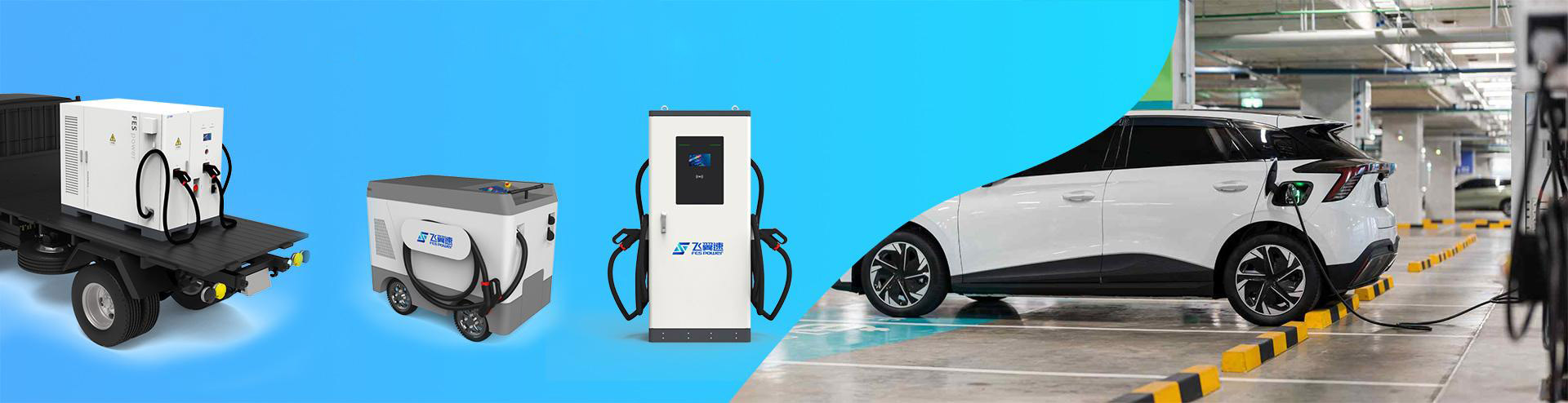
🏭 How FES Power Supports the Next Generation of Charging InfrastructureAs charging technology continues to evolve, infrastructure providers increasingly need flexible and customizable solutions rather than one-size-fits-all products.
At FES Power, we focus on delivering high-performance DC charging systems designed for scalable infrastructure projects.
⚡ Flexible power configuration allows charging systems to adapt to different project sizes and grid capacities. 🔧 Split-type charging systems enable centralized power cabinets to distribute energy across multiple charging terminals efficiently. 📊 Power customization options help clients design charging stations that match their operational requirements. 🎨 Small-batch exterior customization allows partners to align charger design with their brand identity or local project aesthetics.
This flexibility helps operators deploy charging infrastructure that fits their market, their vehicles, and their future expansion plans.
🌍 Is Megawatt Charging the Future?
The short answer is yes—but not everywhere.🚛 Megawatt charging will become essential for heavy-duty electric trucks. 🏭 Logistics hubs and industrial fleets will increasingly rely on high-power charging systems. 🛣️ Highway charging corridors will require ultra-fast charging hubs to support long-distance freight transport.
At the same time, flexible high-power charging systems ranging from 150 kW to 720 kW and beyond will remain the backbone of most EV charging networks.
The real future of EV infrastructure is not just more power, but smarter and more adaptable charging systems that can evolve with the rapidly changing electric mobility landscape.
⚡ As the EV industry moves toward higher power and faster charging, flexibility, scalability, and customization will become key factors in building sustainable charging networks. 🚀
Read More






 IPv6 network supported