Nov 26, 2025
1️⃣ Interoperability — When EVs and chargers “speak the same language”
Today’s charging landscape is still fragmented: CCS, NACS, CHAdeMO, GB/T and more coexist across regions.
Without interoperability:
❌Some cars can’t charge on certain networks
📱Drivers must manage multiple apps and accounts
🛠️Operators face higher maintenance and upgrade complexity
Recent studies show that only ~12% of CCS public chargers have fully implemented secure encrypted communication (TLS). This highlights the gap between standards and real-world deployment—especially across borders and networks.
2️⃣ Roaming — Charge anywhere, across operators and countries 🌐
In Europe, EV drivers regularly cross borders. Without roaming, they must register with each charging provider individually—an unnecessary friction in 2025.
Roaming allows EV charging to work just like mobile networks:
👉 You move. Your access follows.
3️⃣ Seamless Experience — “Plug in and go” is no longer optional ⚙️✨
A true seamless experience includes:
🔷Auto authentication
🔷Auto billing
🔷No apps or QR codes
🔷Cross-network compatibility
This is the goal of Plug & Charge, a key capability of the ISO 15118 standard.
🚀Where Is the Industry Heading? The Next Wave of Technology & Standards
🔐 1. Plug & Charge + PKI Trust Architecture Will Become Standard
ISO 15118-enabled charging allows:
Automatic identification
Encrypted communication
Hands-free payment
Analysts expect Plug & Charge availability to double by 2027, driven by large operators upgrading their networks.
🔌 2. Multi-standard compatibility will be essential
With CCS and NACS expected to coexist in Europe and North America for years, operators increasingly choose multi-standard chargers to reduce long-term upgrade costs.
Future infrastructure will rely on:
Multi-port designs
Modular connector systems
Software-based protocol switching
🛡️ 3. Stronger cybersecurity & mandatory OTA updates
As more data flows between EVs and chargers (billing, identity, vehicle status),
mandatory secure communication—TLS, PKI, and firmware updates—is becoming a regulatory necessity, not just a feature.
🌍 4. Large-scale roaming alliances
Europe’s heavy cross-border mobility makes roaming indispensable.
Operators are moving toward interconnected authentication networks so that EV charging works the same in the UK, France, Germany, or the Netherlands.
🏆How FES Power Supports the Transition to a Fully Interoperable Future
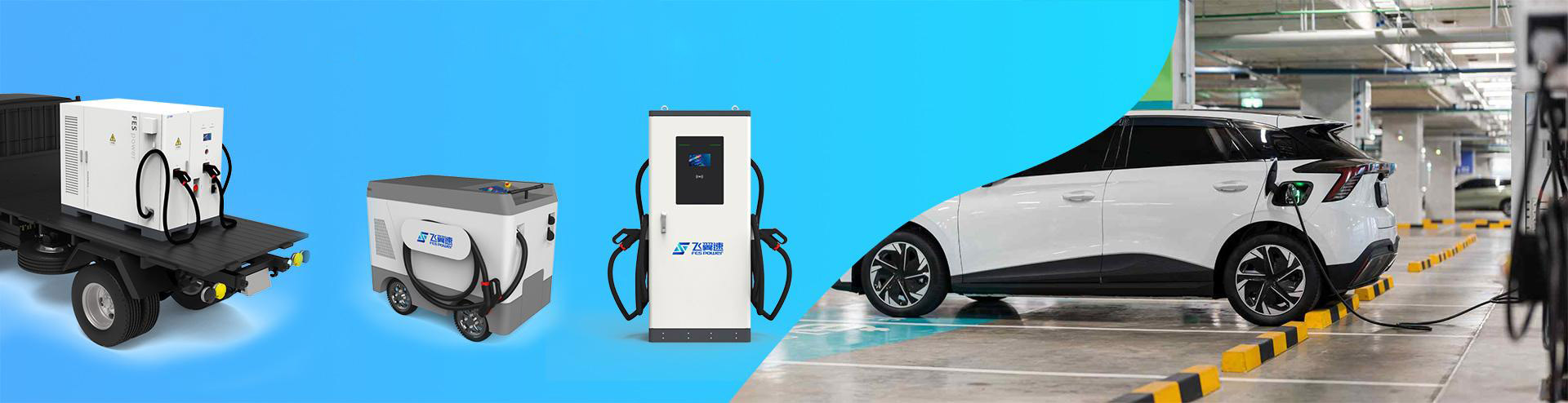
FES Power positions itself as a future-ready technology enabler for charging networks across the UK, Europe, and global markets.
Our solutions are designed for maximum compatibility, long-term value, and seamless user experience.
✨ Our key interoperability-focused capabilities:
Multi-standard DC fast charging (CCS + optional NACS)
Engineered for flexibility, minimizing future upgrade costs.
ISO 15118 Ready “Plug & Charge”
Enabling automatic authentication & auto billing for a truly seamless experience.
OCPP 1.6 & 2.0.1 compatibility
Ensuring smooth integration with any major backend or roaming platform.
Advanced cybersecurity architecture
TLS encryption, certificate management, secure boot, and OTA firmware updates.
Full compliance for cross-border deployment
CE / UKCA certifications, plus modular configurations for different EU market needs.
👉 Our mission:
To help operators build charging networks that are reliable, interoperable, and prepared for the cross-border mobility of the next decade.
⚡Conclusion 🚗
The EV market is shifting from “more chargers” to “better charging experience.”
Interoperability, roaming, and seamless UX will define the competitiveness of charging networks across the UK and Europe.
In this new landscape, companies that build multi-standard, secure, scalable, Plug & Charge–ready solutions will lead the next wave of infrastructure innovation.
🔋FES Power is committed to helping our partners build charging networks that deliver the experience EV drivers expect—and the reliability operators demand. 🌍
Read More






 IPv6 network supported