Customized Electric Vehicle Charger Enterprise
Home

FES Power charging solutions

FES Power charging solutions

  • Why Do EV Charging Standards Differ Across Regions?
    Why Do EV Charging Standards Differ Across Regions?
    Nov 03, 2025
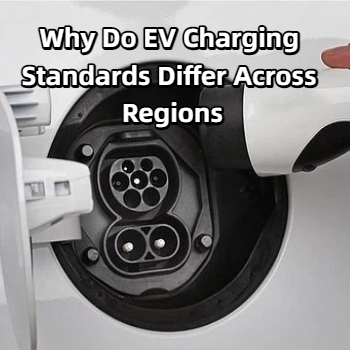
    As electric mobility continues to rise globally, charging infrastructure is expanding rapidly. However, charging standards and regulations vary greatly across different markets — from plug types and power levels to communication protocols and safety certifications. This diversity stems from differences in grid systems, market maturity, and regulatory focus: 🛡️China: Dominated by the GB/T standard, now evolving toward the high-power ChaoJi system. 🛡️Europe: Relies mainly on Type 2 (AC) and CCS2 (DC) connectors, prioritizing interoperability and safety compliance. 🛡️North America: Uses SAE J1772 and CCS1, while Tesla’s NACS connector is rapidly emerging as a new standard. For manufacturers, such variation demands multi-standard compatibility and design flexibility — the very principles behind FES Power’s R&D philosophy. 🔌 What Are the Key Differences in Power Levels and Plug Types? From home AC chargers to ultra-fast highway DC stations, each region defines power levels differently: Region Common Connectors Typical Power Range Key Features China GB/T, ChaoJi 7 kW – 1000 kW Comprehensive national framework for public & commercial use Europe Type 2 / CCS2 11 kW – 350 kW Strong focus on interoperability and safety U.S. CCS1 / NACS 7 kW – 500 kW Competitive, multi-standard environment   To meet this diversity, FES Power’s Cannon 300 and D120 DC fast chargers ⚙️ support CCS1, CCS2, and GB/T standards. Delivering up to 300 kW of power, they provide flexible, efficient fast-charging solutions for passenger EVs, buses, and heavy-duty fleets. Whether installed in European public networks or Southeast Asian depots, Cannon 300 enables a safe and rapid “plug-and-charge” experience. 🌿 Are Safety and Certification Requirements the Same Everywhere? Not at all. Each market enforces distinct certification frameworks for electrical safety, EMC compliance, and ingress protection: 🛡️China: CQC, CCC, GB/T certifications required. 🛡️U.S.: Must comply with UL and FCC standards. 🛡️Europe: CE and EN standards emphasizing LVD and EMC Directives. FES Power designs products under a multi-certification architecture, ensuring early compliance: The PC01/PC02 AC chargers are certified for both commercial and residential use. The EC01 wall-mounted charger features IP65 protection and conforms to both CE (EU) and UL (US) requirements. Through this global design strategy, our chargers achieve “develop once, certify globally.” 🚗 What’s New in Wireless and Mobile Charging Standards? Beyond fixed installations, wireless and mobile charging are emerging as new frontiers. Japan, South Korea, and Germany are developing inductive charging standards, while Western cities are piloting mobile power solutions for flexible deployment. FES Power’s Meta and Meta+ series ⚙️ are built for this evolution: Meta (Passive Mobile) enables on-demand charging in parking areas or event zones. Meta+ (Autonomous Mobile) adds smart navigation and scheduling, achieving true “charger-to-vehicle” flexibility. These innovations transform charging from static infrastructure into dynamic, adaptable energy mobility, ideal for emergency support or high-demand environments. 🌏 How Should Companies Respond to Global Regulatory Diversity? To succeed in this fragmented global landscape, charging solution providers must: ⭐️Design Flexibly – Support multiple connector types and communication protocols (OCPP, ISO 15118, etc.). ⭐️Plan for Certification – Anticipate local testing and regulatory pathways. ⭐️Adopt Modular Architecture – Simplify adaptation for export markets. This is the strategic direction of FES Power From PC01/02 residential AC chargers and EC01 compact fast chargers, to Cannon 300 / D120 DC chargers and Meta mobile energy systems, our portfolio is built on three pillars: 👉 Global compatibility, application adaptability, and safety reliability. While standards may differ, the mission remains the same — to power a cleaner, smarter, and connected future of mobility 🌱. Through innovation and engineering excellence, FES Power continues to lead the way in intelligent charging solutions for the new energy era ⚡. ✅ Learn more at: www.fes-power.com
    Read More
  • Charging Reliability Matters :Why Do EV Chargers Fail So Often?
    Charging Reliability Matters :Why Do EV Chargers Fail So Often?
    Nov 19, 2025
    As the global EV population continues to grow, the reliability of public and commercial charging stations is becoming a critical industry concern. Many users have experienced broken chargers, failed transactions, offline stations, or “ghost chargers”, which not only damages user trust but also reduces the profitability of operators. Solving this reliability issue is key to the next stage of charging-infrastructure development. 🤔Why Is Charger Reliability Being Criticized So Frequently?  The root causes are systemic: inconsistent hardware quality, outdoor exposure leading to aging, lack of real-time monitoring, insufficient maintenance teams, and wear from high-frequency usage. A deeper issue is that many networks still follow a “deploy-and-forget” model, neglecting the importance of ongoing support. This leads to connection errors, communication breakdowns, metering issues, and more. 🛠️What Makes Charger Maintenance So Challenging?  The difficulty is not only a shortage of technicians—it is the absence of a complete maintenance ecosystem. Traditional maintenance relies heavily on manual inspections or passive troubleshooting after customer complaints. This means high cost, slow response, and long downtime. When chargers are spread across different regions or countries, issues are often discovered far too late. Other challenges include: 🛡️Lack of real-time device data 🛡️No predictive diagnostics 🛡️Slow parts replacement cycles 🛡️Increasing complexity of fast-charging hardware For many small and mid-sized operators, maintaining a modern charging network is a significant burden. ⚙️Is There a More Efficient Way to Reduce Failure Rates?  Yes—by shifting from reactive maintenance to proactive health management. Key strategies include: ⭐️Real-time monitoring to detect early signs of voltage drops, temperature rise, or communication failures ⭐️Modular hardware design that simplifies on-site replacement ⭐️Cloud-based intelligent alerts and remote diagnostics to reduce unnecessary field visits ⭐️Improved durability and weather resistance for outdoor environments ⭐️Streamlined maintenance workflows to minimize downtime Only when these measures form a closed-loop system can charger uptime truly improve. ⚡What Makes FES Power’s Solution Different? 🔧 At FES Power, reliability is not an afterthought—it is our core engineering principle. Our wall-mounted AC chargers (such as the EC01 7kW) and commercial DC chargers are designed to reduce failure rates and simplify long-term operation through: 🔷Modular electrical architecture for faster repair and component swap 🔷Industrial-grade components with multi-layer protection to ensure long-term stable operation 🔷Cloud-based management platform offering real-time monitoring, error logs, and remote diagnostics 🔷Simplified installation structure to reduce human error and extend product lifespan 🔷Enhanced environmental resistance, ensuring stable performance in harsh outdoor conditions These features are built not only to avoid failures but to ensure high uptime throughout the product’s lifecycle, helping operators achieve sustainable profitability. 🌍What Does the Future Charging Network Really Need?  The industry is shifting from focusing on quantity to focusing on quality. Future competitiveness will depend on: 🔸Can users charge smoothly without frustration? 🔸Are failures predictable and manageable? 🔸Can the system support long-term, low-cost maintenance? High reliability will become the defining value of public charging ecosystems. Whoever keeps chargers “always online” will win user trust and the market. ✔️Conclusion: Reliability Isn’t a Selling Point—It’s the Baseline  EV infrastructure will only mature when charging becomes consistent, stable, and effortless. ⚡FES Power will continue to focus on delivering highly reliable, intelligent, and easy-to-maintain charging products—ensuring that every charging experience is something drivers can trust. 
    Read More

leave a message

leave a message
If you are interested in our products and want to know more details,please leave a message here,we will reply you as soon as we can.
submit
Contact Us: bella@fespower.cn

home

products

WhatsApp

Contact Us