Dec 01, 2025
🤔EV drivers occasionally plug in their charging cable, only to discover that charging won’t start.
This issue is more common than you might think, especially at public charging stations.
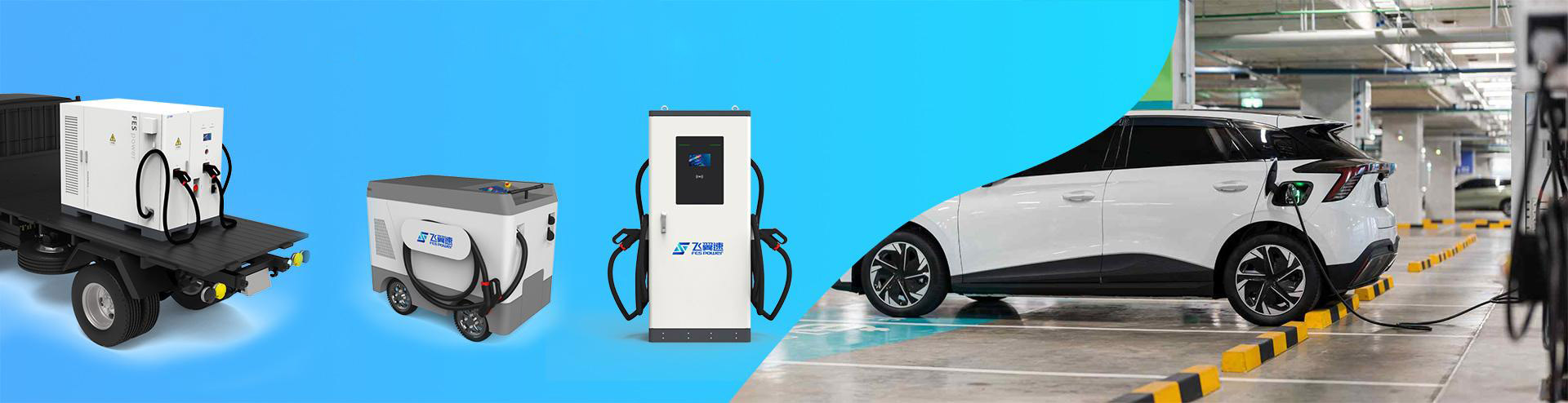
In this blog, we break down why EV charging sometimes fails, what drivers can do, and how FES Power delivers more reliable charging solutions for both home and commercial users.
Explore more about our products here 👉 https://www.fescharging.com/
🔌 Why Does Communication Between the EV and Charger Fail?
🤝Before charging begins, your EV and the charger must complete a “handshake” process.
If any step of this communication sequence fails, charging will not start.
Common causes include:
🔷CP (Control Pilot) signal interruption ⚡
🔷BMS (Battery Management System) returning an error
🔷Dirty or damaged pins on the connector
🔷Software incompatibility between vehicle and charger
🔋 Why Does Plugging in the Charging Gun Sometimes Not Work?
A surprisingly common cause of charging failure is incomplete insertion of the connector.
This can happen when:
🔷The connector is not pushed in firmly enough 👇
🔷Dust or debris blocks the contact points
🔷Wear and tear reduces contact stability
🔷The lock mechanism doesn’t fully engage
⚠️ Why Do Public Charging Stations Experience Hardware Issues?
🌧️☀️❄️Public chargers operate around the clock and face harsh outdoor conditions , making them more prone to failures such as:
⚙️Overheating of power modules
⚙️Relay malfunction
⚙️Internal component wear
⚙️Grounding and leakage protection triggers
⚙️Unstable AC input from the local grid
📶 Why Does Network Failure Prevent Charging?
📡Many EV drivers don’t realize that charging authorization requires network connectivity.
If the charger cannot reach the backend system, it may refuse to start.
Typical causes include:
🔷Weak 4G/LTE signal
🔷Cloud server congestion
🔷RFID verification timeout
🔷App authorization failure
To combat this, FES Power chargers support:
🌐 Ethernet + 4G + WiFi triple-mode connectivity
🧠 Local offline-mode transaction buffering
📊 Smart backend monitoring
This ensures stable operation in parking garages, remote areas, or peak-hour congestion.
🌡️ Why Can Battery Temperature Prevent Charging?
Your EV’s battery has strict thermal limits.
If battery temperature falls outside the safe charging range, the vehicle may block or limit charging.
Common scenarios include:
❄️ Cold winter mornings → low battery activity
☀️ Hot summers or long-distance trips → battery overheating
🔋 High SOC (>90%) → DC fast charging automatically reduces or stops
This is a vehicle-side protection mechanism, not a charger malfunction.
Some EVs perform self-preheating or cooling to maintain charging performance.
⚙️ Why Can Charging Standard Differences Cause Incompatibility?
If the connector type does not match the vehicle’s standard, charging will not start.
Examples include:
CCS1 EV attempting to use a CHAdeMO charger
NACS/Type-Tesla connectors at incompatible stations
Incorrect adapters causing handshake issues
FES Power’s DC systems support multi-standard customization:
🔌 CCS1 / CCS2 / GB/T / CHAdeMO / AC Type 2
This makes them ideal for global operators looking to serve different EV markets.
✨ How Can Drivers Reduce Charging Failure?
Here are practical tips to improve your charging success rate:
Reinsert the connector firmly until it “clicks” 🔒
🔷Try another charging gun or station
🔷Restart the charger session via card or app
🔷Warm up your battery by driving a few miles in winter
🔷Avoid DC fast charging when SOC is already high (>85–90%)
And for station operators:
🔷Choose high-reliability chargers
🔷Perform routine maintenance
🔷Keep gun heads and ports clean
🔷Ensure strong network connectivity
🔧 How Does FES Power Reduce Charging Failure for Users and Operators?
FES Power focuses on stability, durability, and user experience:
💠 EC01 7kW AC Wallbox
Reliable CP/PP communication
App / RFID / Plug-and-Charge options 🔑
Compact design with IP65 protection
💠 DC Fast Charger Series (30kW – 180kW)
Modular power design ⚡
Multi-standard compatibility
Real-time fault detection & smart load management
💠 Smart Charging Backend System
Remote monitoring
Data analytics
OTA updates for continuous improvement
🔗 Learn more at: https://www.fescharging.com/
Read More






 IPv6 network supported